







Louisiana v. Callais Will Have Powerful Implications For Black Voting Rights



Voting Rights, elections, and the power of people to define themselves remain as important in 2026 as they were in 2006, 1982, and 1965. And once again, our right to fair representation and exercise of political power hangs in the balance as the Supreme Court considers the future of Section 2 of the Voting Rights Act.
Louisiana v. Callais could undermine one of the Voting Rights Act’s last remaining enforcement mechanisms. Ashley Shelton, Executive Director of the Power Coalition for Equity and Justice, told NewsOne that Louisiana v. Callais “has powerful implications for representation at every level of government.”
“If SCOTUS decides to strike down Section 2, the impact to minority voice and representation, at every level of government, would be at the whim of elected leaders who have not been fair or equitable, particularly in the South,” Shelton said.
Originally slated for last term, SCOTUS granted a rare reprieve, allowing opponents of Black political power another chance to undo the establishment of a second Black-majority Congressional District as warranted by the population increase documented in the 2020 Census.
Vote dilution has a clear, established pattern and practice across multiple generations. And its impact is not without consequence. For this very reason, Shelton said the case and its impact need to be a national conversation.
“These are our fundamental freedoms,” she said. “This case comes down to what does citizenship mean if you do not have representation at any level of government. It means codifying into law that minorities will live in this country as true second-class citizens.”
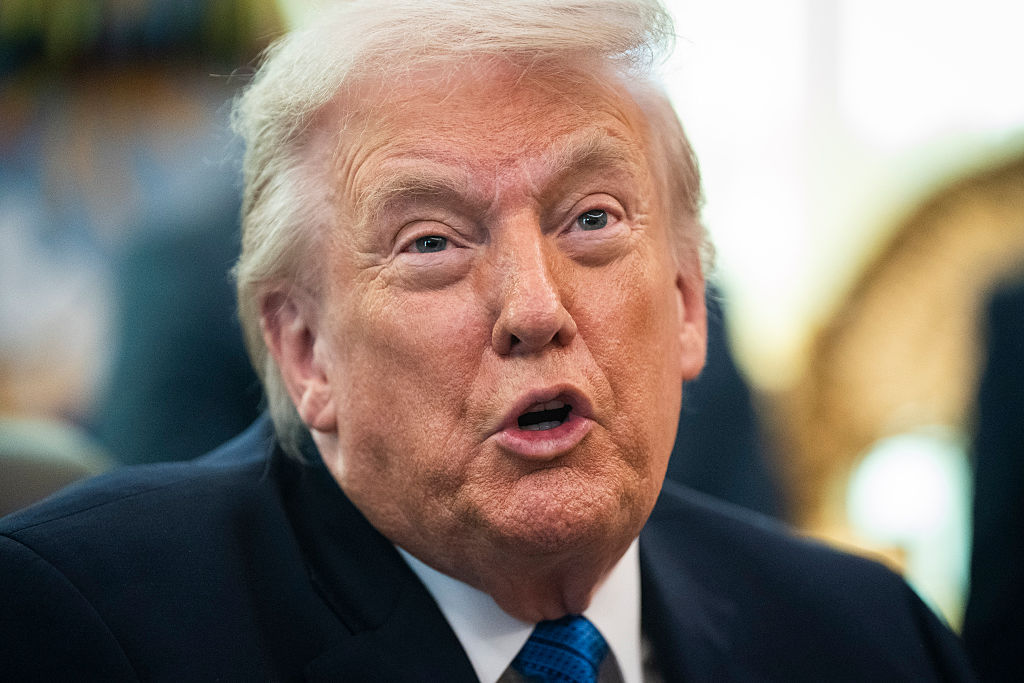
The long-awaited decision will come amid a country grappling with the impact of federal retrenchment from existing civil rights practice and constitutional law. Over the past year, the Trump administration has ushered in a new era of misappropriation and erasure of mechanisms developed to advance equity and justice.
We are witnessing the systemic dismantling of the very tools that helped lift Black people out of bondage and subsequently second-class citizenship.
Now, almost 20 years since the VRA was last reauthorized by a bipartisan majority, the facts have not changed. A country that Congress determined in 2006 still evidenced remnants of racial discrimination in the electoral process continues to do so.
And contrary to what Chief Justice John Roberts claimed in the 2013 decision Shelby County v. Holder, there remains a pattern and practice of state and local governments working with various parties to undermine Black political power and fair representation. All done with not only the blessing, but the insistence of the current administration in an effort to prevent defeat at the ballot box in 2026 and beyond.
Speaking with NewsOne, Black Voters Matter’s National Legal Director April England-Albright drew a careful line, highlighting the importance of Section 2 and the need for more robust mechanisms beyond litigation. While Section 2 offered protection against discrimination in state administration of elections, it’s not the same as what was afforded by pre-clearance.
“What we do know after 2013 happened, Section 2 was the only check on whether or not these racists, particularly in southern states, would be stopped. from preventing Black voters from not having their vote diluted and also the only protection or check on us having unfettered access,” she said. “Under Section 2, we also get to challenge the state’s administration of elections, which we know historically were used to limit Black voters.”
She explained the state weaponized during Jim Crow under its power to determine time, place, and manner provisions of the Constitution to prevent us from voting, and a similar trend persists today.
“ So Section 2 is largely consequential because it stops all those things,” England-Albright said. “And that is why it is important that it stays intact, especially until we are able to get more robust and permanent protections around voting rights for marginalized people in this country.”
She further explained that just as we’re seeing the racist Republican led efforts of mid-decade redistricting, state legislatures could move to simply redraw lines and districts to erase Black political power and representation. Previously, Black Voters Matter and Fair Fight released a report documenting the potential impact of losing Section 2 on state-level political representation in the Deep South. The groups estimated 191 state legislative seats, overwhelmingly representing majority-Black districts, could be eliminated.
Voting rights may not seem as important amid fascist crackdowns on Black and immigrant communities around the country. But these rights and our collective right to self-determination remain intrinsically linked. Removing our ability to elect representatives to fight for our communities increases the likelihood of policies and administrative actions being weaponized against us.
England-Albright said that without Section 2 of the VRA, we could go back to a pre-1980 situation where, unless folks are using the hard ‘ER’ while drawing maps, there will be no way of proving racist voter dilution.
“The only check against these states from drawing rogue maps and drawing us out of political power representation is Section 2,” she said. “It is the only thing standing between them, creating a map where we have zero opportunities in these southern states, and in other places, to have representation because political gerrymandering is no longer unlawful. And then they’ll say racial gerrymandering, while technically unconstitutional, all of the language and precedent and enforcement and the formulas that were produced under Section 2 will no longer be applicable to make the decision and determination around whether or not dilution is actually occurring.”
But litigation and the so-called “rule of law” alone have never been our saving grace. Both have been a stopgap and an intervening action that also took organizing and dedicated advocates to ensure compliance and sustained enforcement.
Shelton called on those running for office this cycle to continue to sound the alarm and not drop demands for meaningful voting rights legislation.
“We need to demand of those running for election or re-election during the midterms to demand the passage of the John Lewis Voting Rights Act,” she said. “We have to demand policy protections from this new Congress! Make the call. Make it an issue at every forum this Fall. Make it clear that the Constitution, and in particular the 14th and 15th Amendments, are sacred.”
SEE ALSO:
Black Voter Disenfranchisement Is On The Supreme Court Docket
What's Your Reaction?
 Like
0
Like
0
 Dislike
0
Dislike
0
 Love
0
Love
0
 Funny
0
Funny
0
 Angry
0
Angry
0
 Sad
0
Sad
0
 Wow
0
Wow
0