








Janice Combs Says Netflix Diddy Doc Harms Her Family’s Reputation


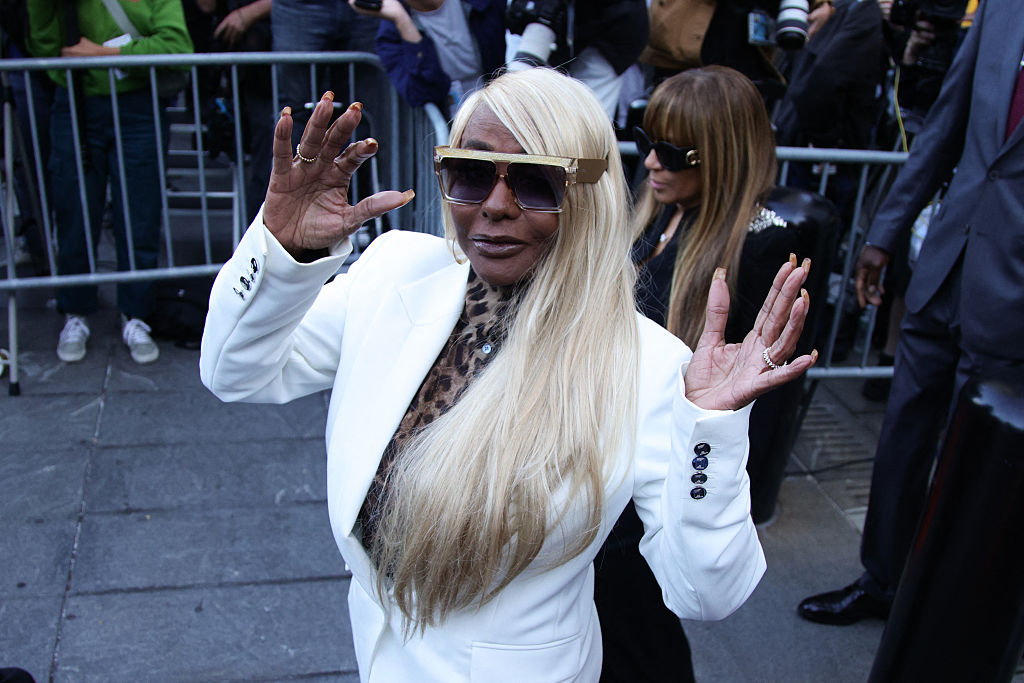
Janice Combs, the mother of music mogul and now-convicted Sean “P. Diddy” Combs, issued a public statement denying claims made in the Netflix documentary Sean Combs: The Reckoning. In it, she accuses the filmmakers of lying, misleading the public, and harming her family’s reputation.
She writes that she wants to “correct some of the lies presented,” calling them “inaccuracies” and saying they were “intentionally done to mislead viewers and further harm our reputation.” She refers to certain interviewees (Kirk Burrowes and Tim Patterson), whose testimonies appear in the documentary, as “falsehoods,” “salacious … to promote the series,” or “fake narratives.”
Combs also denies being abusive to Diddy and insists she was a hardworking single mother who loved her son and raised him well. She demands retractions.
As a survivor of child abuse, I recognized the script instantly as something painfully familiar. I have heard this voice before. The language, the posture, and the evasion. It belonged to my abusive adoptive mother, and it belongs to countless others who harmed children and still refuse to name it.
In the documentary itself, a childhood friend of Sean Combs struggles, almost loses words, trying to describe Janice Combs’ cruelty. You can see him reaching for language that doesn’t quite exist because society doesn’t give us honest words for abusive mothers. At another point, she is shown sitting in an audience while Diddy is on a talk show stage, casually bragging that she “whupped” her son, saying it like a badge of honor rather than an admission of violence. That moment alone collapses her denials. And yet, here we are, watching her pivot to narrative control instead of reckoning.
If you read between the lines of her statement, she’s using the same rhetorical moves abusers always use: “I was a single mother.” “I worked hard.” “I loved him.” “Look how successful he became.” And finally, “The real harm is what this story is doing to me.”
Let me break this manipulation down for y’all, not as theory, but as lived experience.
“I was a single mother.”
This is not an explanation. It’s an appeal to sympathy. Single parenting explains stress, but it does not negate impact. Abuse is not determined by marital status or household structure. It’s determined by what a child repeatedly experiences, which is fear, instability, exposure to violence, emotional control, unpredictability, and harm. When abusers invoke single motherhood, they aren’t explaining behavior; they’re asking for moral insulation. Don’t ask what happened to my child; feel sorry for me.
It’s also a cop-out because it pretends violence is an inevitable feature of single parenting when it’s not. Millions of single parents raise children without beating, terrorizing, humiliating, or emotionally breaking them. To treat single motherhood as an excuse for violence strips women of agency and insults every single parent who chooses not to harm their child under pressure. Struggle does not erase choice. And violence against a child is always a choice. Period.
Abuse is not caused by family structure; it’s caused by decisions. My own adoptive mother was married, middle-class, Christian, and lived in the suburbs, and she abused me anyway. Harm doesn’t require loneliness or poverty. It only requires untreated trauma, childism, a dysregulated nervous system, and power without accountability.
The “single mother” excuse also gaslights survivors because it reframes abuse as something understandable. It asks the listener to reinterpret violence through sympathy instead of truth. When a survivor hears, “I was a single mother,” the implied message is: If you understood how hard my life was, you wouldn’t call what I did abuse. That quietly pressures survivors to doubt their own memories and downplays their pain into mere “stress fallout.”
It also forces survivors into an impossible moral bind. We are told that naming harm means we are cruel, ungrateful, classist, or misogynistic, especially if the parent struggled. The harm itself becomes secondary to the adult’s hardship. Over time, this trains survivors to question whether they’re allowed to name abuse at all unless the abuser meets some imaginary standard of evil. If the parent “had it hard,” then the survivor must be exaggerating. That’s gaslighting.
This excuse further distorts reality by smearing causality. It suggests abuse came from circumstance, not choice. That erases the survivor’s lived experience of intentional acts such as hitting, threats, humiliation, and control and replaces it with a story about inevitability. Survivors are left thinking, Maybe it wasn’t abuse. Maybe it was just how things were. That confusion is not accidental; it’s the damn point.
Worst of all, it collapses the survivor’s pain into the adult’s identity. The moment abuse is rebranded as “single motherhood stress,” the child’s suffering disappears. The survivor becomes a byproduct of someone else’s struggle instead of a person who was harmed. That is the last and deepest gaslight: telling the injured party that the real story was never about them.
For survivors, hearing this excuse again and again reopens an old wound, not just the abuse itself, but the lifelong training to stay silent, to minimize, to protect the image of the person who hurt you. It doesn’t explain violence. It erases it.
In her statement, Combs also notes, “I worked hard.”
Working hard means you tried. It does not mean your child was safe. Effort is not the same thing as impact. Providing food, housing, or tuition does not cancel terror, beatings, humiliation, or emotional abuse inside the home. Exhaustion often becomes the justification abusers use to avoid examination. “I was tired.” “I was stressed.” “I did my best.” Meanwhile, the child is left carrying the long-term damage. You can grind every single day and still terrorize a child every single night.
“I loved him.”
Love is not a credential. It’s a feeling. Abusers love to invoke love because love cannot be audited. There’s no record, no metric, no measurement for it. But children’s nervous systems respond to what actually happens to them, not to what an adult claims they felt while hitting their child. Neuroscience is clear: love can coexist with fear. Love can coexist with terror. Love can coexist with control, neglect, and exposure to adult chaos that a child was never meant to carry. When someone says, “I loved him,” they are often closing the door on accountability, not opening it.
“Look how successful he became.”
This is retroactive absolution. It treats adult achievement as proof that childhood must have been healthy. That logic is not just wrong, it’s dangerous. Hyper-achievement is often an adaptation to chaos. Control becomes survival. Excellence becomes armor. Plenty of violent, misogynistic, coercive men were once “respectful,” “driven,” high-performing boys who learned early how to suppress vulnerability, dominate fear, and perform greatness while never being protected. Success tells you nothing about safety. Not to mention, if Diddy turned out to be so successful, we wouldn’t be talking about a highly successful man who is now a convicted criminal serving time.
“The real harm is what this story is doing to me.”
This is the final inversion, and the clearest tell from Combs’ statement. The spotlight shifts from the child’s experience to the parent’s reputation. Accountability becomes cruelty. Inquiry becomes an attack. Truth becomes violence against the adult. This move does not defend children. It erases them. It is the exact moment a parent fully exits the role of protector and chooses image preservation over reckoning with the harm they caused.
Taken together, these excuses don’t exonerate Combs or anyone else who has abused a child. They form a recognizable script that insists, “How dare you question me?” That script is how abuse survives long enough to metastasize into all kinds of adult violence that everyone later pretends came from nowhere.
What we need to confront, but rarely do, is that Janice Combs’ behavior mirrors the same denial, minimization, and narrative control we are comfortable calling out in abusive men. We name it quickly when fathers harm their children or partners. We analyze it. We condemn it. But when mothers terrorize their children, especially Black mothers, we go silent or defensive. And calling out maternal violence gets reframed as internalized misogyny if you’re a Black female child abuse survivor and children’s rights advocate like me.
In Black communities, abusive Black motherhood is sacred ground. It’s untouchable. To criticize it is framed as betrayal or “airing dirty laundry.” And yet the data is not subtle. Black children suffer the highest rates of child abuse and child abuse fatalities in this country, according to annual child maltreatment reports. Black mothers abuse children at higher rates than men, and they abuse boys more often than girls. These are not opinions. They are public health facts.
So why does it make people bristle when you say violent maternal child-rearing practices are connected to misogyny, sexual exploitation, and violent crime in our communities?
Because that conversation threatens too many myths.
It threatens the myth that Black maternal suffering automatically sanctifies behavior. It threatens the myth that survival equals righteousness. It threatens the fantasy that if the father is absent, the mother must be beyond reproach. And it forces us to confront a terrifying truth: that some of the men causing immense harm were shaped not only by racist systems, but by violent homes that were never named. And they were harmed during the most sensitive periods of early brain development, before they developed any cognition about racism or sexism.
Every time this conversation comes up, someone asks, “But what about the fathers?” That question is a shutdown tactic. Yes, fathers matter. Absent fathers matter. Violent fathers matter. But invoking fathers in this context is often a deflection designed to stop scrutiny of maternal harm. It says: If you don’t indict everyone at once, you can indict no one. And that protects abusers.
Others say, “Why are you always blaming Black mothers?” Again, not an argument. A silencing move.
Naming a pattern is not blaming an entire group. Critiquing behavior is not attacking womanhood. Asking for accountability is not misogyny. What is misogyny is pretending women are incapable of violence, and therefore incapable of responsibility.
We do not protect children by protecting adult feelings. We do not heal communities by refusing to examine their most painful truths. And we do not break cycles of violence by insisting monsters come from nowhere.
As a survivor, I know this script because I lived inside it. Many of us did. And until we are brave enough to say it out loud that some mothers abuse, some mothers deny, and some mothers build the very conditions for the violence they later disown, we will keep pretending that cycles of violence just happen.
Violence does not come out of nowhere. It is shaped, rehearsed, justified, and normalized long before it shows up in headlines, courtrooms, and prisons. And until we stop protecting adult narratives at the expense of children’s lives, the cycle will keep producing broken men and women we pretend we never saw coming.
Dr. Stacey Patton is an award-winning journalist and author of “Spare The Kids: Why Whupping Children Won’t Save Black America” and the forthcoming “Strung Up: The Lynching of Black Children In Jim Crow America.” Read her Substack here.
SEE ALSO:
Why Sean Combs Was Never Going To Be Fully Held Accountable [Op-Ed]
Diddy’s Mom Rips Son’s ‘Public Lynching’
Sean Combs’ Legal Team Claims ‘Mutual Abuse’ In Relationship With Cassie Ventura
What's Your Reaction?
 Like
0
Like
0
 Dislike
0
Dislike
0
 Love
0
Love
0
 Funny
0
Funny
0
 Angry
0
Angry
0
 Sad
0
Sad
0
 Wow
0
Wow
0