






All The Black Presidents We Could’ve Had If ‘America’ Weren’t So Obsessed With Whiteness


America loves to pretend historical progress is a relay race in which the past generation hands over all the freedoms they worked for to the next generation with a sweaty optimism and a Nell Carter smile.
And then you realize that America isn’t a sitcom; it’s more like Game of Thrones in which blood feuds, hatred, and fiery clashes are not only expected, they are inevitable. Because one of the unspoken tenets of America (at the expense of hurt feelings or political correctness,) is that under all circumstances America must remain white. It’s the asterisk and small print at the end of the Constitution. It’s not just what has propelled the ship, it’s what guides it. It’s what’s driving the current administration to treat diversity as dangerous, and immigrants as imminent threats.
The travel bans and family separations at the border, and the normalization of describing migrants in criminal or animalistic terms didn’t just change law enforcement priorities — they signaled culturally that exclusion was a patriotic position, under the guise of “real Americanism” (cue Hulk Hogan’s walkout music).
And because of this, this illusion of whiteness as a synonym for American, we’ve had a long and storied tradition of voting exclusively for white men in almost every presidential election, and what we’ve missed out on could’ve actually prevented us from being where we are today–inside a modern-day hellscape that if fictionalized would sound so outlandish that it would be rejected for teetering along fatalistic fantasy.
Because Barack Obama’s historic election in 2008 wasn’t the day that America transcended race, it was just the day America temporarily ran out of ways to stall. Hell, Obama wasn’t even running against his opponents, he was running against the collective American imagination that had already deemed him a mistake. And because racial progress is adverse to the Declaration of White Men, we’ve been suffering ever since.
But, let’s start where the modern story actually begins: Shirley Chisholm.
In 1972 — when women couldn’t get credit cards without a husband and Black people were still being “integrated” with federal troops — Chisholm ran for president. Not symbolic. Not exploratory. She ran to win. A Black woman, Brooklyn-accented, uncompromising, and allergic to respectability politics.
America wasn’t ready for a Black president. And America definitely wasn’t ready for a strong Black woman who was unapologetic and unyielding in her refusal to ask permission.
Her campaign didn’t fail because it lacked vision. It failed because the country’s political imagination ended at the edges of white masculinity. The idea of a Black commander-in-chief wasn’t radical — it was inconceivable.
Way back then, Chisholm ran on a platform that would be monumental today, if ever it could be implemented. She literally campaigned for the “people left out” — poor Americans, women, Black communities, young voters, and working-class whites — and almost every plank revolved around the government actively removing barriers instead of politely acknowledging them.
She argued that poverty wasn’t a personal choice but a political policy. She wanted a higher minimum wage to keep up with inflation. She wanted federal investment in urban and rural schools to equalize education. She pushed for free or heavily subsidized college tuition.
In short, Chisholm’s platform was a blueprint for coalition politics: anti-poverty, pro-labor, feminist, anti-war, and structurally pro-democracy. What made it radical wasn’t just the policies — it was the insistence that the government should actively guarantee fairness rather than simply promise opportunity..
Chisholm wasn’t rejected because America carefully weighed her policies and chose another path. She was rejected because she arrived before voters were willing to stretch their beliefs, and because she refused to shrink herself to make that stretch easier.
Then came Jesse Jackson.
In 1984, Jackson built the National Rainbow Coalition — multiracial, labor-aligned, economically populist — a coalition Democrats still try to recreate every four years like a cover band that can’t hit the high notes. He won states. He won delegates. He won voters who understood economic justice before consultants discovered the word “working-class.”
But America didn’t reject Jackson’s policies. It rejected his legitimacy. He wasn’t portrayed as wrong — he was portrayed as impossible. The presidency remained a job voters subconsciously believed required a white face to feel real.
Then came Carol Moseley Braun, who ran and was treated more like an interruption than a candidate. Then Al Sharpton, whose campaign coverage proved a familiar rule: Black candidates must be flawless while white candidates are allowed to be human.
After that, the country flirted with “acceptable” Blackness. Businessman Blackness. Non-threatening Blackness. Herman Cain was hilariously a little too on the nose. For all his kowtowing to the Republican party, and despite surges in Republican polls, America wasn’t voting for a Black man, no matter how polished his shoes were.
Dr. Ben Carson was embraced briefly because he reassured voters that systemic racism wasn’t a thing and therefore didn’t need fixing. His entire life had been a testament to that as he was one of the world’s leading neurosurgeons, and he did it all by lifting himself out of poverty (or so he believes). He offered comfort, not change.
And then America said, “I got a joke for you. What do you call a Black neurosurgeon who makes America feel safe?”
I’ll let you Google the answer.
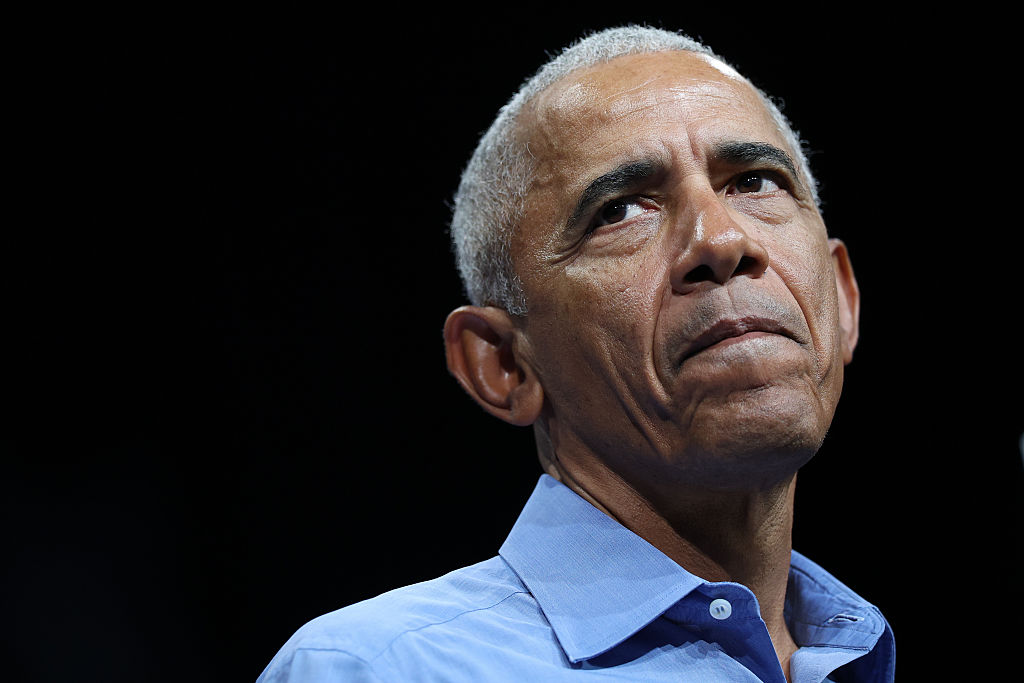
Then came the anomaly: Obama.
Obama didn’t just win because America evolved. He won because he threaded a needle Black candidates before him were never allowed to approach. He was brilliant and nonthreatening, Black yet reassuring, exceptional yet humble, historical yet nonaccusatory. He ran as a Black man who never frightened white voters about Blackness itself. In other words, America didn’t just elect a Black president. It elected the one version of a Black president it could psychologically process.
And once he left office, the country snapped back like a stretched rubber band.
The next generation proved it.
Cory Booker ran on empathy and urban policy — but voters treated his kindness as weakness. Deval Patrick entered the race late and was ignored, not because he lacked credentials, but because he lacked the novelty of being “the first.” Then came Kamala Harris — and America did what it always does to Black women in power: moved the goalposts while insisting they never existed.
Too ambitious.
Too cautious.
Too prosecutor.
Not prosecutor enough.
If America evolved in any way, it was the collective imagination’s reasoning as to why they just couldn’t bring themselves to vote Black. Chisholm was unelectable because she was a Black woman. Harris was scrutinized because she might be elected. Between those two points lies fifty years of progress measured not in acceptance but in tolerance thresholds.
So what Black presidents could we have had?
A Reconstruction America without racial terror might have produced one before the 20th century. A post-Civil Rights America without backlash might have elected Jackson in the 1980s, allowing the country to debate universal healthcare decades earlier. A post-Cold War America without coded racial politics might have taken Sharpton seriously as an economic populist instead of a caricature. He didn’t help matters by sporting a conk.
And an America that truly believed in meritocracy wouldn’t have needed Obama to be perfect to be viable — meaning Booker, Patrick, or Harris could run campaigns about governing instead of proving their humanity. The pattern is clear: Black candidates don’t lose solely on policy. They lose at the boundary where voters decide who looks presidential. Every era had a viable Black president. Every era had an electorate still negotiating with its own hierarchy of belonging.
Obama didn’t break the barrier alone. He slipped through a crack created by demographics, recession, and fatigue. The barrier remains and the crack, the same crack Obama slipped through, has been reinforced with steel.
America didn’t finally find a qualified Black president in 2008.
It finally, briefly, allowed itself to imagine one.
SEE ALSO:
What's Your Reaction?
 Like
0
Like
0
 Dislike
0
Dislike
0
 Love
0
Love
0
 Funny
0
Funny
0
 Angry
0
Angry
0
 Sad
0
Sad
0
 Wow
0
Wow
0