










Dallas man exonerated 70 years after his wrongful execution

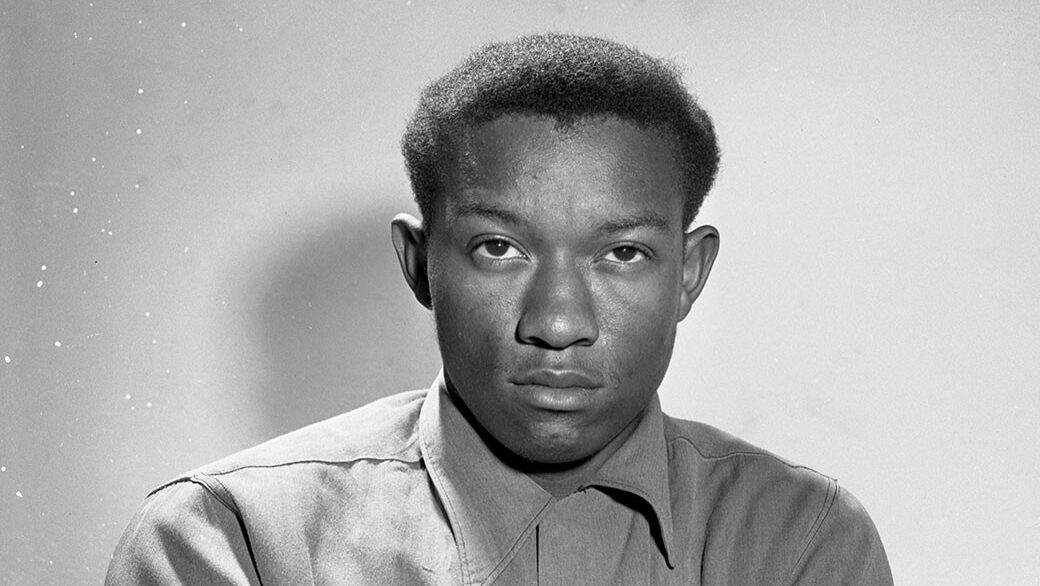
In 1956, Tommy Lee Walker was executed after being wrongfully accused of sexually assaulting and murdering a white woman in Dallas.
Seventy years after the state of Texas executed 21-year-old Tommy Lee Walker for a crime he did not commit, Dallas County has formally acknowledged what his family and community always knew: Walker was innocent. On Wednesday, county officials declared that Walker’s 1954 conviction and 1956 execution for the rape and murder of Venice Parker were “profound miscarriage[s] of justice,” per ABC News.
“Mr. Walker’s arrest, interrogation, prosecution and conviction were fundamentally compromised by false or unreliable evidence, coercive interrogation tactics, and racial bias,” the county’s resolution noted, as reported by the Death Penalty Information Center. “[Which represented] egregious violations of Mr. Walker’s constitutional rights.”
Walker was just 19 when he was arrested and charged in the 1953 killing of Parker, a 31-year-old white store clerk and mother who was raped and fatally stabbed while waiting at a bus stop near Dallas Love Field. Her death ignited racial panic in a segregated city already rife with rumors of a so-called “Negro Prowler.” According to the Innocence Project, hundreds of Black men were rounded up, detained, and interrogated without evidence. A police officer claimed Parker identified her attacker as a Black man, despite the fact that her throat had been slit and witnesses said she never spoke.
Walker was one of those swept up, despite the fact that at the time he was witnessing the birth of his only child, an alibi supported by 10 witnesses. He had no criminal record. Still, prosecutors pursued him aggressively, relying almost entirely on an alleged confession that Walker later recanted. As the court’s recent declaration stated: “The only direct evidence connecting Tommy Lee Walker to this offense is a confession obtained through the use of coercive tactics.”
An all-white jury convicted him. At sentencing, Walker said, “I feel that I have been tricked out of my life.” Before he was executed in the electric chair on May 12, 1956, he used his last words to continue proclaiming his innocence. Walker’s execution sparked grief and outrage in Dallas’ Black community that still lingers. After his death, Marion Butts, publisher of the Dallas Express, reportedly wrote, “Walker is dead, but he will forever live in the minds and conscience of those who have the ability to reason.” And more than 5,000 people attended his funeral.
The Dallas County Commissioners Court’s resolution acknowledges that Walker’s arrest, prosecution, conviction and execution were marred by prosecutorial misconduct, racial bias, and constitutional violations, calling the case “fundamentally compromised by false or unreliable evidence, coercive interrogation tactics, and racial bias.” His exoneration is the result of a years-long collaborative review led by the Dallas County District Attorney’s Conviction Integrity Unit, the Innocence Project, and Northeastern University School of Law’s Civil Rights and Restorative Justice Project. The review uncovered evidence that then–District Attorney Henry Wade systematically struck nonwhite jurors, withheld exculpatory evidence, and engaged in inflammatory conduct. Wade, who would go on to gain national prominence, even told jurors he wanted to “pull the switch” himself and later testified to his personal belief in Walker’s guilt on the witness stand.
For Walker’s son, Edward “Ted” Smith, the declaration brings a measure of peace as he carries the generational trauma of his father’s death.
“It was hard growing up without a father,” Smith said in a statement. “When I was in school, kids talked about their dads, and I had nothing to say. This won’t bring him back, but now the world knows what we always knew — that he was an innocent man. And that brings some peace.”
Smith, now 72, attended Wednesday’s hearing, where he met Joseph Parker, Venice Parker’s son, for the first time. The two men embraced. “I’m so sorry for your loss,” Smith reportedly told him. According to the office of Dallas County Criminal District Attorney John Creuzot, it was “a moment that transcended generations of pain” as Parker also affirmed Walker’s innocence, per ABC News.
“Acknowledging what we know to be truth — that false evidence, misconduct, and overt racism led to the execution of an innocent man — albeit 70 years later, is essential to the integrity of our legal system, the historical fabric of this country, and most importantly it is an acknowledgment of the unspeakable burden Mr. Smith and his family have carried for decades,” Chris Fabricant, one of Smith’s attorneys, expressed.
“Justice does not expire with time,” Cruezot concluded.
What's Your Reaction?
 Like
0
Like
0
 Dislike
0
Dislike
0
 Love
0
Love
0
 Funny
0
Funny
0
 Angry
0
Angry
0
 Sad
0
Sad
0
 Wow
0
Wow
0