![Of Course America Justified The Police Killing Of A Black Baby [Op-Ed]](https://newsone.com/wp-content/uploads/sites/22/2026/10/17925296479503.png?strip=all&quality=80&w=1970&crop=0,0,100,1332px#)














Why The Courtside Finger Pointing At A’ja Wilson Unearths A History Of Racism And Respectability Politics for Black Women



As Black women in America, we are constantly expected to possess an endless reservoir of grace and composure while absorbing disrespect and racism.
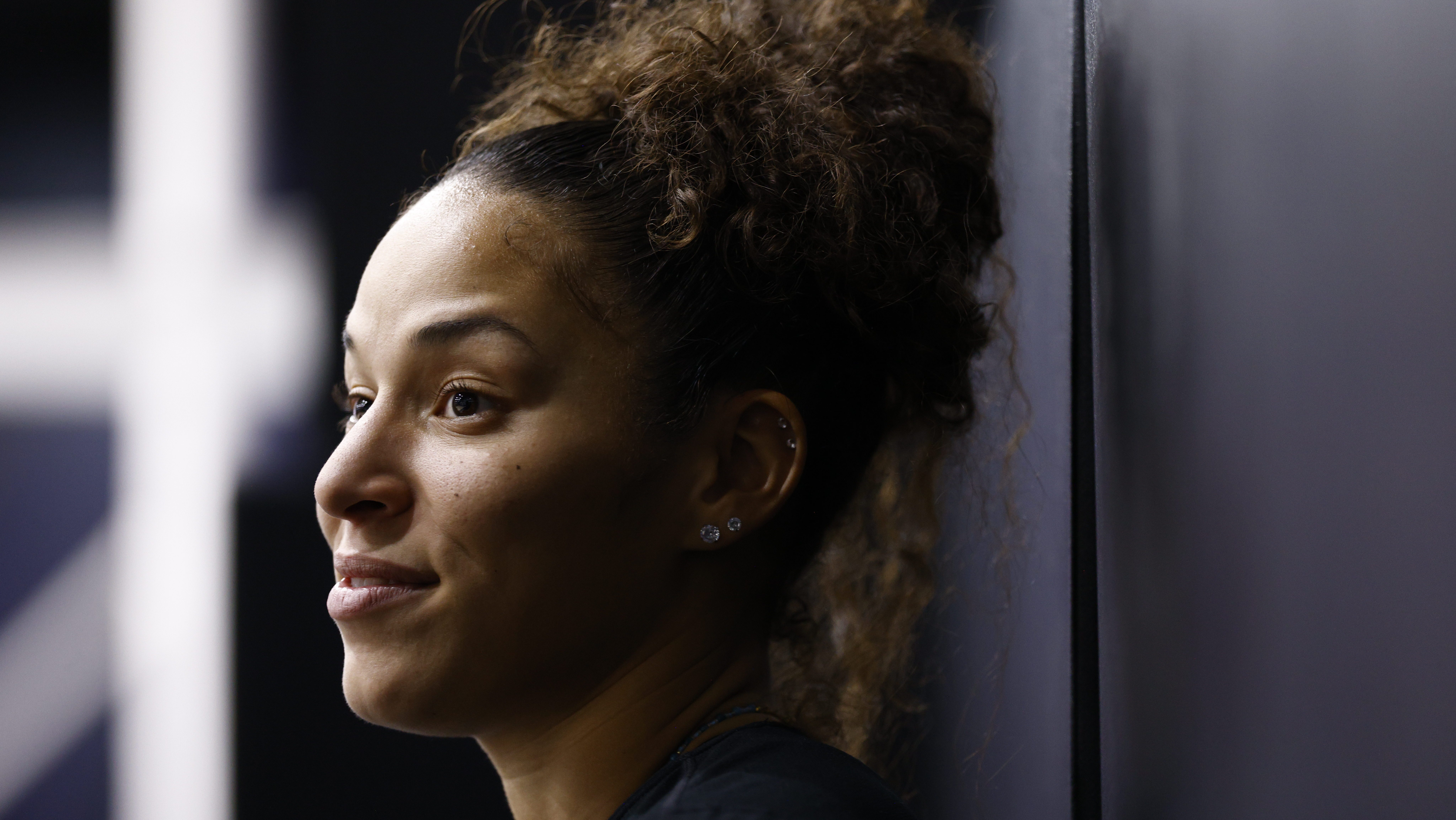
When a white male spectator aggressively pointed his finger at Las Vegas Aces star A’ja Wilson during a playoff match, a collective shockwave went through our community. Wilson promptly defended her space. Predictably, the officiating crew slapped her with a technical foul, and arena management temporarily removed the fan, then allowed him to return, saying he hadn’t violated any fan conduct rules.
During the postgame press conference, Wilson stood firm in her dignity, reinforcing that a man stepping toward her and pointing in her face is and always will be completely unacceptable. Her coach, Becky Hammon, understanding the gravity of the moment, noted that for a leader like Wilson to react with that level of intensity in an arena infamous for letting racial taunts from the sidelines go unchecked meant something had to be wrong.
The public response bypassed the fan’s visible hostility to focus squarely on policing Wilson’s reaction, revealing a total blind spot to the historical trauma fueling Wilson’s response.
For many Black women watching, the video triggered an immediate, deeply felt wound, reminding us of our own encounters with physical intimidation and the terrifying knowledge that a white aggressor can threaten our safety with complete immunity and without fear of consequence.
Wilson is a proud daughter of South Carolina, a region where racial power dynamics have long been maintained through physical displays and enforcement of white dominance and Black subjugation. Context matters, and race functions with a visceral physical intimacy in the American South.
In that landscape, an aggressive finger pointed by a white man toward a Black woman is more than just sports heckling. The aggressive posture carries the unmistakable lineage of white supremacy, mirroring the historical terror of civil rights protests and school integration, where angry white mobs leaned over barricades to thrust their fingers and shout at Black children innocently headed into school with one goal: to learn.
The gesture also belongs to the shared history of fire hoses and attack dogs acting as another tool to corner and injure Black people to enforce compliance and deter challenges to systemic racism. It carries with it baggage dating back to plantations, the Jim Crow era, and a long legacy of racial terror.
For Wilson, this history is personal and deeply rooted in her family’s South Carolina roots. Her father, Roscoe Wilson, Jr., was born in 1952 and grew up under the heavy, daily restrictions of a segregated Columbia, South Carolina. His parents played an active role in the Civil Rights Movement, pushing against an inherently racist system designed to demand Black submission.
Wilson’s father has recounted childhood memories of his mother taking him and his brother into a downtown five-and-dime store in the early 1960s, where they ordered at a lunch counter they would have been banned from just a few years earlier. The trio swallowed the icy silence of white workers who refused to greet them or extend basic pleasantries that should have come with ease to any customer.
Today, a massive bronze statue of Wilson stands on the campus of the University of South Carolina, a campus that restricted access to her maternal grandmother, Hattie Rakes. At the statue’s unveiling, Wilson pointed out the magnitude of this generational shift. “When she was a child, she couldn’t even walk on the grounds of the University of South Carolina. She would have to walk around the campus just to get to where she needed to go. If only she was here today to see that the same grounds she had to walk around now is the grounds that houses a statue of her granddaughter.”
Wilson’s statue stands in a capital city that kept the Confederate flag flying on its state house grounds until 2015, a little over a decade ago. A month before that Civil War-era banner was removed, white supremacist Dylann Roof opened fire at a church in neighboring Charleston, South Carolina. One of the nine people murdered was Democratic state Senator Clementa Pinckney, a pastor and leader Wilson’s father had known for many years.
Born in 1996, Wilson recounts in her memoir being in the 4th grade and planning to attend a sleepover at the house of a white classmate, only to be told that the girl’s father would force her to sleep outside because she was Black. That experience and others shaped her understanding of how insidious and pervasive racism can be.
In a 2024 interview, Wilson noted that her mother taught her to always be aware of her surroundings: “It doesn’t matter that you can dribble basketball well in that city. It’s just like, no, you’re still a Black woman in America, and you have to survive.”
Wilson was aware of her surroundings as the fan left his seat and approached a few short steps away from the court’s sideline. Confronting hostility, as Wilson did, is often frowned upon. We are taught, especially as Black women, to ignore disrespect, to rise above it, and never give in to anger.
We know that losing our cool even once comes with repercussions and the likelihood that we will be labeled angry Black women, completely shifting the focus away from holding the offenders accountable. This is quite simply the math of being a Black woman in America.
It comes as no surprise that many critics’ first response has been to accuse Wilson of losing her cool. The most disappointing development in the aftermath was watching multiple Black women commentators, including former WNBA star Chamique Holdsclaw, immediately join the chorus of respectability politics.
Instead of calling out the spectator or condemning the arena’s dismissal of his hostile behavior, Holdsclaw and other commentators lectured Wilson on the importance of maintaining composure. They claimed Wilson let herself get distracted, reducing a valid defense of her dignity and right to feel safe and protected in her workplace to an emotional breakdown over an impending playoff loss.
Attacking Wilson suggests that our primary job as Black women is to be unbreakable and entertain the public without demanding safety or respect that should have been given to us in the first place.
It remains deeply frustrating to see commentators like Holdsclaw weaponize these standards against another Black woman who was simply standing her ground in a racially hostile atmosphere.
Black women online surfaced a hypocrisy bubbling beneath the surface. They resurrected Holdsclaw’s buried history to challenge her lectures on decorum. In 2012, police arrested the former WNBA player after she tracked down her ex-girlfriend, smashed her car windows with a baseball bat, and fired a handgun straight into the vehicle while her former partner sat inside. It is jarring to watch a Black woman like Holdsclaw demand absolute respectability from another Black woman when her own record includes a six-count indictment and a guilty plea following a violent domestic assault.
It’s important to also surface a persistent double standard that continues to emerge as a part of the discourse around how Black women are policed in the WNBA compared to their white counterparts.
The intense scrutiny Wilson faced was nowhere to be seen when it came to Indiana Fever guard Caitlin Clark. Throughout the game, Clark repeatedly lost her composure, a pattern that has recurred throughout her career. She screamed at referees, made wild gestures of frustration, and threw visible tantrums on the court when a call didn’t go her way. After a teammate shoved Wilson following a play, Clark was seen ramping up the crowd’s energy.
Commentators praised Clark’s actions as competitive fire, intense passion, and a deep desire to win. Wilson, a three-time WNBA champion favored to be crowned the league’s MVP for a record-breaking fifth time, is held to a completely different standard of decorum, where defending herself against an aggressive spectator inching toward the sideline is treated as a character flaw. Wilson was handed a technical foul for unsportsmanlike conduct, while Clark was allowed to tell a ref that they “sucked ass” after receiving her sixth foul, with no repercussions.
The arena in Indiana has built a reputation for allowing a hostile environment where racial and homophobic taunts are directed at visiting athletes. When an organization refuses to eject a spectator who steps toward a Black player to intimidate her, they leave players unprotected.
By stepping to the boundary line, Wilson did what Black women have always been required to do when institutions continue to fail to protect us. She had to make a choice. Wilson chose to protect herself, and that choice is a declaration that when the systems built around us refuse to guarantee our safety, sometimes we have to secure it ourselves.
SEE ALSO:
Beyond The Myth Of The Unbreakable Black Woman [Op-Ed]
The WNBA Has An Obvious Choice For MVP In 2026: A’ja Wilson [Op-Ed]
What's Your Reaction?
 Like
0
Like
0
 Dislike
0
Dislike
0
 Love
0
Love
0
 Funny
0
Funny
0
 Angry
0
Angry
0
 Sad
0
Sad
0
 Wow
0
Wow
0


![The Lakers Look More Like The Country Club Than Showtime [Op-Ed]](https://newsone.com/wp-content/uploads/sites/22/2026/10/17924362130137.jpg?quality=80&strip=all&w=1024&crop=0,0,100,682px#)