![Trump Canceled The Execution Livestream, But The White Lynching Culture That Made It Thinkable Is Still Alive [Op-Ed]](https://newsone.com/wp-content/uploads/sites/22/2026/10/17921727345582.jpg?quality=80&strip=all&w=1024&crop=0,0,100,789px#)









Why Choosing A’ja Wilson As The WNBA Logo Should Be A No-Brainer

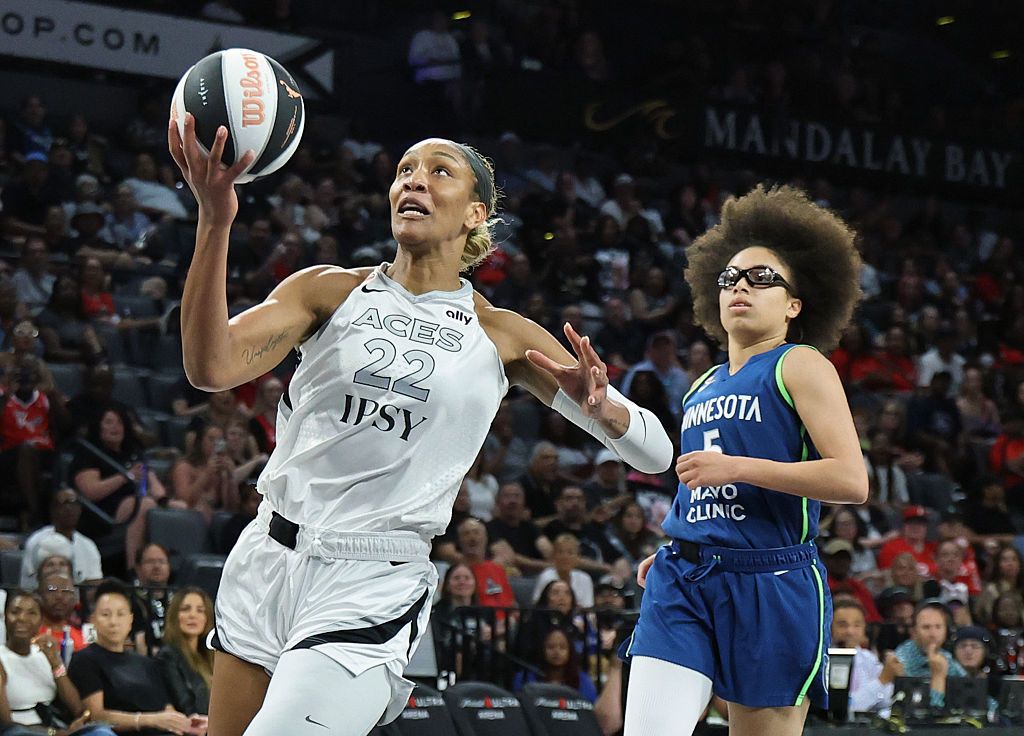
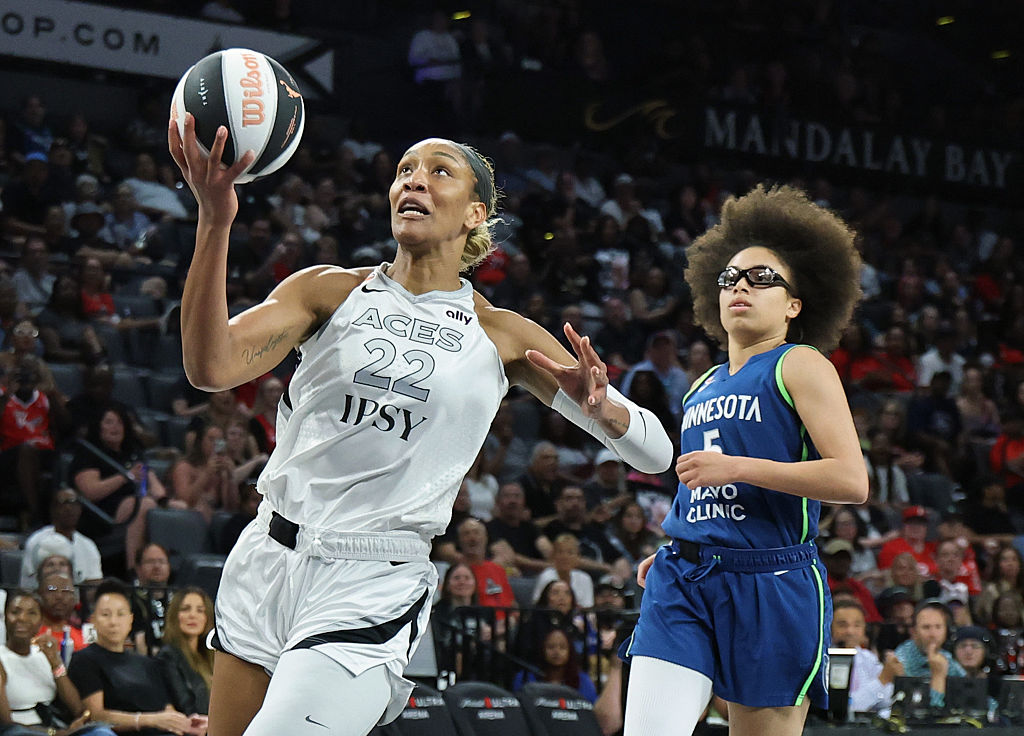
Thirty seasons in, the WNBA still has no face on its logo, and A’ja Wilson’s four MVPs, three championships, and a successful business empire make her the most obvious choice.
As the WNBA continues to celebrate its 30th season, the league looks almost unrecognizable from the one that tipped off for the first time last century. A landmark collective bargaining agreement has delivered the highest salaries in league history. Media deals with Amazon, NBC, and ESPN have brought the game to new audiences and on a scale unimaginable even half a decade ago.
Expansion teams are landing in parts of the country that have competed aggressively for the right to bring women’s basketball to their cities. By nearly every available measure, the league is entering a new renaissance.
The one area where the WNBA hasn’t quite kept pace with its own growth is its logo, which still features an anonymous silhouette.
A logo is a company’s clearest visual declaration of what it believes represents its identity, chosen around the figure or symbol that communicates those values without requiring explanation.
A woman without a name or a face increasingly feels like a placeholder from an era where the league itself was still figuring out its identity and finding its footing in a sports ecosystem that was fine to malign women’s basketball, if not ignore it altogether.
The WNBA now has an opportunity to replace the anonymous figure that served it well as it was building its voice with the silhouette of a player that represents the best of who it’s been and the clearest sign of who it’s becoming.
That player is A’ja Wilson.
She has become the answer the WNBA has been building toward for thirty seasons, the choice that makes every other name on the table look like a hedge.
Four MVP awards, more than any woman in WNBA history. Two-time Olympian. Three championships. Two Finals MVP honors. In 2025, Wilson won the MVP, the scoring title, a championship, Finals MVP and Defensive Player of the year all in the same season, a sweep no player in WNBA or NBA history had ever managed before her.
She holds the record for the most 30-point games in a single postseason, a mark she set, broke, and then reset again.
Then there is her natural form. At six foot four, Wilson moves with an ease that makes clear how dogged the work behind it has been; hours spent mastering footwork, approaching a shot from every angle, anticipating how she’ll be defended before the ball arrives in her hands.
She’s fluid through her cuts, graceful in the post, statuesque the moment she plants her feet and then again when she rises towards the basket.
In game 3 of the 2025 playoffs, with seconds winding down on the game clock, Wilson rose over Phoenix Mercury stars Alyssa Thomas and DeWanna Bonner, her body fully extended above both of them at the peak of the jump, for a shot that stopped time. It was a moment so geometrically perfect that it was easy to imagine, before the ball finished falling through the net, that a still image of that moment was sure to go viral.
That picture of Wilson clinching the victory for her team with that shot has become so iconic that if we were living in the nineties right now, a poster version would have ended up taped to bedroom walls all across America next to the iconic poster of Michael Jordan soaring towards the basket from the free throw line.
That iconic moment exemplifies all that makes Wilson’s game and form visually distinctive and a draw even to people who have never watched a WNBA game. It’s the exact response the WNBA’s logo should be eliciting at a glance.
It’s also the same instinct that produced the NBA’s logo in the first place: a designer recognizing one player’s defining image instead of inventing a generic one from scratch.
In 1969, Alan Siegel, after being handed the seemingly impossible task of designing the NBA’s logo, went digging through old issues of Sport magazine. He happened upon a picture of Lakers star Jerry West, mid-dribble. That picture was what he built the NBA logo around.
Decades later, fans and players still look at West and the logo that contains his silhouette as measures of greatness in men’s basketball. They invoke his name and the logo when they argue about who the greatest players of all time are.
The NBA had never formally introduced West as the inspiration for the logo. For decades, it was basketball’s worst-kept secret. Siegel later said the league wanted to institutionalize the mark instead of individualizing it. West himself called the whole thing flattering but embarrassing and said he wished they’d remove his silhouette.
The NBA has kept it.
The WNBA has an opportunity to choose differently, by openly naming someone who is already a bright beacon for a league segueing into its next chapter.
While other players might make a case for themselves, Wilson makes the case for the entire league. She’s the embodiment of one of one.
There is quite simply no one else in her stratosphere. There’s no other player in the W whose résumé, business reach, and cultural weight converge the way Wilson’s do, which leaves the league with a single name to choose for its logo.
Ask anyone who has played alongside Wilson and the same word comes up. Leader. Her coach, Becky Hammon, has said that Wilson wants everyone in their locker room to feel loved and cared for, and she puts in the work to make sure of it.
Decorating her teammates’ lockers for their birthdays. Every June, she shows up with an elaborate and humorous Pride cake for her LGBTQ teammates, a tradition that the entire team and the internet look forward to. Her teammates have openly said that wherever Wilson goes, they will always follow. She’s passionate on the court and oftentimes humble off of it, focused on identifying where she can be in service to her community.
I know. I know. I could spend forever and a day going on and on waxing poetic about Ms. Wilson as a player and as a person, but the W is also, and there’s no pretending otherwise, a business.
In that realm, Wilson has proven Jay-Z’s infamous line to be true: “I’m not a businessman, I’m a business, man.” She is one of the savviest and most marketable athletes-turned-businesswomen on the planet, and most of us Wilson fans have the receipts to prove it.
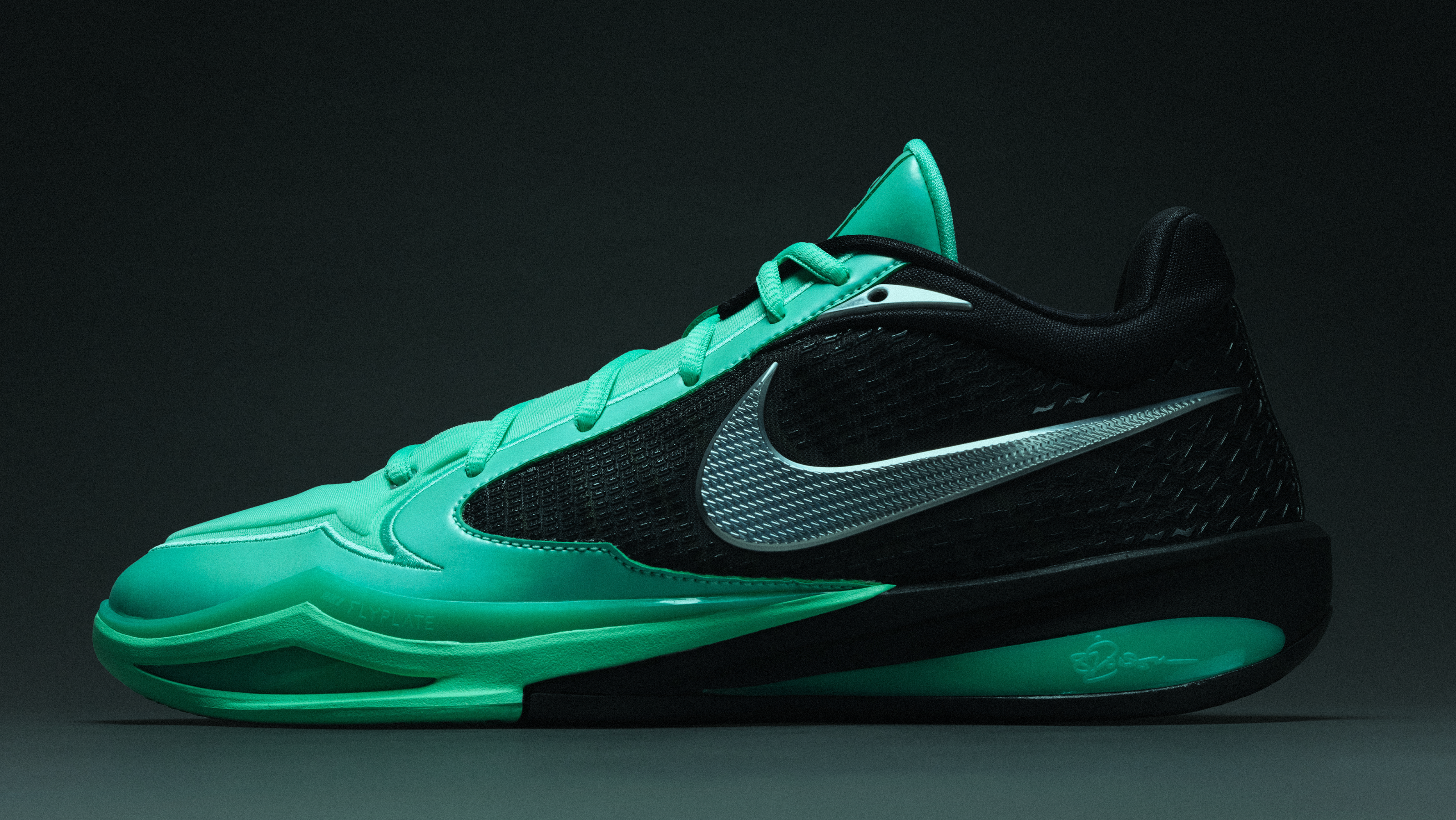
The A’One, her first signature sneaker with Nike, was touted as one of the most anticipated shoe lines in history and sold out in minutes when it dropped last year, making Wilson the first Black woman to headline a Nike signature shoe since Candace Parker a decade and a half earlier.
She has since debuted two versions of a Susie Carmichael player exclusive, an homage to the Rugrats character she loved growing up. Neither pair is available for purchase, which has not stopped me from checking Nike’s website each time she wears them in a game, just in case she’s changed her mind.
Burnt Wax, the candle company Wilson launched with her mother, Eva, in 2021, sold out within hours of its debut. Each unique scent carries the name of one of her accomplishments: National Champion, All-Star, MVP.
While most celebrities write memoirs hoping their readers, especially the younger ones, might glean something from their story, Wilson pointed hers directly to the audience she meant it for. “Dear Black Girls: How to be True to You” traces the WNBA star’s path as a daughter of the South who came to love basketball relatively late in her youth, and who was shaped by her late grandmother Hattie, whose presence in her life still anchors how she navigates and understands herself and the world.
Wilson also writes with real candor about her struggles with dyslexia, and the crippling anxiety and, at times, debilitating depression that took hold of her during the isolation of the WNBA’s pandemic bubble. She shares her journey in therapy and how she’s navigated grief, leading readers through both with refreshing vulnerability. It’s no surprise the book became a NY Times bestseller.
Cereal maker General Mills, understanding the power of her brand and how everything the WNBA star touches on or off the court turns to gold, announced this week that Wilson has become the newest athlete to appear on the cover of its Wheaties box, the most coveted real estate a brand could offer an athlete, joining an exclusive list of basketball players that includes Michael Jordan and Steph Curry.
Generations of kids have grown up pouring the contents of that orange box into a bowl, believing that eating their Wheaties every morning could make them a champion, too. Wilson now gets to represent that promise for a new generation of young athletes.
Imagine with me for a moment, if a similar promise could also be delivered with Wilson in WNBA logo form.
Having her as the logo of the WNBA would give young people everywhere a more accessible reminder. They would be able to carry Wilson with them everywhere they went.
A young athlete spending hours shooting hoops in their driveway, putting up shot after shot, would look down at the basketball in their hands and see Wilson’s silhouette staring back, a reminder that if they keep practicing, they could rise up the way she rose up over Alyssa Thomas and DeWanna Bonner to sink a game winning shot in a high stakes game.
Seeing her silhouette emblazoned on their favorite WNBA sweatshirt would remind them that they could find their way through self-doubt, anxiety, and grief and come out on the other side still standing, soft in some ways, strong in others, but entirely whole.
And, they might even be inspired to throw on a string of pearls over their Aces cap that dangles gently over that prized WNBA sweatshirt as a reminder of what Wilson’s grandmother Hattie used to say about pretty girls always wearing pearls.
Spotting Wilson herself warming up courtside before a game sporting warm up clothes stitched with her own silhouette would remind them that she built a business empire because of her hard work and talent, brick by brick, and that there is no ceiling on what they could build, too.
For the WNBA this should be a no-brainer. All of who A’ja Wilson has become and represents, pressed into the league’s logo that’s small enough to fit on a basketball but big enough to hold everything she’s built and survived, would be the most powerful way to show the next generation of young girls watching the W exactly what they could become.
SEE ALSO:
Angel Reese, Izzy Harrison, And A League That Won’t Protect Its Stars
The Unraveling: How Reality Caught Up With The Cult Of Caitlin Clark
What's Your Reaction?
 Like
0
Like
0
 Dislike
0
Dislike
0
 Love
0
Love
0
 Funny
0
Funny
0
 Angry
0
Angry
0
 Sad
0
Sad
0
 Wow
0
Wow
0