










Who Was Barbara Rose Johns? Teen Activist Whose Statue Replaced Robert E. Lee At U.S. Capitol



On Dec. 16, a statue honoring Barbara Rose Johns—a Black teenager whose courage reshaped American education—was unveiled in the U.S. Capitol. In 1951, Johns led a student walkout at her segregated Virginia high school, a bold act that helped dismantle school segregation nationwide. The unveiling marked a powerful shift in historical memory: her statue replaced that of Confederate Army General Robert E. Lee.
According to NPR, Johns’ bronze statue now stands in Emancipation Hall, a central gathering space in the U.S. Capitol Visitor Center that houses statues representing each of the 50 states. Her presence there elevates the legacy of a young civil rights leader whose impact far exceeded her years.
Who Was Barbara Rose Johns?
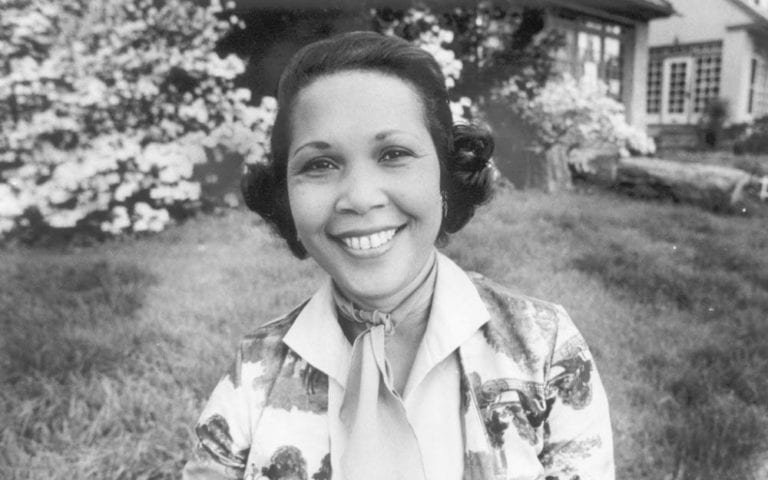
Barbara Rose Johns was just 16 years old when she organized hundreds of students to walk out of Robert Russa Moton High School in Farmville, Virginia. The strike protested overcrowded classrooms and crumbling facilities, conditions starkly inferior to those of the town’s white high school. What began as a student-led protest soon became a catalyst for national change. The NAACP took up the students’ cause, and the case ultimately became one of five consolidated into Brown v. Board of Education. In 1954, the Supreme Court ruled that racial segregation in public schools was unconstitutional.
According to Women’s History, Barbara Rose Johns was born on March 6, 1935, in New York City. Her parents were among the many African Americans who migrated north during the Great Depression as part of the Great Migration in search of opportunity. When economic stability remained elusive, the family returned to Prince Edward County, Virginia, where they had deep roots.
Despite those roots, Johns and her family faced persistent racism. As a student in Prince Edward County’s segregated school system, she witnessed profound inequality firsthand. White students attended solid brick schools with modern facilities, while Black students were relegated to buildings made of tar paper, lacking heat and indoor plumbing. In winter, classrooms were so cold that teachers sometimes held lessons on school buses. Textbooks were discarded hand-me-downs from white schools, and science labs were inadequate or nonexistent.
These conditions were especially dire at Robert Russa Moton High School, where she attended. Repeated complaints from Black families were ignored by the Prince Edward County School Board, deepening frustration throughout the community.
That frustration reached a turning point in the spring of 1951. Determined to act, Johns organized her classmates and carefully planned a strike. On April 23, 1951, she persuaded teachers to send students to the auditorium, where she urged them to walk out and refuse to return until officials agreed to build a new school. Most students joined the strike, and even after a discouraging meeting with Superintendent Thomas J. McIlwaine, they remained united.
Reflecting later on that pivotal moment, Johns explained, according to the Moton Museum:
“It was time that Negroes were treated equally with whites, time that they had a decent school, time for the students themselves to do something about it. There wasn’t any fear. I just thought — this is your moment. Seize it!”
She went on to describe how the strike came together:
“The plan I felt was divinely inspired because I hadn’t been able to think of anything until then. The plan was to assemble together the student council members…. From this, we would formulate plans to go on strike. We would make signs, and I would give a speech stating our dissatisfaction and we would march out [of] the school and people would hear us and see us and understand our difficulty and would sympathize with our plight and would grant us our new school building and our teachers would be proud, and the students would learn more and it would be grand….”
Her strike helped put Brown V. Board of Education in motion.
When Superintendent McIlwaine demanded students return to class, Johns and fellow organizer Carrie Stokes took another decisive step. They wrote to Hill, Martin & Robinson, a Richmond-based law firm affiliated with the NAACP. Attorneys Oliver Hill and Spottswood Robinson met with the students and were impressed by their determination. They agreed to represent the case on the condition that parents would support a direct challenge to segregation itself—not just unequal facilities.
That strategic decision transformed the movement. On May 23, 1951, Robinson filed Davis v. County School Board of Prince Edward County, setting in motion a legal battle that would become part of Brown v. Board of Education. The cost of courage was high. After the lawsuit was filed, students and families faced retaliation, threats, and violence. For her safety, Johns’ parents sent her to Montgomery, Alabama, to live with her uncle, Reverend Vernon Johns, while she completed her senior year of high school. But four years later, Johns’ effort would prove victorious after the Supreme Court ruling.
Johns later attended Spelman College in Atlanta, where she met William Holland Rowland Powell. Despite a significant age difference and her parents’ concerns, the two married and moved to Philadelphia, where Powell joined the ministry. Johns raised five children and worked for two decades as a school librarian in the Philadelphia public school system. In 1979, she earned her bachelor’s degree from Drexel University.
Barbara Rose Johns died on Sept. 25, 1991, from bone cancer. Throughout her life, she rarely spoke about the strike that helped change the nation. Yet her legacy endured. She has since been honored with monuments, school dedications, and the annual Barbara Rose Johns Day in Virginia, which honors the historic contributions of the iconic civil rights leader.
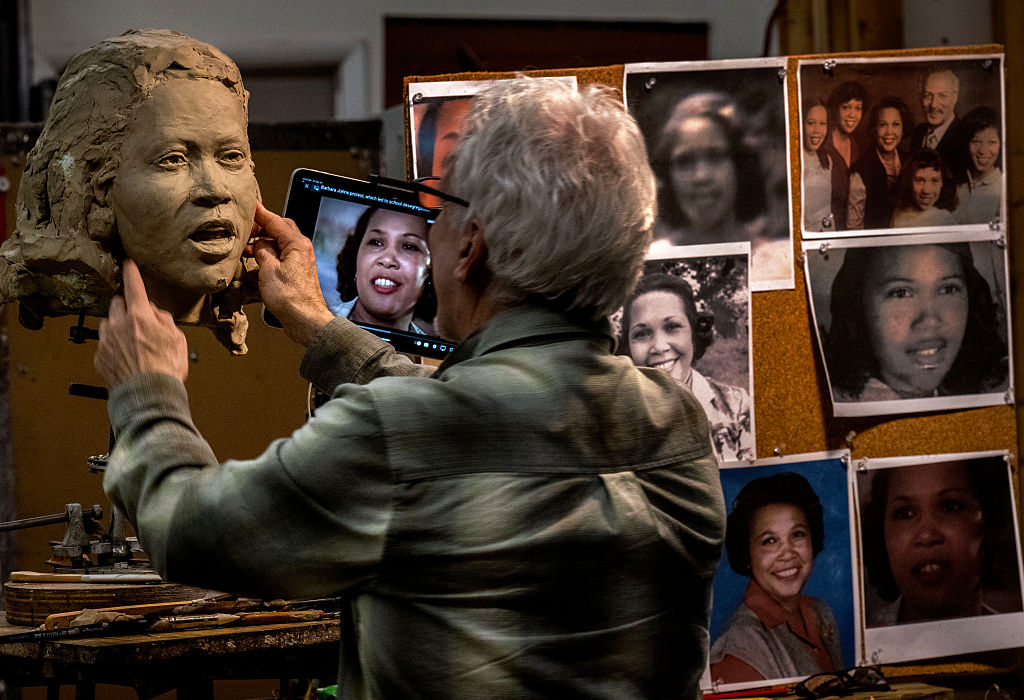
Johns’ monumental statue, created by sculptor Steven Weitzman, comes almost five years after then-Virginia governor Ralph Northam, a Democrat, requested that Robert E. Lee’s statue be removed in December 2020. That same month, Virginia’s Commission on Historical Statues in the United States Capitol voted unanimously to replace Lee’s statue with one honoring the Johns.
SEE MORE:
Robert Smalls Is 1st Black Person With Statue At SC State Capitol
Confederate Group Sues Georgia Over Changes To Stone Mountain Confederate Monument
What's Your Reaction?
 Like
0
Like
0
 Dislike
0
Dislike
0
 Love
0
Love
0
 Funny
0
Funny
0
 Angry
0
Angry
0
 Sad
0
Sad
0
 Wow
0
Wow
0