







When It Comes To Calling Out ICE, We Should All Be Like Philadelphia Sheriff Rochelle Bilal


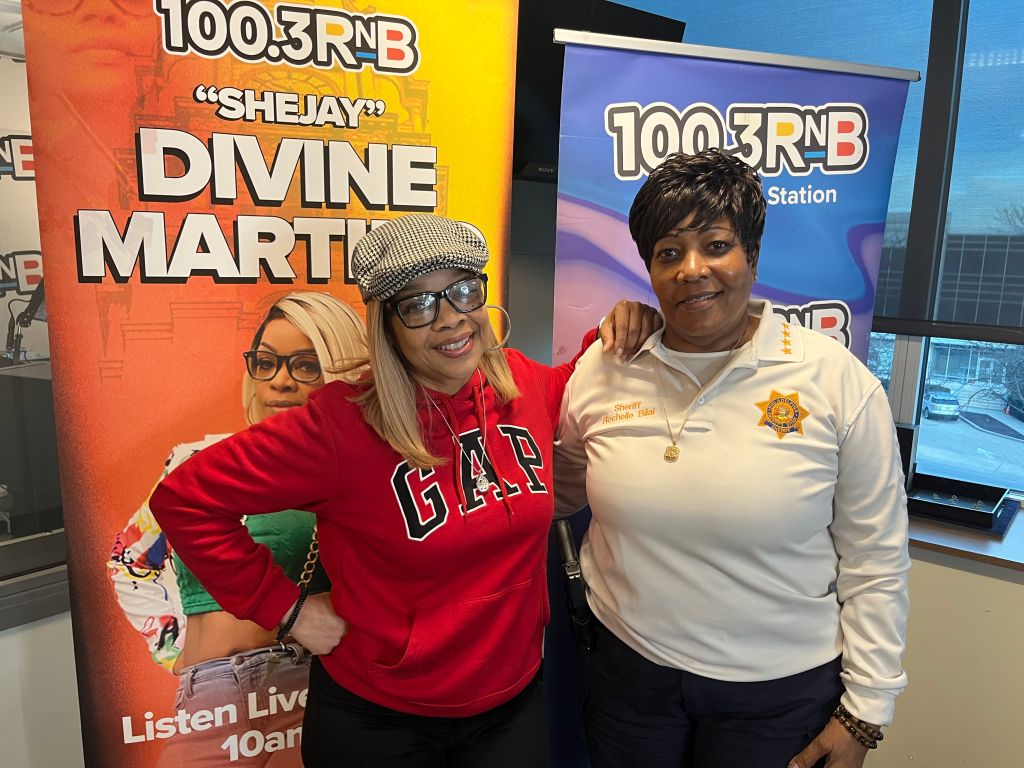
Philadelphia Sheriff Rochelle Bilal decided to give ICE (the flying monkey division of the Wicked Witch of the White House) a dose of reality when she warned the reckless masked militia, “You don’t want this smoke.”
Straight like that.
Sheriff Bilal didn’t mince her words or cower before an administration that rewards cowering; she just stated, in her most full-throated voice, that Immigration and Customs Enforcement is not the law. It was a truth bomb dropped in street vernacular, and it’s about time someone decided to stop speaking the language of passivity.
ICE hasn’t been playing fair since President Trump took office for the second time. They’ve been deployed in largely Black and brown cities and have wreaked havoc since their arrival, which was as subtle as fireworks at a funeral procession.
Backed by the federal government and emboldened by the Ku Klux Klan before them, ICE has confused “immigration enforcement” with armed intimidation and rolled into towns expecting cooperation, deference, and compliance. In Philly, they have run into a sheriff who understands the limits of their authority and the language of the people she serves.
Sheriff Bilal isn’t bending the knee. She’s not hedging. She’s not speaking in hollow focus-grouped jargon of press releases and task forces. She spoke plainly. She spoke culturally. And she spoke with the confidence of someone who, most importantly, is down to scrap for the people she serves.
That matters.
Because one of the biggest cons ICE has ever pulled is trying to convince those they terrorize that they are just a different arm of local law enforcement. They’re not. They don’t answer to city voters. They don’t patrol neighborhoods with an obligation to the people they serve. They are weaponized henchmen for a racist regime that looks to destabilize families, and then fall back into the shadows as some nameless, faceless group of thugs. Know who else moved like this? The Klan.
When local officials don’t boldly state that they don’t support ICE in their city, they allow them to cosplay as police without any accountability. But Sheriff Bilal clocked that and put them on notice, saying essentially, not in my city.
And Sheriff Bilal didn’t say it in bureaucratese. She said it in hip-hop language—the language of warning, not invitation. “You don’t want this smoke” isn’t a threat; it’s a boundary. It’s what you say to someone when they are testing limits they don’t understand. It’s community language, the kind that doesn’t need a memo to explain itself. Everyone knows what it means. ICE knew what it meant, too.
And you know the critics don’t like this. A powerful Black woman telling a white supremacist regime that they don’t want the smoke is the kind of bravery that Nat Turner dreamed of. But the snowflakes just can’t stop snowflaking. They’ve taken to the sheriff’s website and left messages that referred to Bilal as a “DEI” hire and a “disgrace to the uniform.”
Bilal made it unmistakably clear that Philadelphia’s sheriff’s office isn’t a subcontractor for federal overreach. She reminded ICE that they don’t automatically get cooperation just because they show up with jackets and acronyms.
And Bilal’s language is important here because it serves as a reminder that she is, in fact, one of the people she’s serving and not in a campaign-bio way, but actually fluent in the culture of the city where she lives.
Hip-hop has always been a language of governance from the ground up—rules, warnings, accountability, and truth-telling when official channels fail. Bilal speaking the parlance of the people is a signal to Philadelphians that she understands the stakes. She knows who gets hurt when ICE runs wild. She knows whose doors get knocked on at dawn.
Just compare it to the oppressor’s staunch language, the passive voice, and plausible deniability. “An operation was conducted.” “Individuals were detained.” “Protocols were followed.” No accountability. No humanity. Just the cold syntax of an agency that operates in the shadows.
What Bilal and other officials like her have shown is that local resistance works. When governors, mayors, sheriffs, DAs, and city officials refuse to participate in ICE’s power grab, ICE’s power shrinks dramatically. They rely on local jails, local intelligence, and local compliance. This is why Bilal didn’t ask for permission to protect her city.
There is also a larger political message here that is just as important: respectability politics is dead. There is still a faction of upper-crust Black folks who believe professionalism is always the answer. Well, power doesn’t listen to politeness. It responds to clarity. And Bilal was clear. She didn’t just speak to ICE; she also spoke to the people who have to deal with what they know ICE brings.
ICE doesn’t want the smoke, because smoke implies friction, visibility, and purification — three things heavily armed, masked men, in blacked-out cars want no part of. In case ICE wasn’t clear, Sheriff Rochelle Bilal has set the boundary, which will look like violence to a boundaryless group that operates with impunity.
And that’s the part that really rattles them. When someone finally says no—out loud, in the people’s language—it exposes how flimsy ICE’s authority actually is. Sheriff Rochelle Bilal didn’t just warn them they don’t want this smoke; she reminded them that in Philadelphia, the people still run the block.
SEE ALSO:
An Off-Duty ICE Agent Killed A Black Man In Los Angeles
ICE Is The Real Criminal Threat, Not Undocumented Immigrants
What's Your Reaction?
 Like
0
Like
0
 Dislike
0
Dislike
0
 Love
0
Love
0
 Funny
0
Funny
0
 Angry
0
Angry
0
 Sad
0
Sad
0
 Wow
0
Wow
0