





Separating Shawn Carter The Businessman From Jay-Z The Business, Man



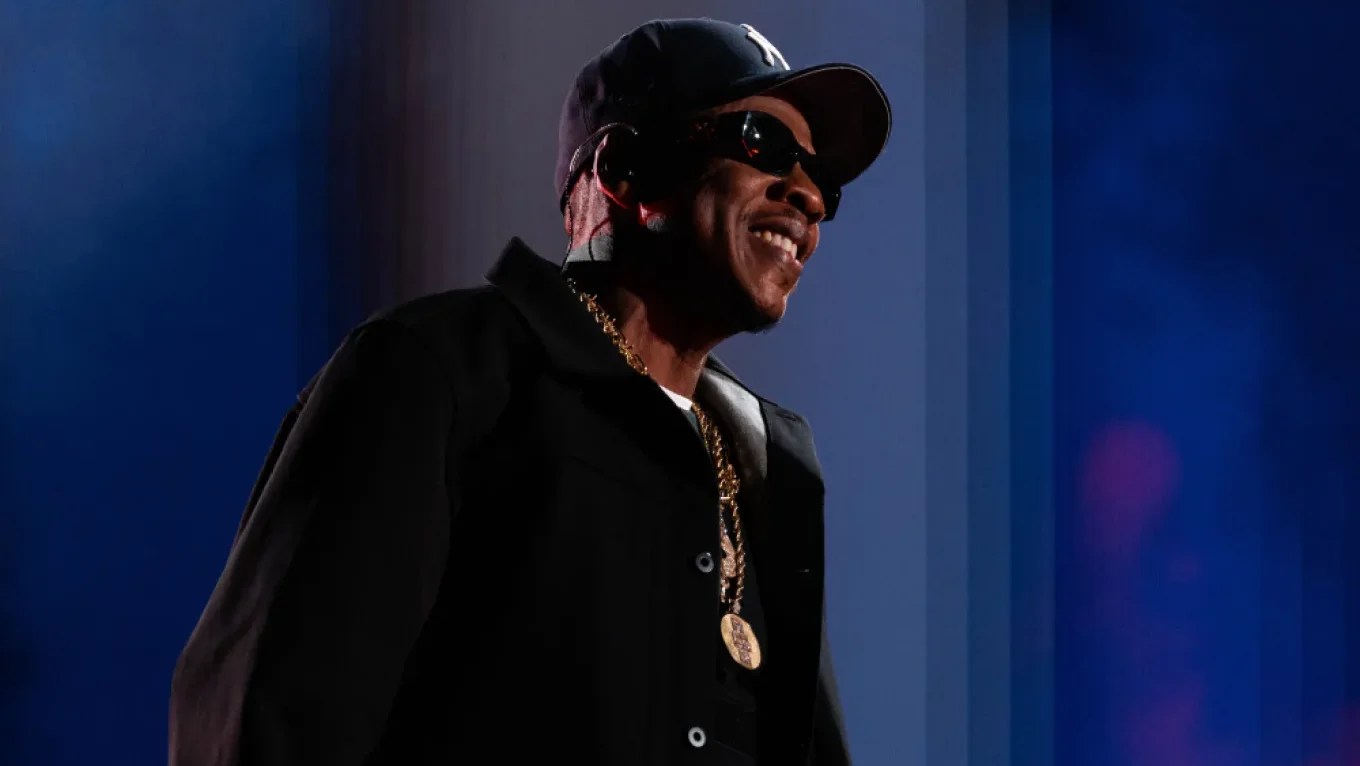
After years of helping the NFL select its halftime performers through his Roc Nation partnership, which was conveniently created during the time of former quarterback Colin Kaepernick’s kneeling protest in support of the movement for Black lives, Jay-Z has finally decided the biggest stage in American sports needs what it has apparently been missing all along: more Jay-Z.
The man who helped pick the headliners has picked himself. That is certainly one way to celebrate 30 years in the business. It is also one hell of a way to confuse running the show with needing to be the show.
I am tired, y’all.
Because Jay-Z is forcing himself on us. He is everywhere. He is doing concerts, sitting down with Rick Rubin for an eight-part HBO documentary about his own genius, and now he’s decided the best person to headline the Super Bowl halftime show is … Jay-Z.
It’s like watching Narcissus whisper “You’re the real Fly God!” into a mirror.
It’s exhausting. We get it.
There was a time when Jay-Z represented one of hip-hop’s great American stories: the former hustler who turned street smarts into an empire, escaped the circumstances that shaped him, and proved that a Black kid from Brooklyn could conquer rooms never built for him. His rise was extraordinary. His music helped define generations. His business instincts were legendary.
But somewhere along the way, the hustle became the whole point. The man who once rapped about getting rich now seems determined to convince us that his getting richer is itself a form of Black liberation.
And that is where Jay-Z loses me.
Because there is a difference between a Black man succeeding in a capitalist system and a Black man convincing everybody that his success is synonymous with Black progress. Jay-Z has spent years blurring that line until it is practically invisible. He is the Jared Kushner of hip-hop: a businessman whose proximity to power is presented as a victory for the people who helped make him powerful, even when those benefits are hard to identify.
Remember the NFL deal?
In 2019, Jay-Z’s Roc Nation partnered with the league to help produce entertainment and work on social justice initiatives. The arrangement arrived while Colin Kaepernick remained unsigned after protesting police brutality and racial injustice. Everyone, including Kaepernick’s supporters and former teammate Eric Reid, argued that Jay-Z was helping the NFL rehabilitate its image without demanding meaningful accountability for how it treated the quarterback who started the protest movement.
In short, the man who once shunned selling out had, in fact, sold out.
Jay-Z defended the partnership as the next phase of the struggle. He said it was time to move from protest to action. Fine. But action for whom? The only one that seemed to benefit from his partnership with the NFL was Jay Z.
Kaepernick later said the deal was disappointing and accused Jay-Z’s organization of undermining the protest. Jay-Z’s defenders could point to the opportunities Roc Nation created for artists and its social justice work. But the uncomfortable question never went away: What happens when the movement becomes a business opportunity for the person claiming to represent it?
Now Jay-Z is headlining the very Super Bowl show he has helped shape for years.
There is nothing inherently wrong with a veteran artist performing at the height of his career. Jay-Z has the hits, the catalog, and the cultural stature. But when you have a hand in choosing the performer and then choose yourself, the symbolism practically writes its own punchline.
The man who once told us to get our own money has apparently decided that the best way to help hip-hop is to make sure he gets another check.
And then there is Tidal, the streaming service Jay-Z acquired in 2015 with a roster of artist-owners and a promise that musicians deserved better. Tidal was supposed to be different from the tech companies treating music as an endless buffet while artists fought over the crumbs. It marketed itself as an artist-first alternative, emphasizing better compensation and giving musicians a stake in the platform.
That was an appealing idea. It was also a business.
In 2021, Square, now known as Block, agreed to pay $297 million in cash and stock for a majority stake in Tidal. Jay-Z joined the company’s board. The artist-first platform had become an asset in a deal with a financial technology company.
And what became of the promise to pay artists differently? Tidal later introduced a direct-payment experiment that sent part of certain subscribers’ fees to their most-streamed artist. In 2023, the company ended that program, acknowledging that it disproportionately benefited top artists and left less room for emerging musicians. It redirected the funds to its emerging-artist initiative.
To be clear, Tidal did not single-handedly make musicians lose their streaming royalties. But the episode illustrates the problem with framing a complicated, industry-wide issue as something a billionaire’s business can solve. The grand promise was artist empowerment. The reality was another experiment inside a commercial platform, one that eventually had to be changed because it was not delivering the intended results.
Jay-Z had already made his money from the sale. The revolution, meanwhile, remained a work in progress. That is the Jay-Z formula: package capitalism in the language of liberation, then ask us to celebrate the deal as if the deal itself were the victory.
Which brings us to JAŸ-Z IN 8, his HBO series with Rick Rubin, in which the two spend eight episodes revisiting the rapper’s lyrics, influences, and creative process.
There is nothing wrong with an artist reflecting on his work. If the plan is to reshape the narrative that the rapper is a genius, then I think we could’ve gotten there on our own. This feels like Donald Trump campaigning for the Nobel Peace Prize.
But the timing makes the whole thing feel like an extended corporate victory lap. We have the anniversary concerts, the documentary, the Super Bowl announcement. Jay-Z is not merely celebrating his legacy; he is everywhere, narrating it, curating it, and selling it back to us. Even his introspection arrives as premium content.
How many different ways must we be reminded that Jay-Z is Jay-Z?
The man who once made hustling sound like a survival strategy now has the resources to turn his own mythology into an entire entertainment vertical. He is the subject, the executive producer, and the beneficiary. It is self-mythology with a distribution deal.
And that might be fine if Jay-Z simply wanted to be a billionaire. There is no law requiring a rich rapper to become a revolutionary. He can sell champagne, invest in companies, buy art, sit on corporate boards and count his money until the end of time. He does not owe us poverty or perpetual protest.
But he cannot keep presenting his proximity to corporate power as a victory for Black people and then act surprised when people ask what Black people actually gained. That is the conundrum of Jay-Z Inc. He has every right to build an empire, and we have every right to question why his empire keeps being marketed as our liberation.
I once admired the story of a hustler who made it out. Now I am watching a billionaire who seems determined to make sure nobody forgets that he made it — even if the rest of us are expected to confuse his personal elevation with collective progress.
Maybe we should have listened more closely when he told us, “I’m not a businessman, I’m a business, man.”
He was telling us exactly who he was.
And I hate everything about Jay-Z Inc.
SEE ALSO:
James Dolan Is The Thin-Skinned Donald Trump Of Sports Owners
Killer Mike: The Capitalist Spook Who Sat By The Black Door
What's Your Reaction?
 Like
0
 Dislike
0
 Love
0
 Funny
0
 Angry
0
 Sad
0
 Wow
0