







Muhammad Ali never stopped regretting losing Malcolm X

By God, they did it.
The Greatest pulled off the impossible.
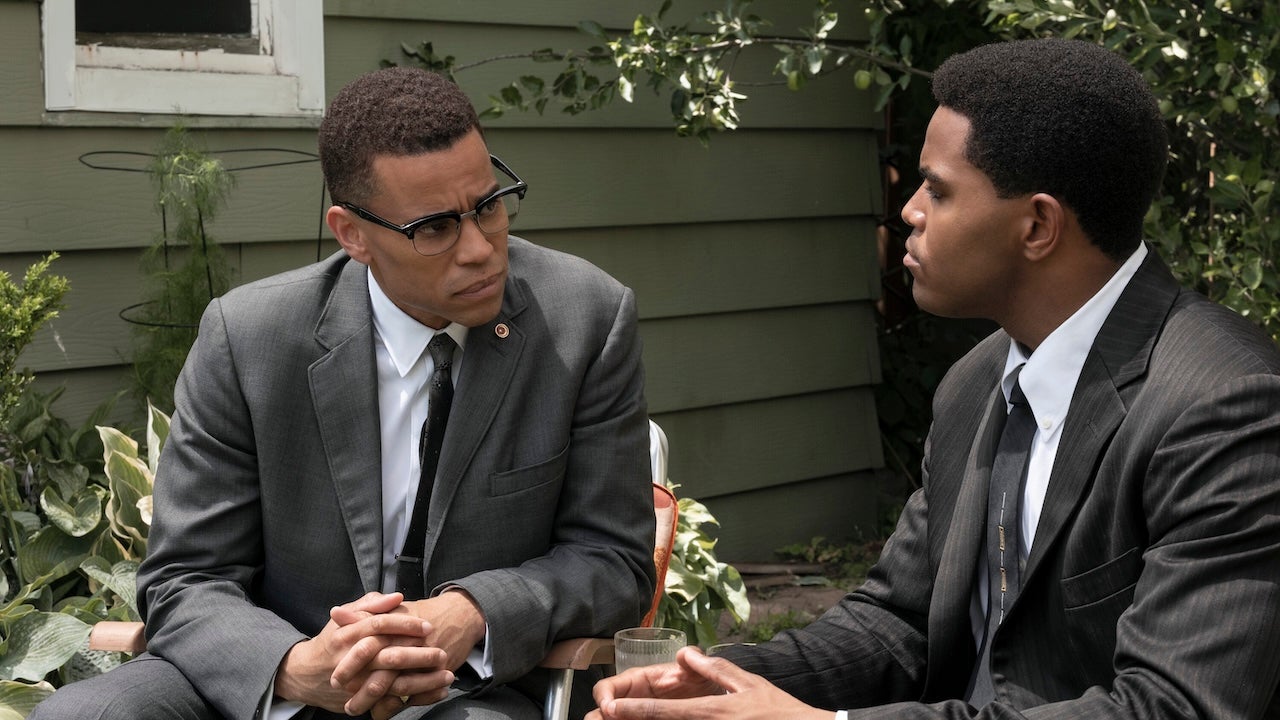
The Prime Video series finds a searingly new way to tell the story of Cassius Clay (later Muhammad Ali), a subject that has long felt peeled to the core. Over eight episodes, the friendship between a young Clay and civil rights icon Malcolm X comes to life. While not the main storyline, it is irreplaceable — a brief mentorship-turned-brotherhood whose abrupt end haunted Ali until the end of his life a decade ago. Smartly, that rupture doesn’t materialize on screen in The Greatest. Instead, the series lays the groundwork for a spiritual awakening brewing in Clay since the 1955 slaying of Emmett Till.
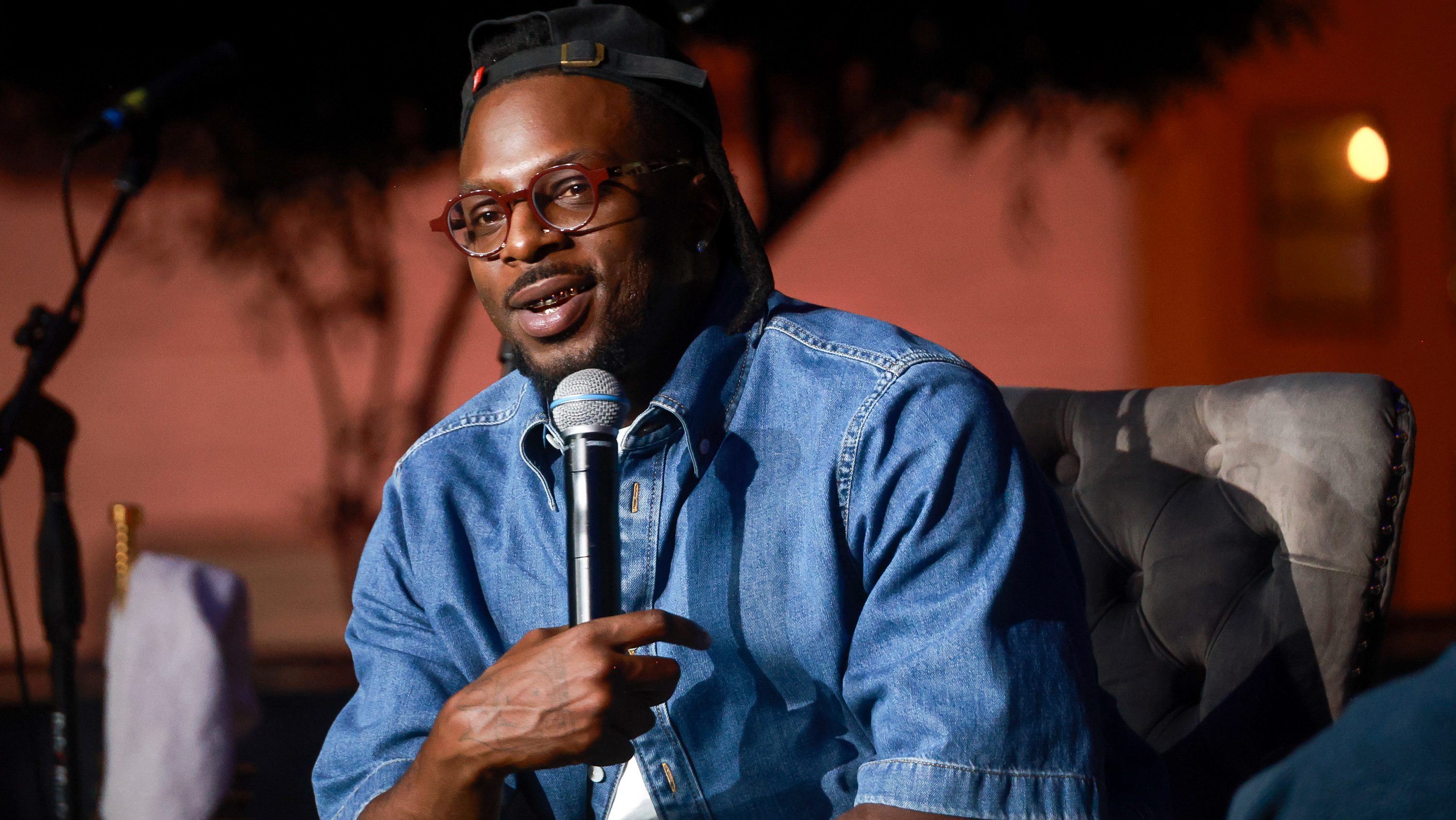
A conversation with Jaalen Best (who portrays Cassius Clay) and Michael Ealy (Malcolm X) reveals actors who deeply understood the weight of their connection. During the press tour for The Greatest, Ealy shared that he and Best avoided meeting until they shot their first scene together. The intention was clear: to mirror the initial encounter between Cassius and Malcolm. Both Best and Ealy deliver standout performances in a series packed with them.
But it’s this bond in particular — one Ealy and Best understood ultimately fractured — that drives the series home.
“In so many ways, Malcolm was always the adult in the room,” Ealy said. “He fully understood the pressure [Cassius Clay and later] Muhammad Ali was under, and perhaps knew [their falling out] might not be personal.”
Best and Ealy knew what happened — even if the series itself wouldn’t examine it in its first season. That was part of the gig’s cruelty. They had to foster the brotherhood in pure warmth, knowing damn well the coldness that lay on the horizon. And the regret that would stick with the man who “shook up the world” many times over. How exactly do you love your brother on camera, knowing one day it’s all going to crumble?
Simply put, both men refused to carry it into their characters.
“I had to put it down,” Ealy said. “There’s no version of me that wanted to carry the future into the present.”
He had to love and guide Cassius Clay in real time, because the real Malcolm X was unguarded then. Malcolm had no clue what wall he was walking toward. Clay, who officially became Muhammad Ali in early 1964, had no clue how long it would take to tear that wall down long after losing a friend.
“Naturally, you look to the future,” Best said. “But it’s more present sense. ‘I need you, Malcolm, to help me to navigate this world right now.’”
John Peodincuk/NY Daily News Archive via Getty Images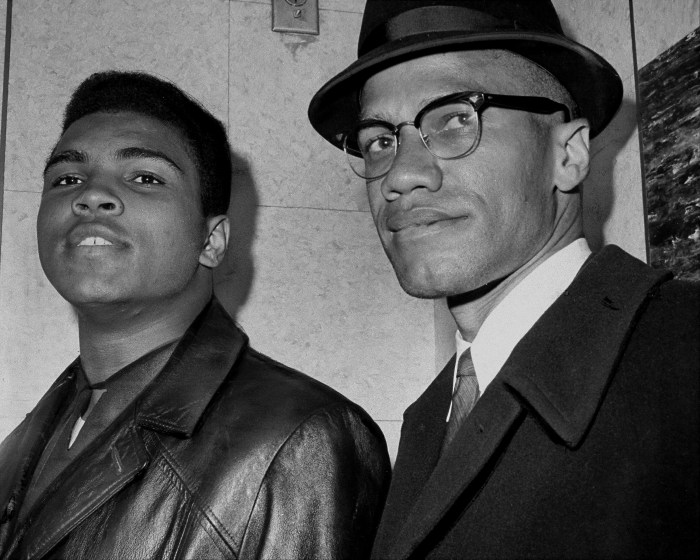
If the series goes into production in future seasons, there is plenty of time to flesh out the nuances and complexities. Ealy protects the future from itself, while Best looks ahead at the heartbreak yet to come and chooses to live in the moment. They weren’t there to play the ending. They were there to build the framework for why the ending is traumatic in its own right.
Their story is no secret, yet no less thrilling. On one hand, there’s a fierce human rights leader whose influence came from speeches on Harlem blocks, holding a mirror to American bigotry in unapologetic fashion before “unapologetic” became a buzzword. On the other is a charismatic young pugilist who saw boxing not just as a path to immortality, but as a way to speak for the Black community at large.
The Greatest centers on Cassius Clay’s life between 1960 and 1964 — if not the most important stretch of his rise to power, certainly the most influential. Malcolm X sits right in the center of those crosshairs. Separated in age by nearly 20 years, the two found common ground: The younger Clay initially found bravery and peace in Malcolm X’s powerful oratory on how he viewed Black life in America, while Malcolm X saw how powerful a vessel Clay could become for the Nation of Islam as its heavyweight champion. But he also truly came to care about his new friend beyond religion and even beyond his own talent.
“I liked him. Betty liked him,” Malcolm later said. “Our children were crazy about him.”
In retrospect, it’s nearly unfathomable how much was happening in the two men’s lives at the same time. It also helps explain why they found comfort in each other. On Nov. 22, 1963 — 63 years ago this week — President John F. Kennedy was assassinated. Roughly a week later, Malcolm X defied Nation of Islam leader Elijah Muhammad’s verbal no-fly zone, publicly declaring the slaying was an example of America’s “chickens coming home to roost.”
The fallout plays out in The Greatest. During Malcolm X’s 90-day silence, he and Clay grew closer, bringing their families together in Miami as Clay prepared to face Sonny Liston. Yet the cost was clear: by speaking the unimaginable, Malcolm X temporarily lost the platform that had made Clay — and his brother Rudy — so devoted to the Nation of Islam in the first place.
“[Malcolm was the] one person on the team that you gravitate to the most who really understands you,” Best said. “At first, I think it was more of a mentor. But when they got around each other, it was more of a brotherhood.”
John Lamparski/WireImage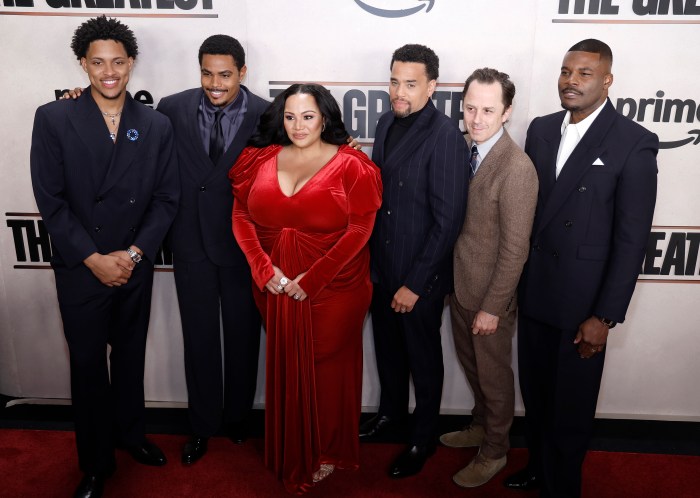
The Greatest reveals the slow burn that was Clay’s eventual immersion into the Nation of Islam. He wanted them; the organization didn’t necessarily want him. The Nation of Islam traditionally viewed sports as a distraction — so much so that members allegedly showed up at boxer Sugar Ray Robinson’s house, mistaking him for Jackie Robinson during the group’s friction with the baseball legend.
As Malcolm X spent time with Clay at his Miami training camp in January 1964, he personally delivered Clay to Elijah Muhammad. In the most literal fashion, he brought his friend to the man who’d soon make Malcolm X an outcast.
The series ends on a triumphant note, with 22-year-old Clay defeating Liston for the world heavyweight championship. It’s Liston, too — played by Amin Joseph — who ranks as another standout character in the series, playing the yin to Malcolm X’s yang in a young Cassius Clay’s life. He was obsessed with both, albeit for different reasons: With Malcolm X, he could theoretically save “his people,” while with Liston, the allure of the fight game kept calling his name.
But at some point over the past 60-plus years, the odyssey of Sonny Liston was reduced to fear-mongering, mob ties and a suspicious death. He was a mugshot with gloves — perhaps Satan with nuclear weapons as fists. Never mind that Liston was savagely abused by his father as a child, eventually tossed into the system and soon into a life of crime. All of it is part of his story — the same way Malcolm X’s pre-Elijah Muhammad era is.
What The Greatest does best for Liston is what it does best for every other character: It humanizes them.
The series is intentional in how it builds out each connection to young Cassius Clay’s life. That’s why it’s so intoxicating: It resists the urge to tell Clay and Malcolm X’s story in full. It was, in fact, a short-lived power kinship. They could’ve easily shown Ali’s Ghana trip, where he followed Elijah Muhammad’s orders to separate himself from Malcolm X and was then viewed as a traitor. They could’ve easily shown Feb. 21, 1965 — the day Malcolm X was assassinated at the Audubon Ballroom in Harlem. Black death, however, shouldn’t accelerate Black life.
One quote lives near the heartbeat of The Greatest. It wasn’t said in the series, but it does serve as a precursor. In 2004, Muhammad Ali reflected on the short time he spent with Malcolm X. In the years and decades after Malcolm X’s murder, Ali lived several different lives — atop the mountain, battling the American government and the debilitating disease of Parkinson’s that robbed him of his most powerful punch: his voice.
Watching The Greatest with this quote in mind changes everything about what the series represents.
“Turning my back on Malcolm was one of the mistakes that I regret most in my life,” Ali wrote in his 2004 autobiography The Soul of a Butterfly. “I wish I’d been able to tell Malcolm I was sorry, that he was right about so many things. But he was killed before I got the chance.”
The friendship he lost — the one Ealy and Best bring to light in sobering fashion on The Greatest — haunted the man who haunted so many foes in the boxing ring. In Malcolm X lived a man who taught him how to be a Black man with the world clocking his every move. In Malcolm X lived a Black man simply proud of being Black — and willing to fight whatever battle to preserve that Blackness.
“Without saying it, this is what I’ve been through,” Ealy said of Malcolm X’s role in Ali’s life. “And this is what they’ll do to you, too.”
Two years after Malcolm X’s death, Ali followed his friend’s example, calling America out for its bigotry and refusing to be a pawn in what he saw as international colonialism. When he first met Malcolm X — a benchmark of The Greatest — he said he wanted to protect “his people.” America then took his voice like Elijah Muhammad had taken Malcolm’s. By refusing to fight in the Vietnam War, the prime years of Ali’s career, ages 25-28, were stripped from him. A fighter never gets his prime back.
In an ideal world, The Greatest is allowed to explore this tribulation. By the time of the Vietnam War, Ali had to understand fully what his fallen friend had tried to put him on game for. In reality, he always had understood on some level, but the problem was the timing and outside influence. By the time an apology was in order, the party who deserved it could only accept it from the afterlife.
That’s the debt The Greatest still holds.
Season 1 ended on a euphoric high. The new heavyweight champion has the world in the palm of his vicious hand, having just taken down Sonny Liston — a man once viewed as indestructible. Mike Tyson before the world came to know Mike Tyson.
What comes next for The Greatest is landing a plane detailing a 20th-century friendship with very few historical and cultural peers. Best and Ealy slow-cook the friendship, so much so that it makes future storytelling all the more powerful. If the series goes there, it becomes the rare estate-approved body of art willing to indict its own subject.
The truth is, Malcolm X knew Cassius Clay longer than he knew Muhammad Ali. The latter would spend the next half-century of his life living with that regret. At his funeral in 2016, Malcolm X’s daughter, Ambassador Attallah Shabazz, spoke of Ali’s deep connection to her family long after her father’s death.
The bond was the apology.
The post Muhammad Ali never stopped regretting losing Malcolm X appeared first on Andscape.
What's Your Reaction?
 Like
0
 Dislike
0
 Love
0
 Funny
0
 Angry
0
 Sad
0
 Wow
0