






Jan. 6: Trump And Friends Are Still Smearing The People’s House 5 Years Later

On Jan. 5, 2021, millions of Georgians did something extraordinary. We elected Reverend Raphael Warnock, the state’s first Black U.S. senator, and Jon Ossoff, the state’s first Jewish senator.
Together, those victories flipped control of the U.S. Senate and marked a generational shift in American politics. Ossoff’s election also marked the first time a millennial was sworn into the Senate, as the majority of the chamber was born before there were 50 states.
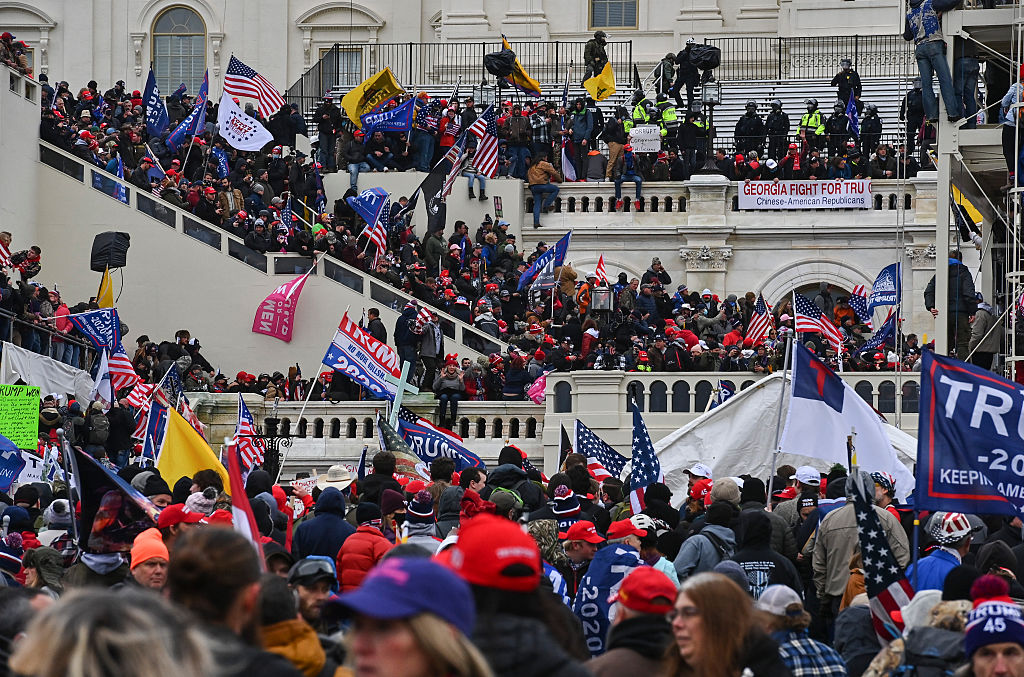
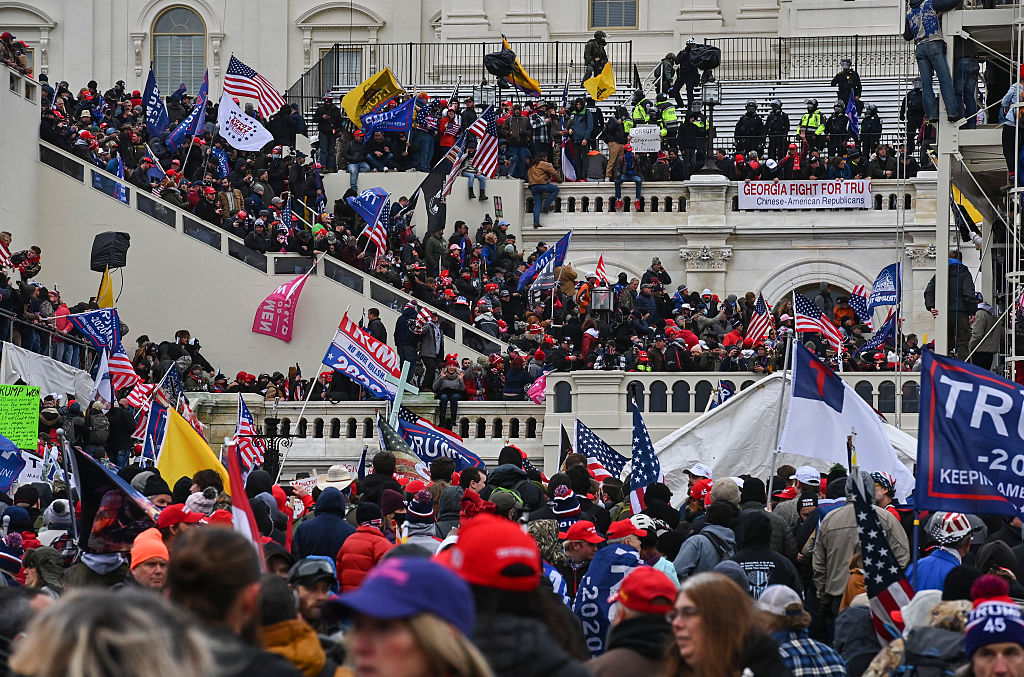
The next day, on Jan. 6, a mob whipped into a frenzy by Donald Trump stormed the U.S. Capitol in a violent attempt to overturn the results of the 2020 election. They beat more than 150 Capitol Police officers.
A woman died, and the US Capitol was desecrated in the most literal sense. The Capitol rioters urinated, defecated, and smeared human waste across the halls of American democracy.
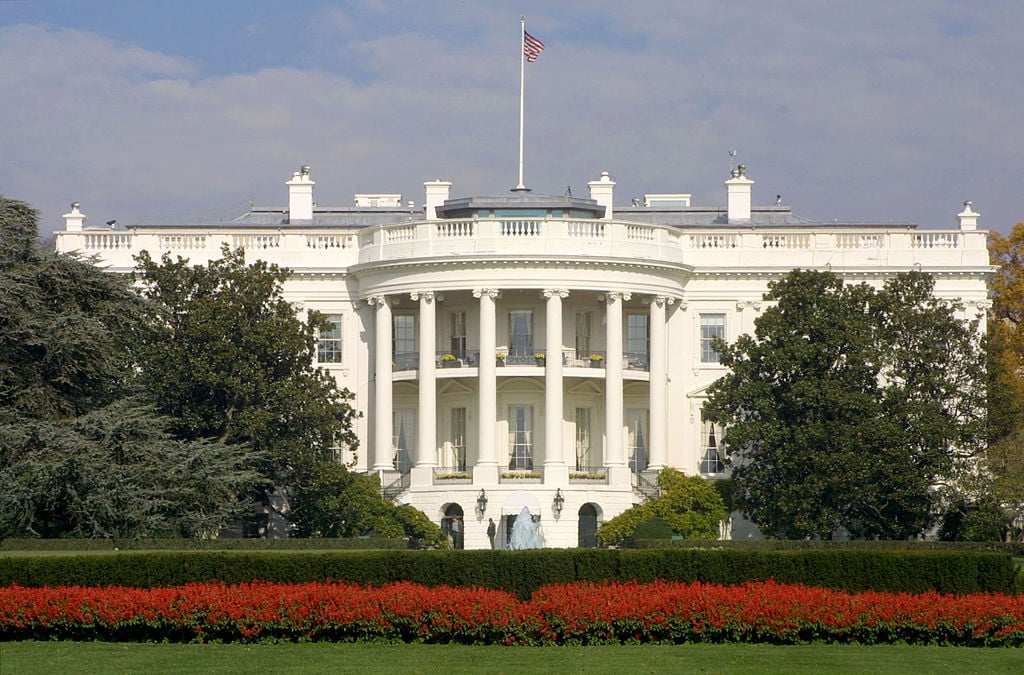
Five years later, Trump and his supporters are still smearing crap all over the people’s house. Memory is our superpower. But Republicans would like us to forget.
Republicans want us to forget that Trump is the only president in U.S. history to be impeached twice by the House of Representatives. They would like us to forget that impeachment is not a partisan parlor game but a constitutional accountability mechanism triggered by abuse of power.
Republicans want us to forget that no president has ever been removed by impeachment because the Senate has repeatedly chosen party loyalty over democratic principle. They would especially like us to forget that Trump resigned nothing. He apologized for nothing.
Forgetting is not an option—because the threat never ended.
Despite the overwhelm of the current moment, we cannot forget how we won in Georgia. In 2020, the Democratic Party had largely abandoned traditional, on-the-ground campaigning. Party leadership pivoted to virtual events and risk-averse messaging, civic, labor, environmental, and civil rights organizations were out in the streets.
These groups adapted to organizing in the pandemic, wearing masks and protective gear that made them look like beekeepers. Knocking doors. Running phone banks. Driving voters to the polls. Translating materials. Answering questions. Calming fears. Curing ballots.
It was these groups who created the conditions for Joe Biden to win Georgia by just under 12,000 votes. The same coalition quickly reset and did it again nine weeks later in the Senate runoffs.
Immediately after those wins, it was these groups who said, clearly and correctly: the Republicans are not done.
The voter suppression and outrage demonstrated after the victory in 2020 was not a one-off tactic but a governing strategy. Trump’s phone call to Georgia’s secretary of state asking him to “find” more votes was not an anomaly but a rehearsal.
Georgia organizers understood that our historic victory would elicit a violent backlash. Republicans in Georgia went on to make roughly 50 changes to the state’s election laws, tightening access to the ballot and criminalizing ordinary acts of voter assistance.
Our pro-democracy coalition insisted—again correctly—that Congress needed to act because it wouldn’t just stop with Georgia. They demanded passage of federal protections, such as the Freedom to Vote Act, to shore up voting rights nationwide. They warned that without strong federal standards, every state would become a laboratory for election subversion.
They were right about that, too.
Today, all of America is the Deep South when it comes to the right to vote. Trump’s core tools are chaos and overwhelm. It’s why, five years later, he and his MAGA buddies continue to contest an election won through the blood, sweat, and tears of grassroots volunteers and organizers.
They were not playing when they denied the results of the 2020 election.
They were not playing when they attempted a violent coup.
They were not playing when they spread lies about voting machines.
They were not playing when they floated federal seizures of ballots and equipment.
They were not playing when they threatened election workers.
They are not playing when they discuss deploying armed forces against peaceful protests.
This is not rhetoric. It is the playbook.
There is no reason—none—to believe these tactics will magically stop at the 2026 midterm election door. The quiet machinery—poll workers, election administrators, certification boards, canvassing processes—is not sexy.
It does not trend on social media. But the system of election administrations is the spine of democracy, and it is under attack.
Winning in 2026 and beyond requires organization and action.
Turning the tide in this country requires channeling the very real frustrations Americans feel – watching an administration drive us into poverty through disastrous economic, trade, environmental, labor, health, foreign, and security policies. It also requires that the groups that won in 2020 operate at full capacity.
Resource them. Join them.
Members of Congress are going to need people holding the line and organizing demands for the America we actually need. Just because lawmakers were once forced to remove their congressional pins, drop to their knees, and crawl to safety while Trump supporters smashed windows and smeared feces does not mean they must accept that as the new normal.
Civic engagement and power-building groups are the ones who risked their lives to get out the vote. It was that serious then; it remains that serious now.
In Georgia, the margins told the story. Tens of thousands of voters—many of them people of color—who skipped the general election showed up for the runoff. Black Belt counties were organizing miracles under relentless pressure. With COVID-19 vaccines still largely unavailable at the end of 2020, people still stood in lines. They voted anyway. They organized anyway.
Those victories cost money. More than a billion dollars flooded into Georgia because the stakes were clear: control of the Senate, and with it, the future of the country. But money alone did not win. Relationships did. Culture did. Trust did. Infrastructure did.
That infrastructure did not come from Washington consultants or national party committees. It came from community-rooted organizations that had been building power long before the cameras arrived—and that stayed long after they left.
And yet, today, civic engagement and power-building organizations are treated as inconveniences or obstacles rather than the backbone of democratic participation.
That is not just wrong. It is dangerous.
Because Trump and his supporters are still smearing crapover our democracy, and the mess is not metaphorical. It is institutional. It is legal. It is violent. It is strategic.
Beating it back requires both democratic infrastructure and a robustly funded, culturally relevant, community-rooted, independent political infrastructure. You cannot substitute one for the other. You cannot outsource courage. You cannot virtualize resistance.
Memory is our superpower. It tells us who showed up when it mattered. It tells us who sounded the alarm early. It tells us what actually works.
As we head into the 2026 midterms, five years after January 6, the lesson is not subtle: get active, get serious, and get organized.
Nsé Ufot is an organizer, strategist, and public thinker focused on democracy, technology, and power-building in the U.S. South. She leads Solidarity Analytics & Media, and advises organizations and leaders on how to combine data, culture, and organizing to win durable power for working-class communities and communities of color.
SEE ALSO:
5 Years After Jan. 6: What Did America Actually Learn?
FBI Arrests Potential Suspect In Jan. 6 Pipe Bomb Case
What's Your Reaction?
 Like
0
Like
0
 Dislike
0
Dislike
0
 Love
0
Love
0
 Funny
0
Funny
0
 Angry
0
Angry
0
 Sad
0
Sad
0
 Wow
0
Wow
0