












Howard University’s Enrollment Controversy Highlights Black Colleges Are Under Financial Pressure: What’s Really Happening At HBCUS Right Now


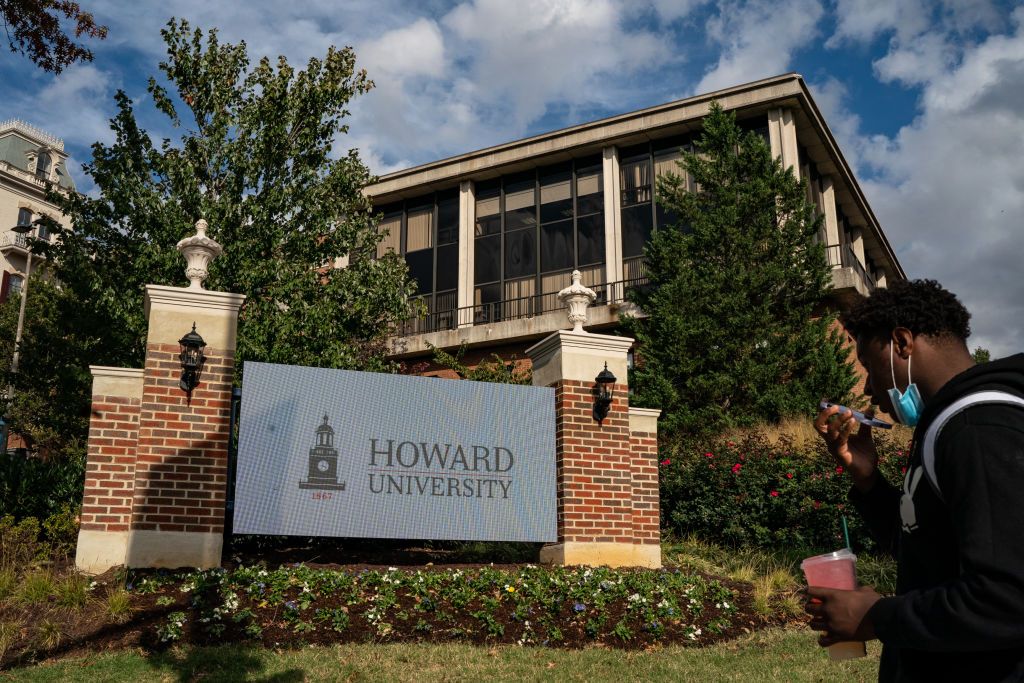
Historically Black colleges and universities (HBCUs) across the country are facing mounting financial pressures and operational challenges, and Howard University has become the latest institution to find itself at the center of a national conversation with its enrollment controversy.
Howard University enrollment controversy: What happened?
This month, Howard University reinstated dozens of incoming freshmen after more than 500 students were abruptly removed from the University’s fall incoming class over financial and enrollment deadlines. The decision sparked outrage among students, parents, and alumni, quickly gaining traction across social media.
According to DC News Now, Howard has since reinstated 46 incoming freshmen after widespread public backlash over its decision to unenroll hundreds of students with unpaid balances. University officials say they are reviewing each student’s case individually and making adjustments where appropriate as families continue arriving on campus seeking answers.
The controversy began after Howard unenrolled more than 500 incoming freshmen who failed to meet a July 10 payment deadline. University officials said students received multiple communications regarding outstanding balances and enrollment requirements before the deadline. However, many students and parents said they believed scholarships, financial aid, or outside funding had already covered their tuition costs—or that those funds were still being processed. Some families said they didn’t learn about remaining balances until after students had already lost their enrollment.
In a statement published July 23, Howard acknowledged the frustration families were experiencing but defended its communication efforts.
“We understand that the enrollment update that was issued yesterday is difficult and disappointing for students and their families. Howard University provided multiple detailed communications throughout March, April, May, June, and July to first-time-in-college students and families on steps needed to secure enrollment for the fall 2026 semester,” the HBCU stated. “Notifications included emails, personalized financial aid information, videos, and Bison Prep sessions—to help incoming students understand tuition payment requirements, payment plan options, the process for reporting outside scholarships, and the deadlines necessary to secure their enrollment,” they continued.
“Students who did not meet the established payment, payment arrangement, or scholarship and other financial aid reporting deadlines have been notified that the University can no longer hold their place in the incoming class. As Howard finalizes enrollment for the Fall 2026 semester, which begins August 17, confirming enrollment is essential to planning academic programs, housing, financial aid, and student support services.”
The university added, “We recognize that some students with pending outside scholarships and other financial aid resources may have been impacted by the recent enrollment update. The University is reviewing information related to anticipated scholarship funding and other financial aid, where appropriate, and will consider relevant circumstances presented regarding pending scholarship awards and financial aid resources.”
Howard University has faced financial challenges over the last several years.
The enrollment controversy comes as Howard is already navigating broader financial headwinds.
According to Fitch Ratings, the university has faced rising operating expenses and softer enrollment in recent years, with expectations that operating cash flow will remain narrow through fiscal years 2026 and 2027. While Howard projects an operating surplus for fiscal 2026 on a consolidated basis—thanks in part to one-time unrestricted gifts—its underlying financial picture remains more challenging. Excluding those one-time donations, the university is expected to post an operating deficit that could continue into fiscal 2027.
Enrollment has also become a concern. After several years of growth, Howard’s fall 2025 student headcount declined by 5%, reducing tuition and auxiliary revenue by approximately $1 million. Meanwhile, Howard University Hospital continues to operate on thin margins despite improving financial performance.
Thankfully, hope remains for the legacy HBCU. According to Fitch Ratings, the university has implemented approximately $25 million in operational improvements and plans additional cost-saving measures. Fitch noted that Howard remains in compliance with its debt and liquidity requirements and maintains significant financial flexibility with approximately $331 million in liquidity at the end of fiscal year 2025. Analysts expect the university to return to balanced operations over the next one to two years.
Howard’s challenges, however, are part of a much larger trend affecting HBCUs nationwide.
HBCUs are facing challenges across the country.
Many Historically Black Colleges and Universities are facing unprecedented financial and operational risks driven by federal policy changes, declining enrollment, state funding disputes, and individual institutional financial struggles.
One of the most significant changes comes from new federal Parent PLUS loan caps. Beginning July 1, 2026, annual Parent PLUS borrowing is limited to $20,000 per student with a lifetime cap of $65,000. Because many HBCU families historically relied on Parent PLUS loans that exceeded those limits, institutions are now scrambling to raise emergency scholarship funds and institutional aid to help students close unexpected funding gaps.
Loan default rates present another concern. According to Bankrate, Department of Education rules could place nearly 60% of HBCUs at risk of losing access to federal student aid programs if student loan default rates are not adequately controlled.
Federal aid changes don’t stop there. The Williams-Franklin Foundation warns that policy changes included in President Donald Trump’s “Big Beautiful Bill,” signed into law in 2025, tighten Pell Grant eligibility while proposing a 90% reduction in Federal Work-Study funding. Those changes disproportionately affect low-income students who rely on campus employment and federal aid to pay for housing, food, and educational expenses.
The financial disparities facing HBCUs have existed for decades. Today, there remains an estimated $12.8 billion funding gap between land-grant HBCUs and predominantly white institutions.
The foundation also noted that although HBCUs enroll only about 3% of U.S. college students, they produce nearly 20% of all Black college graduates. They remain national leaders in educating Black engineers, teachers, healthcare professionals, scientists, and public servants.
A United Negro College Fund (UNCF) study found that HBCUs generate $14.8 billion in annual economic impact while supporting more than 134,000 jobs nationwide. These institutions serve as major economic engines in historically underserved communities, making their financial stability a national issue rather than simply a higher education concern.
As The EduLedger summarized, HBCUs “are being forced to aggressively increase their endowment fundraising, divert budgets toward institutional ‘gap’ grants, and in some cases, consider tuition freezes to prevent a mass exodus of students who can no longer bridge the funding gap between federal aid and the cost of attendance.”
Several institutions have already experienced the consequences of these financial pressures.
As previously reported, Saint Augustine’s University filed for Chapter 11 bankruptcy protection. The Raleigh-based HBCU filed on April 27 in the U.S. Bankruptcy Court for the Eastern District of North Carolina.
In announcing the filing, university officials emphasized that bankruptcy was intended to strengthen—not close—the institution.
“This structured, court-supervised process will enable SAU to organize its financial affairs in an orderly and transparent manner. The decision, made by the University’s Board of Trustees, reflects a deliberate and strategic step to advance the University’s long-term sustainability while addressing current financial realities.”
University leaders said Saint Augustine’s will continue operating throughout the restructuring process with support from its primary lender, Self-Help Ventures Fund. Court documents list the university’s assets between $100 million and $500 million, with liabilities ranging from $50 million to $100 million and more than 200 creditors.
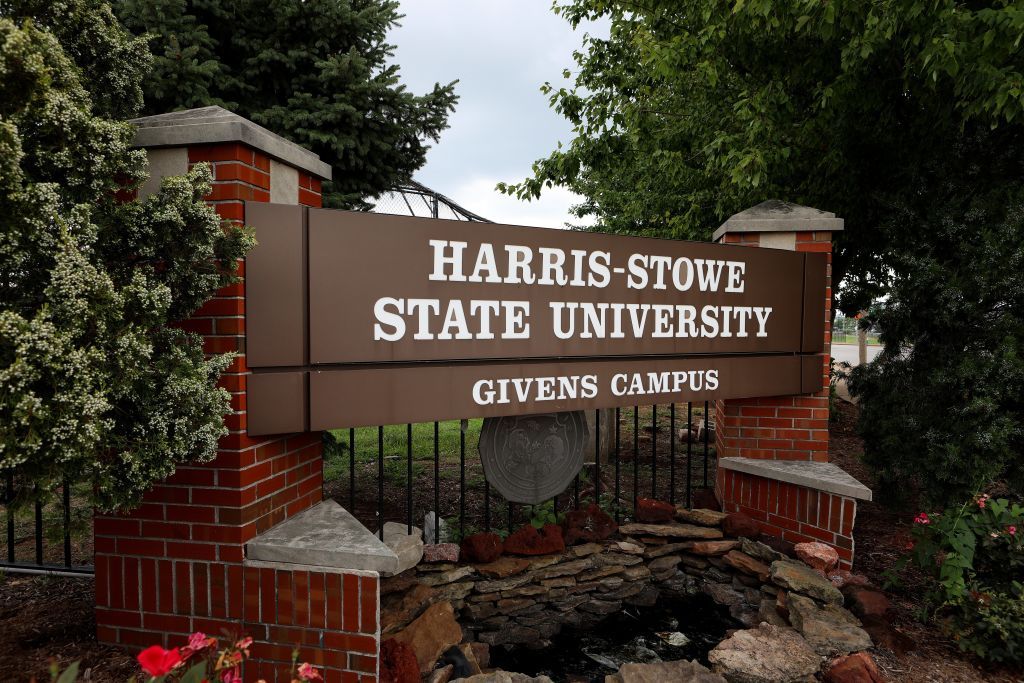
Meanwhile, students at Harris-Stowe State University in Missouri found themselves at the center of a separate funding battle earlier this year.
Just weeks before the spring semester concluded, Missouri lawmakers considered changing the state’s higher education funding formula by tying institutional funding primarily to full-time enrollment numbers. According to 5 On Your Side, the proposal would have reduced funding to Harris-Stowe—the state’s only HBCU—by nearly $5 million, roughly 40% of its state allocation.
University leaders warned the cuts would almost certainly force tuition increases and threaten student enrollment. Although House Bill 2003 ultimately became law, legislators removed the enrollment-based funding penalty before the governor signed the measure on June 30, 2026.
Still, lawmakers acknowledged that Missouri’s higher education funding formula remains unresolved and will require a long-term solution.
For Howard University and many other HBCUs, the challenges extend far beyond a single enrollment deadline. Rising costs, changing federal aid policies, enrollment fluctuations, and longstanding funding inequities are creating an increasingly difficult financial landscape.
The outcome of Howard’s current enrollment controversy may ultimately be resolved through individual student reviews. But the broader issues confronting HBCUs across the country are unlikely to disappear anytime soon.
SEE MORE:
Howard Students Start the Year Under Federal Watch
Howard University Journalism Students Confront The Danger Of Reporting In D.C. While Black
What's Your Reaction?
 Like
0
Like
0
 Dislike
0
Dislike
0
 Love
0
Love
0
 Funny
0
Funny
0
 Angry
0
Angry
0
 Sad
0
Sad
0
 Wow
0
Wow
0