








How These Descendants Of Enslavers Are Repairing Ancestral Damage


Randy Quarterman had been fighting for years to keep the land given to his family after emancipation by their enslaver, George Adam Keller. Decade after decade, those 10 acres were being whittled away by eminent domain because, like many early Black landowners, they didn’t have a clear title for the property. So when he opened an email from Sarah Eisner, an unknown white woman, asking if he was a descendant of Zeike Quarterman and whether Randy still owned the land given to his ancestor in 1890, he was skeptical.
“Our land is getting taken by eminent domain for acreage—what, they want the rest of it?”
Eisner wasn’t reaching out to take more land but to make amends—to pay back a debt owed to her family’s slaveholding past.
“I was always told that, yes, our ancestors enslaved others, and that was wrong. I wanted to look for descendants that my ancestors had enslaved and try to offer some sort of reparations, apology, or repair work,” Eisner said.
Over the next several months, Eisner, the great-great-great-granddaughter of Keller, worked to find a lawyer who would clear the title to the Quarterman’s land, ensuring they’d keep it in the family, and she eventually expanded the reparative efforts to other families through the Quarterman & Keller Foundation.
Black people across the globe have long fought for reparations to provide justice to African descendants still reeling from the brutal legacy of slavery and systemic racism—apparent in the United States’s yawning Black/white wealth gap (white households have 10 times the wealth of Black households, according to a 2021 census survey) and inequities in multiple facets of life from education to housing.
In the Caribbean, where 40% of enslaved Africans were shipped to, countries are struggling with economic underdevelopment, subpar public health facilities, and the lowest level of higher education youth enrollment in the Western Hemisphere, according to UNESCO.
“They have failed to compensate for these horrible wrongs and crimes against humanity, so that it is incumbent on myself and yourself, and persons who are descendants of the enslaved Africans…to come forward and to say that enough is enough, and that we demand that the perpetrators of this crime be held accountable,” said Arley Gill, chairman of Grenada’s national reparations committee.
After George Floyd’s murder in 2020 sparked a global racial reckoning, it seemed as if the U.S. and former European colonial powers were ready to make amends.
With the rallying cry of “Black Lives Matter,” more than 1,100 organizations in the U.S. rushed to institute Diversity, Equity, and Inclusion (DEI) programs to the tune of $200 billion. In comparison, tech giants like Google and Apple separatelycommitted nearly $1/2 billion.
President Joe Biden made racial equity a centerpiece of his administration. Citing “the enormous human costs of systemic racism, persistent poverty, and other disparities,” he signed an executive order on his first day in office that directed all government agencies to address systemic barriers to equality, clearing the way for DEI programs.
There was even hope that the federal reparations bill HR 40—which had languished in Congress since 1989—would finally pass. In Europe, the EU proposed its own Anti-Racism Action Plan in 2020 to address structural racism, which required all member states to develop initiatives to confront racism across spheres, including law enforcement, housing, employment, and health. Over the past several years, the UK, France, Denmark, the European Parliament, and the Netherlands have apologized for slavery and/or acknowledged it as a crime against humanity.
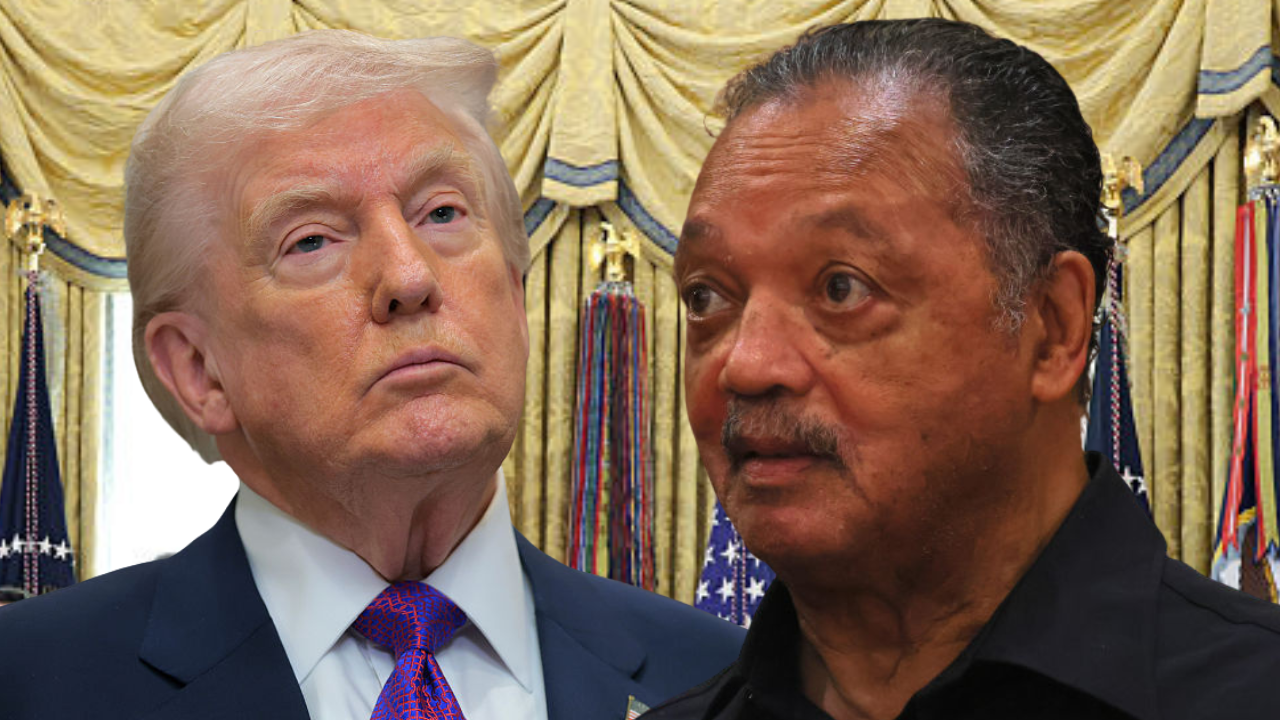
But the political winds have shifted. Donald Trump’s return to the White House has not only ushered in an abrupt rollback of DEI and a denial of anti-Black racism, but also an assertion that anti-white racism is the real issue—making federal reparations less likely than ever. And aside from apologies, European governments haven’t proposed any reparations legislation. Even the Netherlands, which set aside a $204 million slavery education fund, was clear that it shouldn’t be considered reparations.
Rather than allow Black Lives Matter to become an empty slogan, however, the grassroots is seizing momentum. From Asheville to Evanston, leaders have rallied support for local reparations, and in other instances, some have personally reached out to the descendants of the enslaved, as in Eisner’s case.
Laura Trevelyan was a successful BBC correspondent and anchor when a 2022 trip to Grenada to report on reparations moved her to make amends for her family’s slaveholding past. Several years prior, a family member’s search on the University College London slavery database uncovered the shocking truth that their ancestors had owned over 1000 enslaved Africans across six plantations in Grenada—part of a slave trade that left devastation in its wake.
“The system of wealth extraction that was slavery has left societies in the Caribbean with this legacy of economic under development and legacies of poverty and of disease and hypertension, diabetes, not to mention what people will talk to you about: the trauma of slavery, legacies of colorism…so it doesn’t feel like it’s the dim and distant past when you’re in the Caribbean,” Trevelyan said.
Upon emancipation, those they enslaved received nothing, but the British government paid the Trevelyan family £26,898 in reparations (the equivalent of $1,309,231 in today’s currency) for the loss of slave labor. Trevelyan recognizes how that stark injustice created disparities that are felt to this day.
“Our family is [not] a wealthy one…but it is solidly middle class; professional people have social privilege that you could absolutely argue is something that was created at least partly by the wealth from slavery over the generations. So it just seemed to us as a family that the CARICOM 10-point plan was a really good road map,” Trevelyan said.
The CARICOM 10 Point Reparations Plan was created by the CARICOM Reparations Commission in 2014, an organization that represents 15 Caribbean nations, each with its own reparations committee. The 10 Point Plan serves as a guidepost for what reparations should look like.
Number one on the list is a full formal apology. Gill explained, “We always demand that the apology comes first, because that’s the beginning of the healing…the admission that listen, what they have done is wrong. Then, from there, how they can repair the many harms which were caused by the Atlantic slave trade, slavery, and indigenous genocide.”
Repairing harms takes many forms, and the other nine points of the plan encompass all developmental aspects: educational programs, psychological rehabilitation following trauma, establishing cultural institutions, addressing the public health crisis, and providing debt cancellation and monetary compensation. While most discussions around reparations focus on the latter, all these gestures can have a significant impact.
What’s important is providing what the community needs most, and that’s decided on with a conversation—led by slavery’s descendants.
“We are the victims here, and for any real and meaningful repair to be had, our voices must be heard, and we believe that we are in a better position to determine how our societies and how our lives, how our psychological rehabilitation can best be addressed. We are in a better position to speak to that,” Gill said.
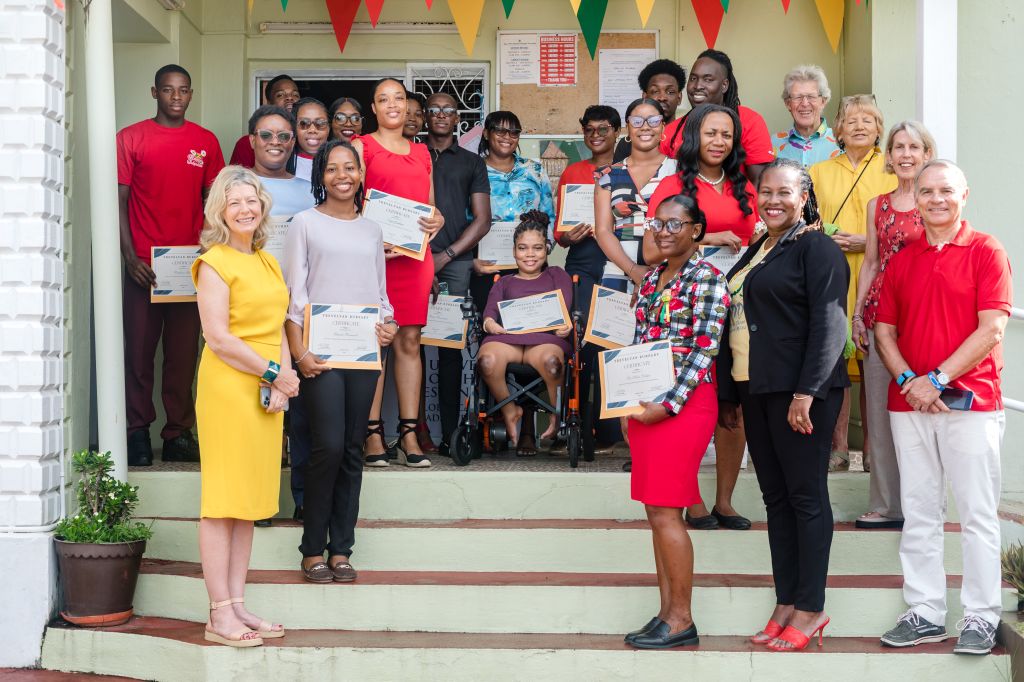
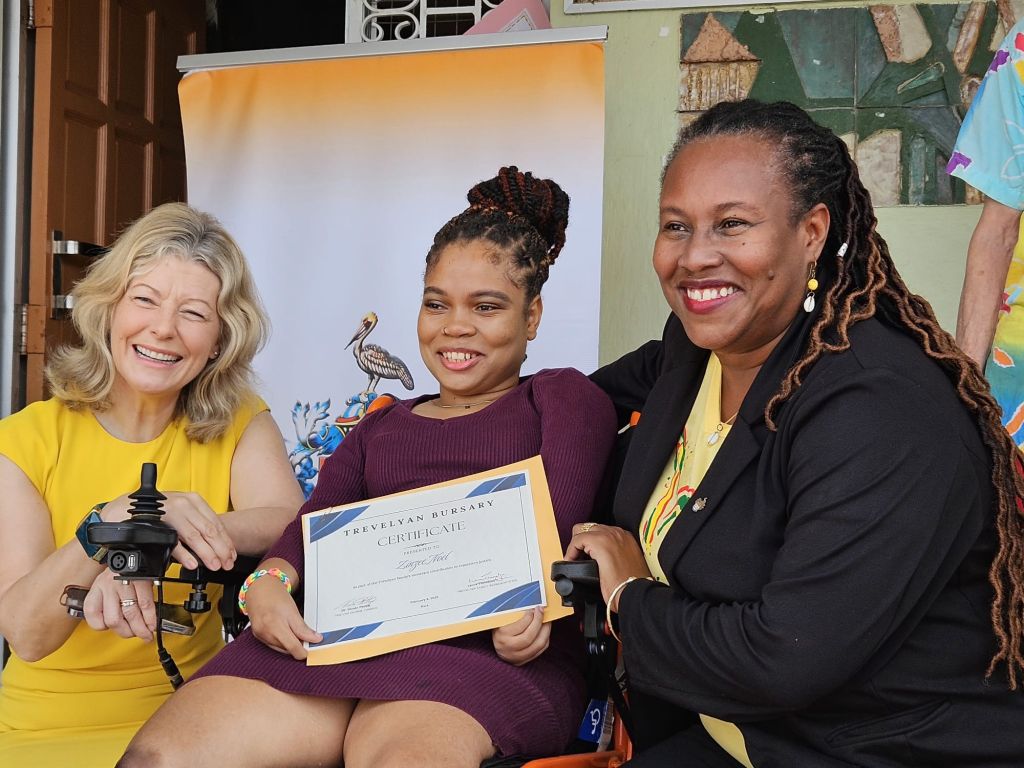
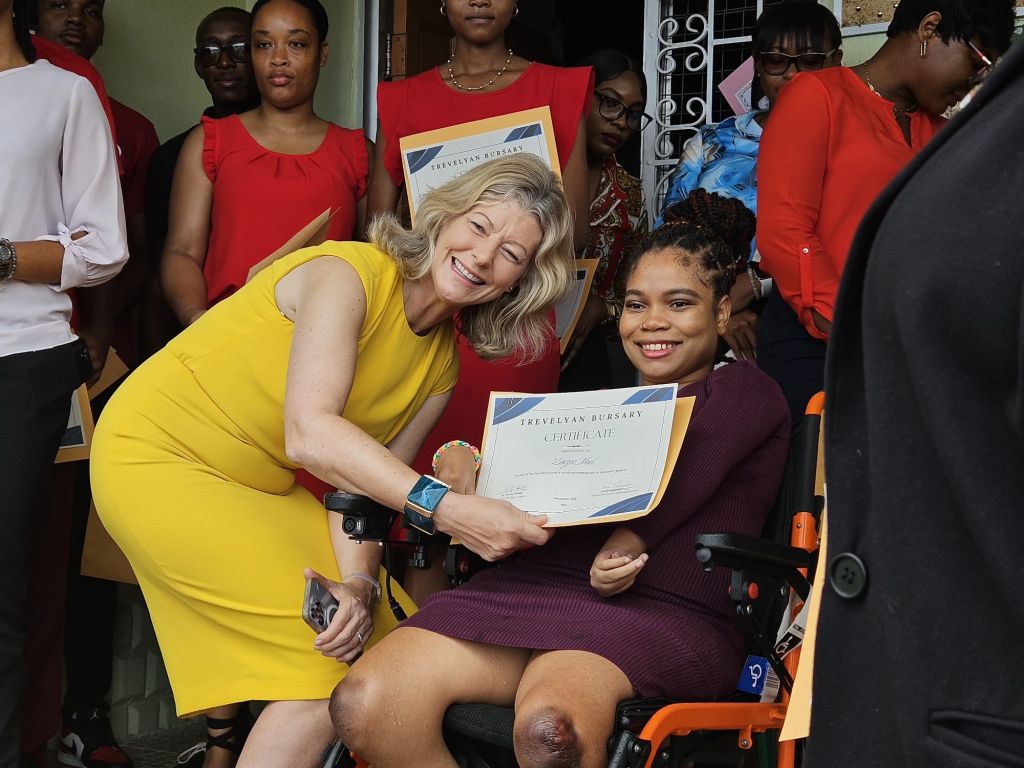
Trevelyan, in conversation with Gill and the deputy chairman of Grenada’s reparations committee, Nicole Philip Dowe, determined that education was a good place to start, so on February 27, 2023, Trevelyan arrived in Grenada with a formal apology letter signed by 104 of her family members and a contribution of £100,000 to be used by the University of West Indies (UWI). Much of that money has gone towards funding student scholarships, and Phillip Dowe, who also works as a historian and administrator at UWI, identified the exact parishes where Trevelyan’s family had sugarcane plantations to try connecting scholarships with the direct descendants of those they’d enslaved.
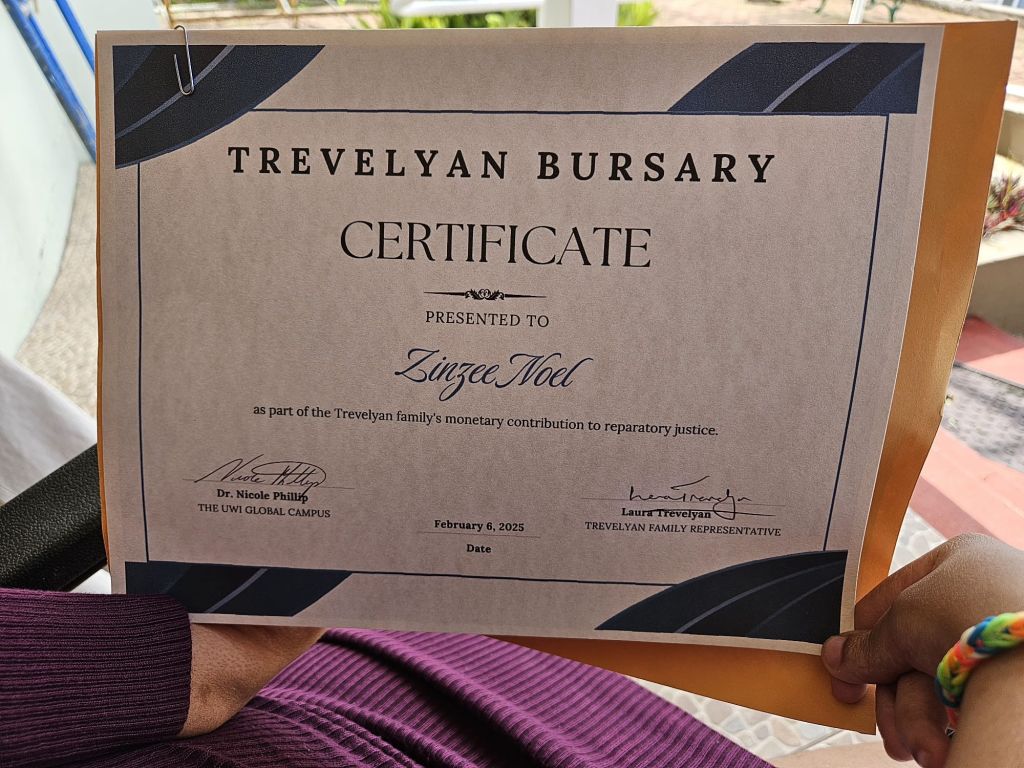
Nikita Date, who’s studying early childhood education and family studies while working multiple jobs to pay for her education, felt that the scholarship was “a blessing.” In an email, she wrote, “Being a recipient made me feel seen, not just as a student, but as someone whose roots, struggles, and dreams are part of a larger historical story that deserves acknowledgment and support.”
The former BBC anchor continues to raise money for scholarships through the Trevelyan Grenada Reparations Fund, in which all family members who signed the apology letter contribute money according to their means. So far, £20,000 has been raised. But even that is a drop in the bucket compared to the scale of the slave trade’s damage.
What Trevelyan hopes to do is inspire much larger, wealthier, and more powerful entities, such as the UK government and the British Royal Family, to offer reparations. “What’s important is the principle…Maybe you can set an example in Britain. You know, if a family can apologize for slavery and pay reparations, then why can’t a government?”
In the meantime, through the Heirs of Slavery organization, the Trevelyan family is connecting with other former slaveholding families who are making their own reparative gestures. For example, the Gladstone Family (whose heir was a British Prime Minister in the 19th century) was moved to make amends in Guyana, one of two countries where they held slaves, and this grassroots movement continues to pick up steam.
In the U.S., the Quarterman and Keller Fund is also facilitating reparations between the descendants of enslavers and the enslaved through its Reparations Project. Eisner and Quarterman, inspired by the work to preserve the latter’s reparations land, sought out the remaining Keller land and discovered it had all been given to the conservative Georgia Baptist Foundation, which was funding scholarships for mostly all-white schools.
Attempts to get the foundation to dedicate a portion of its funds to Black education were rejected. Undeterred, Eisner started a social justice Scholars Program at Spelman Morehouse with her own money earned from her tech career. Eventually, through word of mouth and media coverage, it began attracting the attention of other white people looking to make reparations. “It was important to me to only raise money from white people if this was really, truly a reparations-type thing,” said Eisner.
Quarterman’s efforts, which steered towards education (along with land preservation), stemmed from his public school experience in Georgia, where a lack of emphasis on education led him to drop out. “If my family was educated from the beginning without Jim Crow, would I be in this situation or would they have said, ‘Hey, this is why you need to make this grade, not just to graduate to get a job, but hey, you need to be educated because you need to understand this financial literacy. You need to understand this history.’.. I would have had a purpose of why I needed to graduate and go to a Secondary College.”
Education is one key to closing the Black/white wealth gap, and funding is more critical than ever, with financial cutbacks hitting Black students particularly hard.
“We can’t wait for the government to act. Now it’s like we have to act faster to repair the fresh new harm they’re doing with taking away these scholarships, attacking colleges, and affirmative action, and all of this. So we’re really, really proud that we can keep doing race-based scholarships,” Eisner said.
Evanston, Illinois, native Robin Rue Simmons felt that same sense of urgency when she looked around the Black sections of her city and saw crumbling infrastructure, inferior housing, and higher crime rates.
“I was living it, and it was clear to me reparations were due,” said Simmons. In her role as Alderman of the 5th Ward, Simmons got to work in 2019, marshalling community support and soliciting input from the Black community about what they needed most and how it would be funded. Her efforts were aided by meeting commissioners on the National African-American Reparations Commission (NAARC) and reviewing its 10 Point Reparations Plan. It was modeled on CARICOM’s and shares many of the same elements, including a formal apology, the creation of a Black holocaust institute, the provision of resources for the health and healing of Black communities, education, housing, and wealth generation.
While outcomes might seem similar (e.g., new housing developments, educational grants, etc.), Simmons emphasized that the reparative process differs from ordinary public policy in that it’s a bottom-up process and a harm report must be established, which explores who has been harmed and by what (redlining, police brutality, etc.), which determines both the remedy and who should be responsible.
Simmons explained, “A first best practice of reparations is that the harmed community, those that have been injured, those that have been victims of criminal acts from government and institutions, prescribe and inform the process…making sure that it is, in fact, reparative. It is also very important that a multiracial democracy or coalition is convened because of the nature of the work, the truth-telling, the learnings, the reconciliation that must happen.”
Significantly, that multiracial democracy was firmly in support of reparations, and the city council ultimately passed it, making Evanston the first city in the nation to enact reparations. The resolution greenlit $25,000 housing grants to any Black person at least 18 years old who lived in Evanston between 1919 and 1969, or is the descendant of someone who lived in Evanston during that period. Legal cannabis sales and real estate transfer taxes are funding the grant. So far, $6.36 million in funds have been disbursed to roughly 251 people, and disbursements will continue on a rolling basis until the $20 million currently set aside is spent.
Since Evanston’s historic reparations passage in 2019, Simmons has served as a NAARC commissioner and has helped over 100 communities across the United States with their local reparations initiatives through her role as the founder and executive director of First Repair. As evidence of this momentum, its 5th annual symposium on state and local reparations held earlier this month drew more than 200 local leaders—the most ever.
“What we’re seeing is that there’s so much promise in what can happen locally. Tulsa is an example. So they have expanded beyond their municipal effort. The Tulsa Mayor Nichols has established a private trust and committed to raise $105 million to bring reparations for the race massacre in Tulsa, Oklahoma,” Simmons said.
And while there’s no glide path towards reparations anywhere across the globe and Evanston’s reparations program is facing a class action lawsuit, Simmons is bolstered by the actions of fearless ancestors like Queen Mother Audley Moore, who was instrumental in bringing reparations petitions before the UN as far back as 1957 and Congressman John Conyers who spearheaded the first reparations bill H.R. 40 in 1989.
Just as progressive movements that came before took a local-to-national approach, Simmons is confident that reparations will follow the same path. “The news will depress you, and it’ll make you feel like there’s no hope in any policymaker, and that Trump has won, but we are winning in our localities. We are fighting. There is a heart and will. There is ally support. There’s unity that is happening…This Trump administration has really awakened our connections to each other.”
Eisner, who has forged a friendship with Quarterman, also has a hopeful but clear-eyed message for white descendants of enslavers who want to reach out to Black descendants of the enslaved but are unsure how.
“My advice would be, understand the sensitivity of what you’re doing, understand that you’re not in actual danger, and that you might be providing some life-affirming information to a family by reaching out, and that you should be prepared to receive rejection, and it’s not about you, it’s about history. Then finally…yes, it can involve money. It does not have to. Again, it’s the truth-telling and information and reaching out authentically, that I think repair starts with.”
SEE ALSO:
New York Reparations Movement Gains Help From BLIS Collective
Op-Ed: California, The Eyes Of The Nation Are Upon Us
‘Riot To Repair’ Project Provides Platform For Community Storytelling
What's Your Reaction?
 Like
0
Like
0
 Dislike
0
Dislike
0
 Love
0
Love
0
 Funny
0
Funny
0
 Angry
0
Angry
0
 Sad
0
Sad
0
 Wow
0
Wow
0