










A Love Letter To Claudette Colvin On Martin Luther King Jr. Day


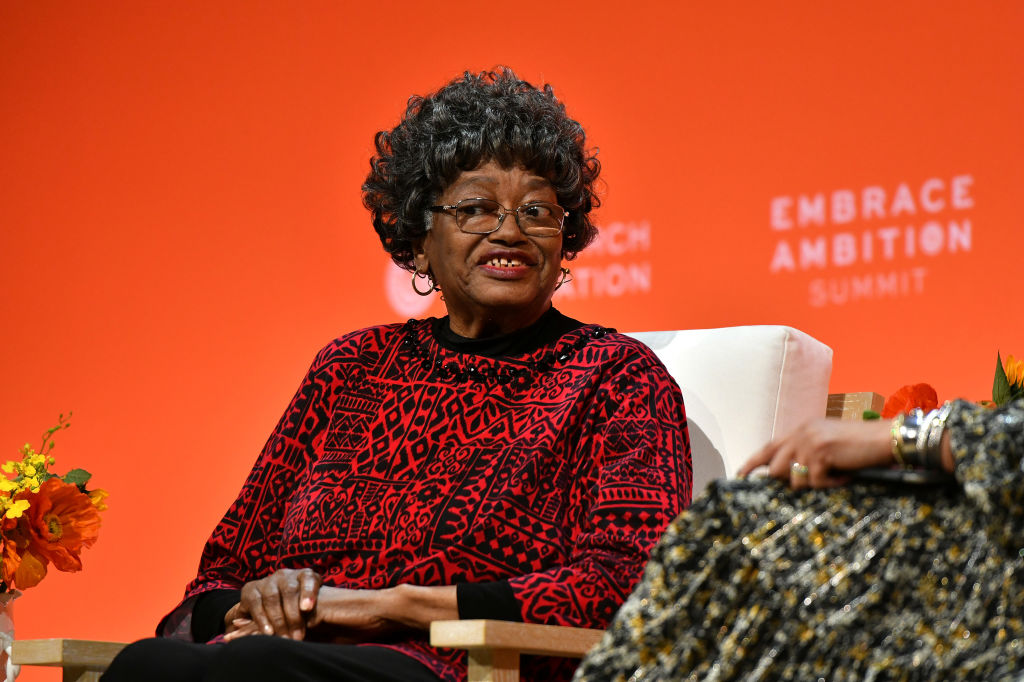
Dear Ms. Colvin,
I write to you in the space where grief sharpens memory and love becomes instruction.
In the hush where our elders leave us, where our ancestors make room, and where we reckon with the many mistakes we have made as our heroes go on to glory.
You left this world on January 13th, and with you went a library, a recipe box, and a curriculum we still don’t understand how to follow. We are, too often, terrible students.
This letter meets the world on Martin Luther King Jr. Day, a day we honor a man and a movement, and also reflect on how far we’ve come and how far we have to go toward becoming a nation that is equitable, just, and joyous for every single human being within it. It’s so important that as we hold all of this, we also hold you. After all, we should know by now that movements are not miracles. They are mosaics– built not only by speeches and sermons, but by the quiet courage of people like you whose names history routinely forgets.
You were just fifteen– a baby– when you refused to move from your seat on that segregated bus in Montgomery. Fifteen, carrying textbooks, history, and revolution in your body and heart. You were fresh from school and lessons about Harriet Tubman and Sojourner Truth when that bus driver demanded you give up your seat.
You refused.
You later said it felt as though the ancestors themselves held you in place– Harriet on one shoulder, Sojourner on the other– and you simply could not stand. “I couldn’t move,” you said. “History had me glued to the seat.” Those chosen to fight toward liberation understand that this kind of knowing doesn’t come from age; it comes from a Divine truth recognizing itself and refusing to be further silenced.
Today, we remember that when police dragged you off that bus in Montgomery in 1955, you were not just arrested, you were initiated. Initiated into fear. into clarity and into the long tradition of Black girls paying the price for being too right too soon. You later spoke of the terror you experienced in that patrol car– the fear that officers might kill you or rape you, a fear Black girls learn early and carry quietly throughout their lives. And still, you never regretted the stand you took.
As we calculate historic dates, we should remember that your arrest was nine months before Rosa Parks faced a similar fate. Before this boycott had a name, and before this nation unknowingly learned how to celebrate resistance without celebrating all resisters.
And when the Civil Rights Movement needed a face, Black male leaders decided it couldn’t be yours. You were deemed too young; too poor; too brown-skinned; too much from the “wrong” side of town. When you became a young, unmarried mother, the respectability politics (that continues to steal so much from Black history and Black culture) sealed their decision. You later explained that movement leaders believed white America wouldn’t rally behind you– that your life didn’t look “clean” enough to symbolize freedom.
This choice to erase you from the movement was not coincidental. It was structural violence. It was classism woven into sexism. And most importantly, it was respectability politics narrowing Black excellence into what felt palatable rather than what was true. Sadly, that logic still lives on among us. We still confuse image with integrity and elevate voices deemed safe while sidelining those most impacted by the harm we say we are fighting against. Even today, our community still struggles to trust young people, though history repeatedly shows they are often first to see clearly and first to show up boldly.
Your story corrects us, Ms. Colvin.
I want you to know that you were an inspiration to me– a young, brown-skinned Black girl organizer growing up in a struggling Black neighborhood, learning early that leadership and survival often show up together. I didn’t grow up surrounded by monuments or marble heroes. I grew up surrounded by women and girls carrying whole communities on their backs, with little thanks and even less support.
When I learned your story, it named for me what I already felt in my bones: that leadership never waits for permission, that brilliance lives in underfunded classrooms and overcrowded buses, and that those closest to harm often hold the clearest vision for change. You taught me that organizing is not about palatability– it’s about principle, and that being young, poor, and unapologetically Black is not a liability.
After your arrest, you testified in Browder v. Gayle, the federal case that ended bus segregation in Montgomery. While other organizers got to stand at podiums and be celebrated for their bravery and humility, you quietly helped dismantle Jim Crow with very few accolades or even fewer shows of respect.
And still…
Still, you moved forward. Still, you raised your son. Still, you worked, loved, and endured. “I feel very, very proud of myself,” you once said. “I did what I did.”
As we celebrate Dr. King today– and the movement he helped co-organize– we must also celebrate you. It’s paramount that we remember the moral force of that movement didn’t belong to one man, one class, or one image. It belonged to the people, to the children, to Black girls, and to those the world has tried its hardest to ignore. Today, we must remember that we are losing elders and recipes, but we don’t have to lose the lessons our current reflections on history are teaching us.
Ms. Colvin, your life reminds us that movements must center youth and those most impacted if we want them to be honest and durable, that justice cannot be curated by image alone, and that courage does not require credentials.
I pray that you are resting now and sitting with the ancestors who held you steady that day in 1955. We will keep saying your name. We will teach it correctly. And we will center the voices you taught us to trust.
With love.
With reverence.
With a promise to do better.
SEE ALSO:
Claudette Colvin, Early Resister In Civil Rights Movement, Dies At 86
What's Your Reaction?
 Like
0
Like
0
 Dislike
0
Dislike
0
 Love
0
Love
0
 Funny
0
Funny
0
 Angry
0
Angry
0
 Sad
0
Sad
0
 Wow
0
Wow
0