











World Cup shows African soccer is here. Now it’s time to stay.


Andscape columnist William C. Rhoden explores the intriguing teams, people and themes around the 2026 FIFA World Cup in North America.
Listen to this story
NEW YORK — There have been a number of outstanding storylines during the 2026 World Cup, but none has been more captivating than the performance of African nations throughout the tournament.
While it’s taken for granted that nearly every European nation will have players of African descent on their rosters, the idea that teams from Africa would become serious contenders has been more aspirational than real.
Until this year.
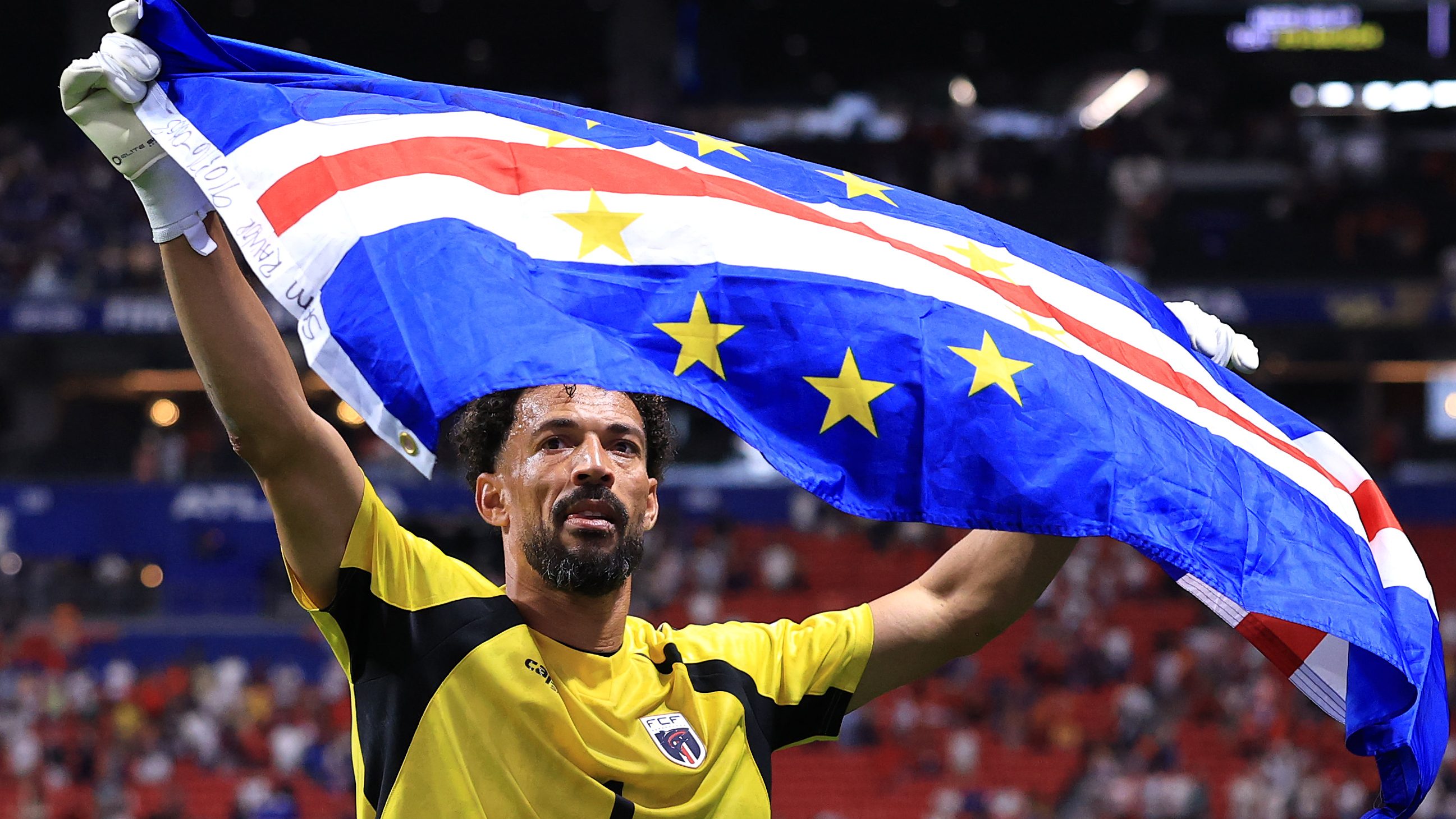
A record 10 African nations qualified in this year’s expanded field, and nine reached the knockout stage. Cape Verde, the smallest nation to qualify, became World Cup darlings and nearly pulled off the biggest upset in tournament history before falling to defending champion Argentina 3-2 in their round of 32 match.
“Cape Verde may have done more to contribute to the global image of African soccer in one game than the entire history of African soccer,” said Reggie Wilson, the director of operations and vice president of Sports Link Football Academy in Dar es Salaam, Tanzania.
Along with longtime friend Amri Kiemba, technical director of Sports Link and former member of the Tanzania national team, Wilson is using his passion to recruit and train young soccer players, providing a pathway to use the sport as a means of creating opportunity.
The hope is that the success of African teams in the World Cup will accelerate his efforts and encourage investment in the initiative.
“Obviously, those who have been around the game in Africa know the potential is there, and it was a matter of time,” Wilson said. “But now the world is beginning to notice. Cape Verde showed what African soccer can look like against the greatest player ever [Lionel Messi]. This match might be the catalyst to serious international interest in developing the talent within Africa on African soil.”
Megan Briggs/Getty Images
While the success of North African sides such as Egypt and Morocco is celebrated, the advance of sub-Saharan countries may be even more significant. Morocco’s investments in academies and infrastructure have become a model across the continent.
“The North African teams will usually do well,” Wilson said. “But to have South Africa get through to the knockout, to have a couple West African teams get through to the knockout, and then Congo — that’s near and dear to our hearts.”
The success of African teams in this World Cup is a hopeful sign that Africa may no longer only be the world’s farm system.
For those who work inside the world of African soccer, the success of countries such as Cape Verde, Ivory Coast, Ghana and Senegal reignites the dream of someday building world-class infrastructure that can keep talented African players on the continent.
For Wilson, the ultimate goal is to someday transform Africa into a soccer power that no longer simply exports talent, but one that builds competitive national teams and showcases them on the highest levels of international soccer. Asked how long he thought this transition might take, Wilson said: “Soon. If not this, the next World Cup.”
“Despite the circumstances, people are going to have to start really respecting what the teams are doing in Africa,” he said.
As a U.S.-born African American, Wilson brings a unique perspective to African soccer.
He was born and raised in a suburb of Salt Lake City. He played football and basketball growing up, rather than soccer. His father played football at the University of Utah and had a brief NFL career.
“Just like a lot of kids here in Utah did, we played a lot of different sports. Soccer was not top on the list,” Wilson said during a recent phone conversation.
His religion, in a roundabout way, brought him to soccer. When Wilson was 19, he was called to serve as a full-time missionary for two years in East Africa for the Church of Jesus Christ of Latter-day Saints. He lived in Uganda, where he became fluent in Swahili. After briefly returning to the United States, Wilson went to school in Tanzania, on the island of Zanzibar, where he continued to study Swahili and East African culture.
In 2003, Wilson received a diploma in Swahili language and culture at the State University of Zanzibar. Through a series of friendships, he became involved in youth soccer, specifically in developing young Tanzanian players. He began soccer consulting and evaluating talent in 2002 and helped start the Imara Soccer Academy in Tanzania in 2010.
One of those friends was Kiemba, a former player with the Tanzanian national team who worked with him at Imara. In 2023, Wilson and his wife, Shaylee, joined Sports Link, and Keimbra joined them. Wilson’s wife, who played soccer at Utah State, is the director of girls’ soccer at Salt Lake Academy in the U.S., and is the director of coaching at Sports Link in Tanzania.
“The objective was just to try to find talent and do something with them,” Wilson said. “I didn’t know what I was going to do once I found them. But that’s what I knew I wanted to do.
“We’ve been going ever since, trying to make things happen, trying to get more eyes on players there, trying to create opportunities and pathways. We’ve brought several kids over to go to college here [in the U.S.] on scholarships. That’s where we’re at right now.”
Kiemba grew up in Tanzania and began playing soccer at an early age, but received no formal instruction until secondary school.
“We were just playing because you had that talent, but there was no foundation or knowledge of soccer,” Kiemba, now 43, said from Tanzania during a phone conversation. “We were just playing because God gave us that talent.”
He began playing 11-on-11 at secondary school, where coaches from the national team came to scout talent and spotted him. Joining the national team exposed him to the tactical side of soccer.
“When I reached the senior team, I began to learn how football really is, because at the club level, they start bringing in coaches from the outside,” he said. “They started to tell us the things that were new to us in those days. Not until I was 17, 18 did I begin to learn what it was all about.”
For all the success of African teams at this World Cup and for all of the talk about the rise of African football, the continent, especially sub-Saharan Africa, has steep mountains to climb when it comes to building infrastructure to develop African talent locally.
The reality is that European and South American countries have a well-developed academy infrastructure.
“They’re very good. They’re the best in the world at it. France might be the best ever,” Wilson said. “All over Mexico, South America, Latin America in general, you have huge professional soccer academies. If you’re in Brazil and you’re good, you’re going to get discovered.
“There are pathways. If you’re good, you’re dedicated, you’re in your grassroots, in your village league, you’re going to go to Flamengo or Santos [in Brazil], the same thing in Argentina and Mexico. They have a ton of excellent youth academies that if you excel at the grassroots level, you’re going to get noticed. So, there’s a pathway.”
The challenge facing Africa is not a lack of potential, for there is an abundance of raw talent.
“We’re talking about millions and millions, maybe 100 million kids,” Wilson said. “But there’s no pathway.”
Ezra Shaw – FIFA/FIFA via Getty Images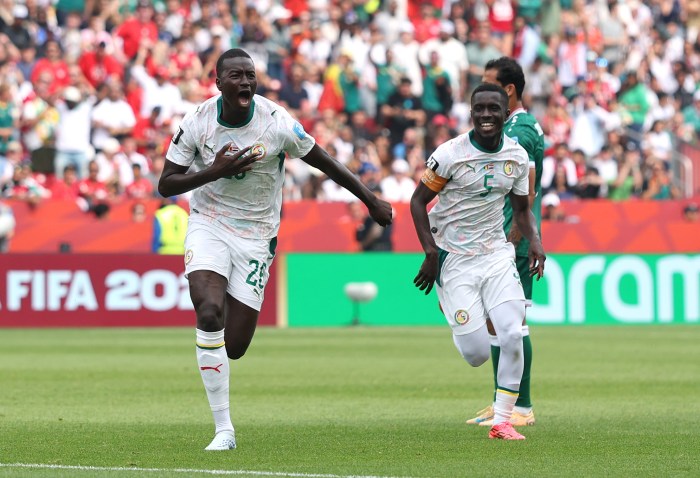
Wilson explained that in Dar es Salaam — a city with about 4 million to 5 million school-age children — there are four full-size fields that are accessible to the public.
“And it’s only accessible if you have the money to pay for it, and it’s pretty expensive. That’s just not enough quality space to be able to have any type of significant grassroots development system,” he said. “Most kids in Tanzania don’t even play 11v11 — even the good players — until they’re 17, 18 years old. And by then, by most industry standards, you’re aging out.”
Wilson pointed out that the next barrier to development was coaching.
“You have people who are willing and who are invested,” he said. “But the level of understanding the international game and understanding what it takes to compete on an international level is just not quite up to par.”
Finally, the struggle of day-to-day living makes soccer an unaffordable luxury for many.
“I think the day-to-day life, it’s hard in Tanzania,” he said. “It’s hard in Africa when you have people who are choosing between transport to get to practice and eating, and oftentimes they take the road of going to practice. That becomes a rough life. “
For Wilson, who sees development through the prism of Africa and the United States, the remarkable aspect of the African presence in global soccer is that so many have reached the top of the sport at all.
“The amazing thing about Africa is that even though there’s no pathways, there’s still some kids making it,” he said. “When I say coming from nothing, I don’t mean mom and dad didn’t have means. I mean zero pathway, but they’re finding a way to make it to every top league in the world.”
The primary challenge inside Africa when it comes to soccer is the process of developing its raw material.
“It’s similar to cotton,” Wilson said. “Africans grow cotton, and they export it to China. And then they buy the shirts back from China. They’re just missing that middle piece of manufacturing of cotton into textile. It’s the same thing with them with their athletes. They have the talent, but unfortunately right now they don’t have the manufacturing capabilities to be able to turn that talent. They have to export their resource or export their resources to Europe.”
For Wilson, the success of Africa in the World Cup should put pressure on the continent’s various soccer federations to put more effort and resources into development.
“African federations and African people who are interested in African sports should say, ‘Look, we got to figure out how we can help these kids here,’” Wilson said. “We got to figure out how we can develop them here, give opportunities to them here, so that they’re not forced to leave and be developed in Europe.”
Again, how long does Wilson think that will take?
“I think it depends on the result you’re looking at,” he said.
Wilson pointed out that even with Morocco — which became the first African team to reach the World Cup semifinals in 2022 and is into the quarterfinals again this tournament — many of the players on the national team were developed in France.
“If you’re talking about a World Cup team, I think it could even happen this World Cup. I think Morocco’s got a good chance,” he said. “Morocco’s in the middle of a golden generation right now. So, I think Morocco is going to be a force to be reckoned with for the next maybe two World Cup cycles, and they have a chance this year to win it.”
The challenge for development requires investing in safe facilities, quality fields and quality academies.
“The creativity and strength, the will, the desire are all there,” Wilson said. “There’s just not places to play, and they’re not learning the game.”
The success that African teams have enjoyed in this World Cup in some ways raises more questions than it answers: How will Africa develop a new generation of young talent and keep that talent on the continent? Can it develop its raw soccer resources in a way that enriches the continent?
Those challenges echo centuries, on and off the pitch.
The post World Cup shows African soccer is here. Now it’s time to stay. appeared first on Andscape.
What's Your Reaction?
 Like
0
Like
0
 Dislike
0
Dislike
0
 Love
0
Love
0
 Funny
0
Funny
0
 Angry
0
Angry
0
 Sad
0
Sad
0
 Wow
0
Wow
0