








Why Serena Williams came back

In 2002, the same year Serena Williams completely dominated the world of professional tennis en route to her first “Serena Slam” of holding all four major titles simultaneously, the movie Paid In Full was released. No one knew then — certainly not Serena herself — that nearly a quarter century later, the cult classic’s defining soliloquy would embody her life.
Mekhi Phifer’s character, Mitch, was based on the infamous and legendary Harlem drug kingpin Rich Porter. Though Mitch was referencing his love of hustling, the quote itself was rooted in far more than street politics. It was about identity, purpose, the adrenaline of his profession — and ultimately the stress that came with the mere thought of walking away from what made him feel most alive.
“I love the game. I love to hustle, man,” Mitch said. “[I] be feeling like one them ball-playing n‑‑‑‑s, you know, like Bird or Magic or something. Yeah, you know, a n‑‑‑‑ got dough. A n‑‑‑‑ could leave the league. But if I leave, the fans still gon’ love me, man? I get love out here in Harlem, man! I done sold coke on these streets — hash, weed, heroin. As long as n‑‑‑‑s was feeling it, a n‑‑‑‑ like me could hustle it. That’s my gift in life.”
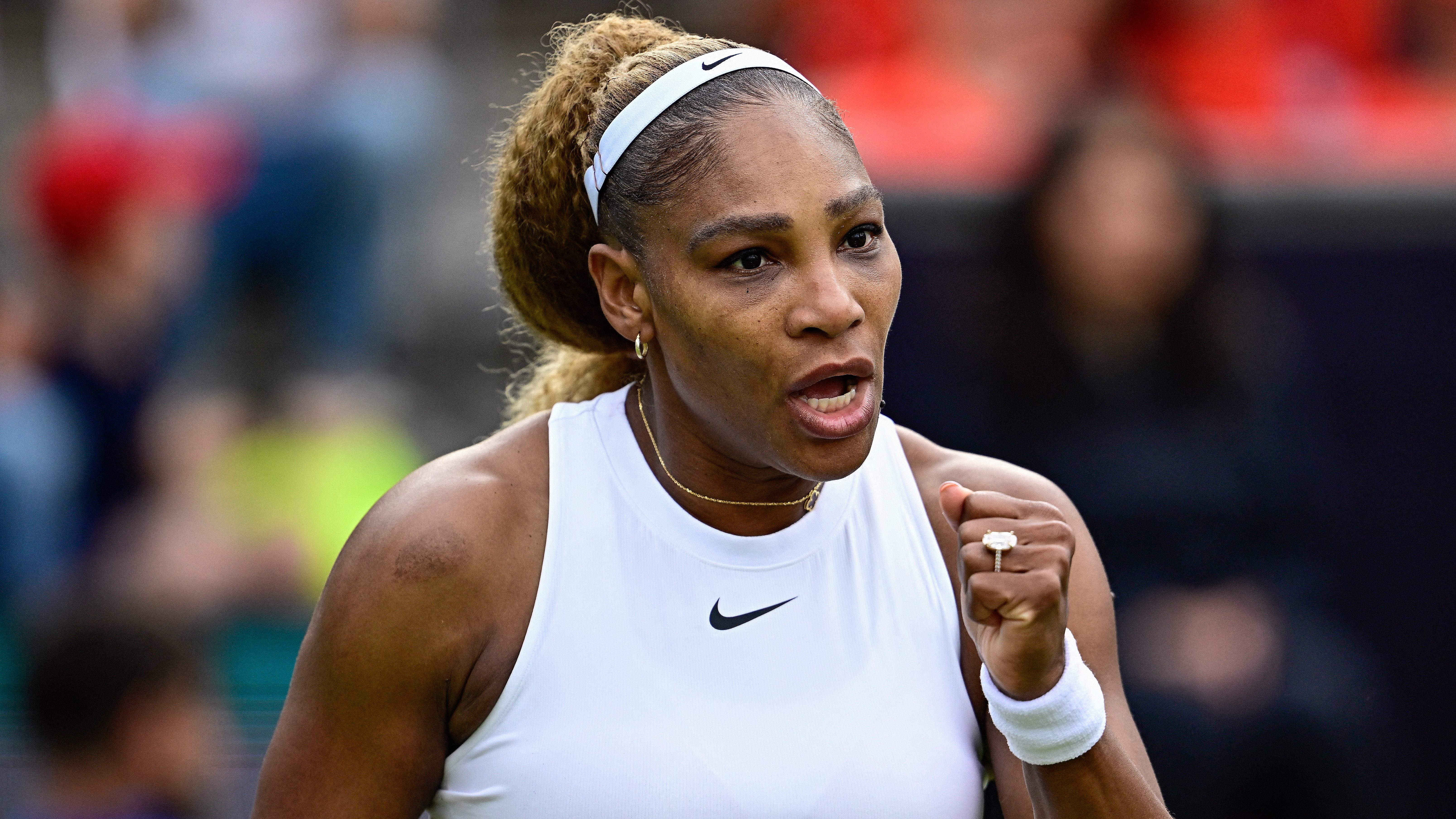
As Williams prepares to return to Wimbledon — a tournament she’s won seven times — the most compelling question isn’t if she can compete at age 44, nearly four years since her last professional match.
The intrigue lies in what brought her back. Many of Mitch’s sentiments live in Serena’s August 2022 statement in which she announced she was stepping away from tennis.
“Retirement” — a word Serena admittedly never used to describe herself four years ago — is often misconstrued with freedom. But what does it really mean when an elite-level athlete still longs for the passion they dedicated their life to mastering?
Tennis became Serena’s identity and how she, in her own way, wrote chapters into American history. Conversations around race, gender equality and maternal health were had with Serena as a foundation. Movies were made. Excellence was admired. But such a singular pursuit presents a complex and understandable desire not to walk away.
With athletes, intimacy lives in the process.
“It started when they were young,” said Robert Andrews, renowned sports psychologist and founder and director of The Institute of Sports Performance. “Leaving behind the locker room, the travel, and the different coaches, the winning, playing at Wimbledon or the French Open — there’s a process that takes place there. It’s not just, ‘OK, I’m done. I’m going to go live this happy life.’
“A lot of times there’s confusion, grief, anxiety, and loss of identity. So it’s not the easy road everybody thinks.”
This distinction is perhaps the most important quality when discussing an athlete’s life after being an athlete. Retirement is often seen as no work, but it’s also the dissolving of structure — which athletes thrive on. A schedule dictates the rhythm of life. When that disappears, discovering a new structure is more intimidating than any championship.
Ultimately, then, Serena chose her family in 2022. The choice never came off in angst. What sounded regretful was that she was forced to choose in the first place. This was the love she found and the love she created.
“Believe me, I never wanted to choose between tennis and a family,” she said then. “I don’t think it’s fair. … There is no happiness in this topic for me. I know it’s not the usual thing to say, but I feel a great deal of pain. It’s the hardest thing that I could ever imagine. I hate it. I hate that I have to be at this crossroads.”
Whether that unfinished piece of history matters to Serena remains known only to her. The psychology behind stepping away, however, is much like mourning the loss of a loved one.
“I’ve been reluctant to admit to myself or anyone else that I have to move on from playing tennis,” Williams wrote.
She couldn’t speak with her husband or parents about what she dubbed a “taboo topic.” Real grief existed then, and perhaps still does.
“It comes up, I get an uncomfortable lump in my throat, and I start to cry,” she wrote. “The only person I’ve really gone there with is my therapist! One thing I’m not going to do is sugarcoat this. I know that a lot of people are excited about and look forward to retiring, and I really wish I felt that way.”
Luke Walker/Getty Images for LTA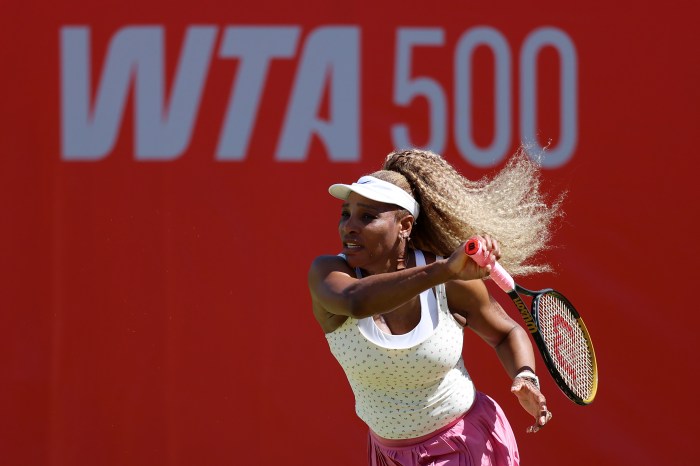
Judging from Williams’ thoughts and what the art of competition means, championships make up only part of the addiction. It’s the purpose, the mastery, and the daily justification of embarking on the only professional journey she’s ever known.
Championships are the end goal. The heartbeat is in the pursuit of them.
Victories and battles spanned decades and the game’s evolution. Williams’ opponents weren’t simply on the other side of the net — she couldn’t escape the standards she had set for herself. She rallied against expectations in a sport that never truly knew how to embrace her.
It was the history of race and tennis in America, as told by a young Black girl from Compton, California.
Yet, there isn’t a cultural temperature check or business venture that an already deeply business-savvy Williams could find that would replicate the endorphin rush that is Wimbledon’s Centre Court.
“The athletes that I’ve seen struggle are the ones that think their sport is their identity. … Sometimes it’s sad to watch and listen to [them] try to be who they were and perform like they used to be,” Andrews said. “So understanding that it’s a transitional process, it’s a letting go, but also a finding of what’s next. Serena seems to really understand that.”
The key questions in 2026 are whether Serena misses tennis, or the version of herself that found so much purpose in the sport she inevitably changed. Appreciating what retirement means in its literal sense is remarkably different from living with the myriad emotions that mark the new sense of forever it brings.
Serena Williams is far from an anomaly. Tom Brady, Michael Jordan, and Michael Phelps have all famously spoken about finding joy outside their sports — and how difficult it was to sacrifice personal happiness for professional fulfillment. LeBron James has often lauded his wife and family’s patience with his desire to play basketball as long as he can — including his daughter’s recent, and touching, Father’s Day card to him.
“When you retire, I can’t wait for you to be at all my games,” his daughter Zhuri wrote, “like I was at yours.”
Even Jay-Z, nearly 10 years removed from his last album, finds himself as active as any rapper this year. The throughline isn’t a lack of money, validation, and certainly not fame. Every name listed is among the most recognizable people on the planet. At some point, the end arrives for every great creator, and certainly an athlete. Not the end of life, but the beginning of a new one.
Serena Williams knows, or she should know, that opportunities like the one before her at Wimbledon are rare. In life’s grand scheme, she’s a young woman with opportunities and leverage very few in the world will ever experience. In the grand scheme of professional tennis, far more rests in the rearview than the dashboard.
Growth in life never ends. Dominance in sports does.
Finding the next challenge is the hardest part.
TALLIS / AFP via Getty Images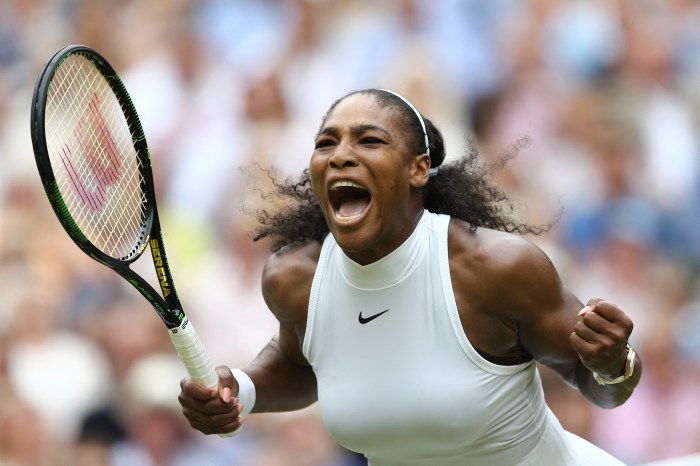
What Serena Williams searches for is what the great majority of us hope our life’s legacy entails. We all want to leave behind something that shaped us and hopefully changed others. We want that in our careers, marriages, friendships, and relationships with whatever higher power(s) we worship.
But along the way, we come to understand happiness is not a straight line. It’s not one size fits all. It’s the most painful pursuit of our lives, but the pursuit makes life worth living.
“Sometimes it takes more than one thing to channel that energy into,” Andrews said.
Life’s fuel is purpose. The most successful transitions occur when a person, and certainly an athlete like Williams, realizes that they’re the purpose — not the “it.” Crowds eventually silence. Trophies collect dust and become memories. That’s why Mitch’s Paid In Full quote resonates in the manner it does, and why it defines 2026 Serena Williams in such a piercing manner.
“That’s my gift in life.”
For a career that spans decades and across two centuries, Williams answered the question like none other before or after her in tennis history. As grand as Wimbledon is, it could never answer all the questions.
But that’s the point. Some questions never stop being asked.
Saying goodbye is far harder than introducing yourself. Seeing Williams on Wimbledon’s grass once again next week will be surreal. Because of who she is, how long she’s been at it and the reality of this next time could very much be the last time we see Serena Williams in the mold she crafted — one serve, drop shot, and rally after another.
Greatness is salient because it’s forever. Greatness is even harder to embrace, because it doesn’t last forever. The trophies were the validation, but never the sole protagonist. That was Serena Williams. That was the pursuit.
Maybe that’s why Serena loathed the term “retirement.” That begets an ending. Evolution means continuation. The pursuit was always going to be the songs in the key of her life. Serena’s tallest task — all of ours, really — is composing the rest of her life’s soundtrack.
The post Why Serena Williams came back appeared first on Andscape.
What's Your Reaction?
 Like
0
Like
0
 Dislike
0
Dislike
0
 Love
0
Love
0
 Funny
0
Funny
0
 Angry
0
Angry
0
 Sad
0
Sad
0
 Wow
0
Wow
0