





Charlotte Hornets GM Jeff Peterson has ‘thick skin’ to succeed in NBA

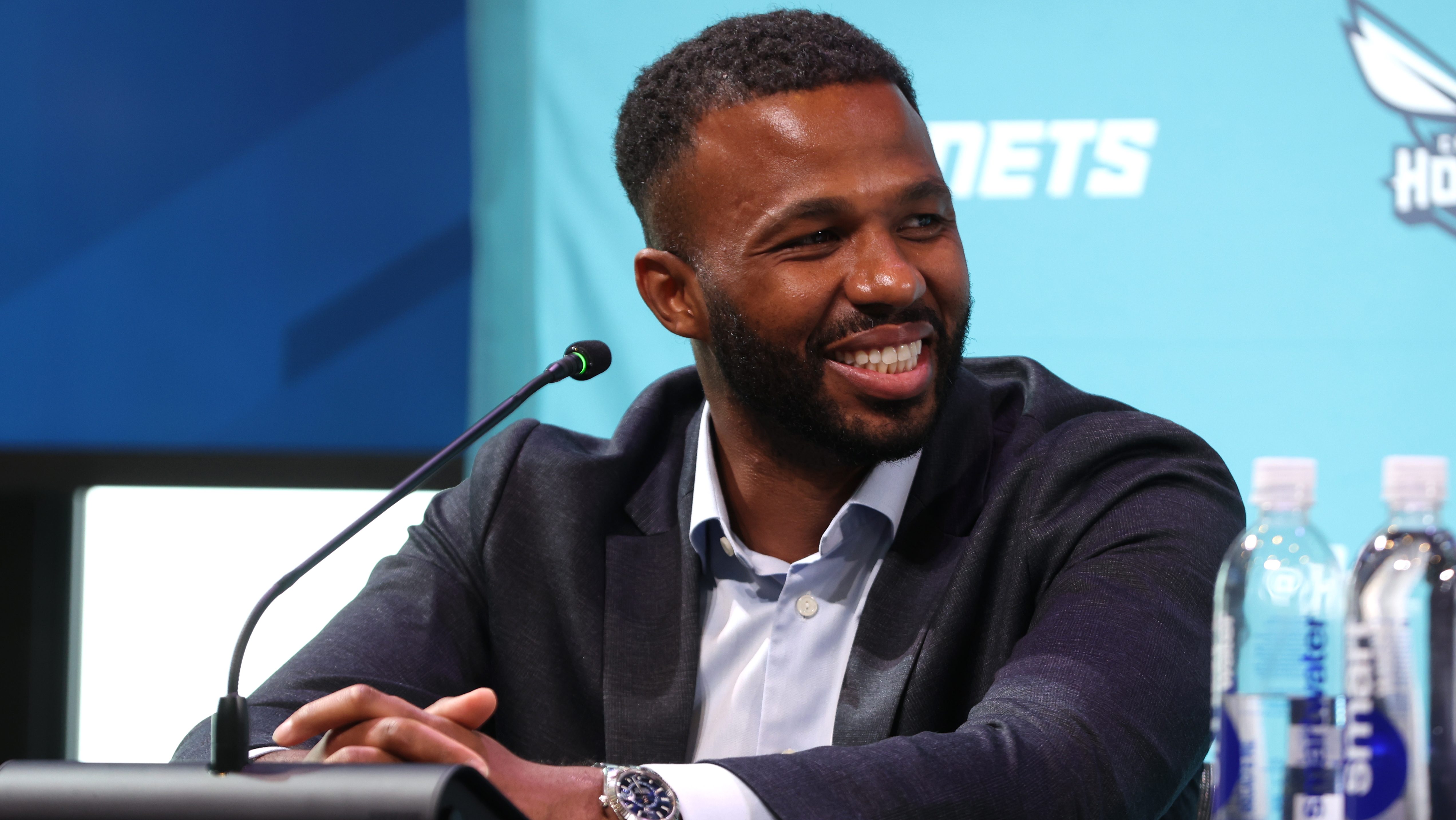
LAS VEGAS — The way Charlotte Hornets general manager Jeff Peterson sees it, it’s in his best interest to ignore the buzz surrounding his surprising trade of popular star LaMelo Ball.
Peterson traded the 2022 NBA All-Star from the Hornets to the Minnesota Timberwolves last week for 2024 NBA Sixth Man of the Year Naz Reid, a 2033 first-round pick, three pick swaps and three second-round picks.
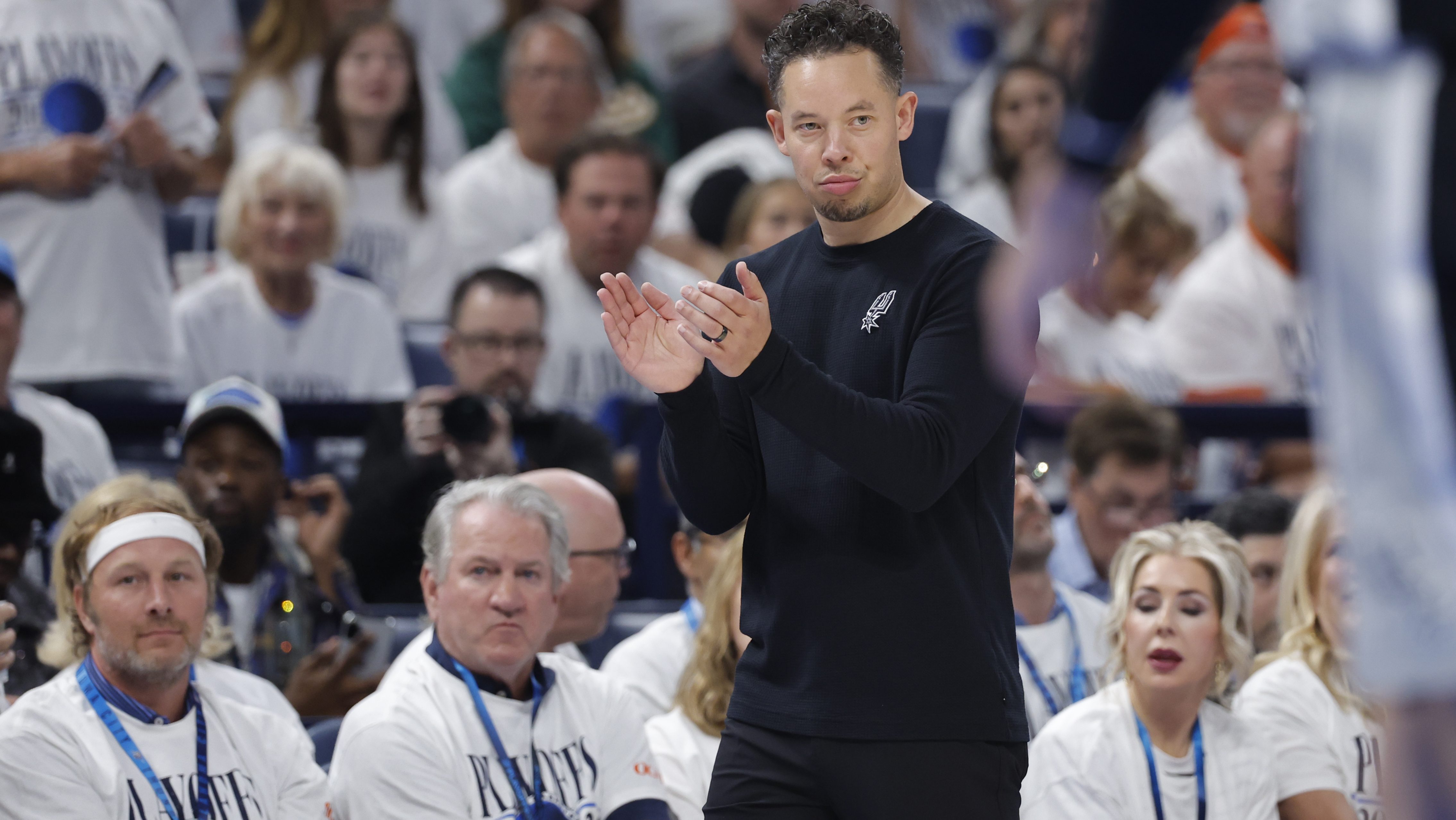
With the oft-injured Ball off to Minneapolis, young Hornets stars Kon Knueppel and Brandon Miller are now the faces of the franchise. And while Peterson may not have been widely known since being hired in 2024, trading Ball shined the NBA spotlight on the thick-skinned GM.
“Fortunately, I don’t get on social media. I don’t really follow it or anything like that,” Peterson told Andscape July 11 from the Thomas & Mack Center during NBA summer league. “I do have people who will send me stuff occasionally, and most of the time it’s as a joke. It’s always funny to me how people who don’t have the full context of a situation can truly weigh in on your decision making. But it’s very thick skin.
“Look, when I ultimately made the decision to trade LaMelo, I knew that it was not going to go over well with a lot of the fanbase. I understand and respect their position on it. But the minute you start to feed into that, then you can’t do the job. It’s not that you can’t value other people’s opinion or appreciate their opinion. But if you let that weigh in too much on what you’re doing, you’ll get paralyzed.”
Peterson was hired March 4, 2024, to oversee the Hornets’ lengthy rebuilding efforts amid the NBA’s longest playoff drought, having not reached the field since 2016. The Springfield, Missouri, native joined the Hornets after spending four-plus seasons as the Brooklyn Nets’ assistant GM and seven seasons with the Atlanta Hawks, where he was assistant GM, director of scouting and coordinator of basketball operations.
Peterson also played collegiately at Iowa, Arkansas and Florida State, and he holds a bachelor’s degree and a master’s degree in marketing.
The following is an exclusive sit-down interview with Peterson. He discusses the Ball trade, along with Knueppel and Miller stepping into leadership roles. Peterson also reflects on the pain of falling shy of the playoffs, dreams of a postseason berth, and how he gained strength from the challenges his family faced in the South.
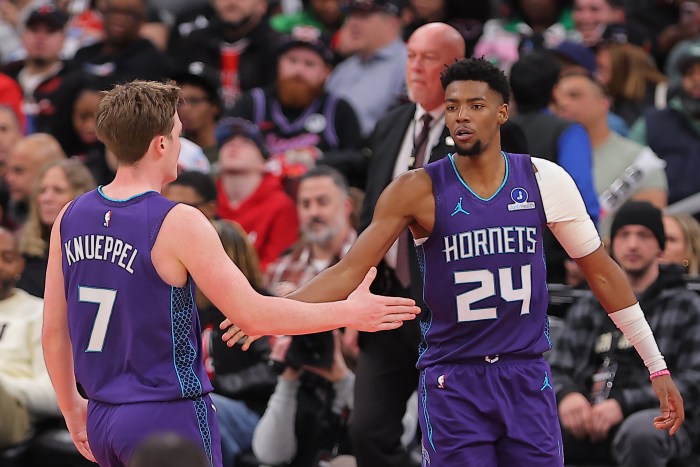
Melissa Tamez/Icon Sportswire via Getty Images
Why did this LaMelo Ball trade need to be made?
Ultimately, it was a very challenging decision. It’s not like I just woke up in the morning and said, “Oh, we got to get a trade.” I’ve evaluated the team every day since the time I got here. And LaMelo, I’m going to miss him. He’s a great person. Obviously, an enormous talent. But we ultimately made the decision that you know the goal is not just to get to the play-in [tournament]. The goal is being in the playoffs on a consistent basis and then ultimately contend for championships. When I entered dialogue with [Minnesota Timberwolves president of basketball operations] Tim Connelly, and we were able to get Naz Reid, and of course those picks, I just felt like it was something we couldn’t pass up in our life cycle right now.
Do you see Kon and Brandon as the co-faces of the Hornets now, and are you comfortable with that?
I’m very comfortable. [Hornets head coach] Charles [Lee] and I had a conversation with both of them knowing that these trades can be challenging. Sometimes I do think we forget that we’re human beings dealing with this stuff — lives and its emotions. Those guys are friends and they are in the locker room every day. At the same time, Charles and I kind of explained, “We believe in you guys, too. You guys are here. We want to continue to see you guys grow. This is going to challenge you guys. You guys got to continue to get better.” We wouldn’t have made that trade if we didn’t feel comfortable with what they can continue to be developing into.
What goes through your mind when you make a trade of that magnitude?
It’s a lot, because on the one hand, LaMelo is amazing. I love LaMelo and his personality, and of course the player. We had some great conversations. So, a little torn. You get pulled from an emotional standpoint. But at the same time, it is my responsibility to do what’s best for the organization. So, that goes back to having tough skin and some conviction with your decision knowing that you’re not going to get all of them right. I’m not going to get every draft right, every trade right, every free agent, whatever it is. But I do feel confident that the work and the preparation that I put in — and my group has put us — where ultimately this is the right thing for the franchise.
Is the acquisition of Naz Reid an underrated move in this trade?
Completely agree. He’s someone I’ve always appreciated. He’s one of my favorite stories in the NBA. Go undrafted. He’s finished top five in [NBA] Sixth Man of the Year running three years, and he won it a couple years ago. He’s been in the Western Conference finals a couple times. He’s a guy who has changed his body, has changed his habits, his approach. So, I like to bet on guys like that. Chip on the shoulder, got it out the mud, found a way to have success. So, I could not be more thrilled to have him with us. And I know he’s going to make us better.
Did re-signing veteran point guard Coby White (to a three-year, $74 million contract) make that trade decision easier?
No, because I’ve always loved Coby, too. And I said this from the time when we traded for Coby [in February], he was always a priority to bring back. He wasn’t a rental. So, we would bring Coby back with LaMelo, without LaMelo. And he was always someone who is just a winner and does the right thing. So, of course, it’s a luxury to have him in that situation. And we were fortunate that he ultimately ended up choosing us, because he could have went anywhere as a free agent. But no, they were independent of each other.
The Hornets beat the Miami Heat in the play-in tournament’s 9-10 matchup before being eliminated from postseason contention by the Orlando Magic, stretching the franchise’s playoff drought to 10 years. What did it mean to be so close to making the playoffs?
That was tough. We came off the Miami game, which was emotional as they come. One of the best games I’ve ever been to my life. And I was happy that our fans got to experience that at home. And then when you go to Orlando — look, and we knew it at the time, Orlando, everyone was writing them off. Everyone was saying that [then-Magic head coach Jamahl] Mosley’s getting fired and they need to trade either Paolo [Banchero] or Franz [Wagner] or whatever. These guys are humans. They have pride. They’re not going to just come in here and lay down because that’s what everyone thinks they’re going to do.
So, you got to give [the Magic] credit. They came out the gate, and they ended up giving Detroit a run as well. So, I don’t think with Orlando it was ever a talent question. They just kind of had some chemistry stuff and whatnot. They certainly clicked that night. If there is a positive of getting blown out like that, it’s basically [that] you know it’s over. We knew it was over. Whatever. Third quarter, just couldn’t really get over the hump.
I didn’t stay out there and watch the whole thing. I went to the back and kind of just decompressed. Got my thoughts together. Still watched it, of course. And then immediately it’s like, “All right, how are we going to continue to get better?” So, it’s important. You don’t want to make any emotional decisions right after the game, of course. But it’s clearly not good enough. That game still bothers me.
How would you describe your college basketball career, and what did you gain from it that resonates with you in your job now?
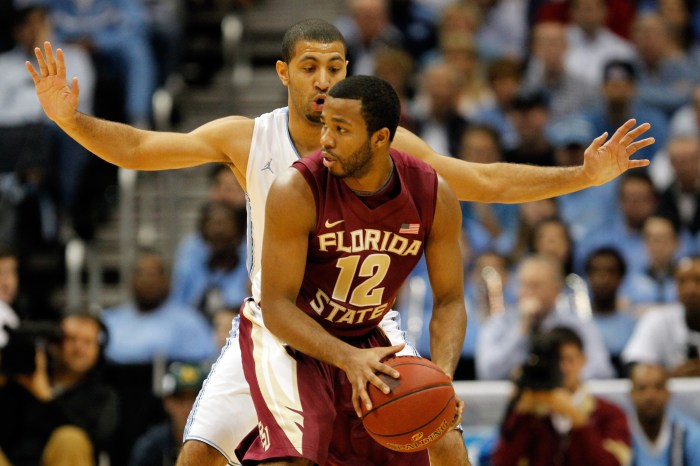
I’d say it was a journey. People joke — I think I was the first person to transfer twice, so I played at three different [schools]. I kind of look at it as life. It didn’t go as I thought it was going to go in high school. [I faced] a ton of adversity. And I use the word adversity with respect to this. Coming out of high school, I originally committed to Princeton, [but] I wanted to go to play at a higher level [than the Ivy League]. So, I did that, and Iowa didn’t go well. I ended up transferring to Arkansas. And then our coach ended up getting fired at Arkansas. So, then I transferred.
I played my last year at Florida State for Coach Ham [Leonard Hamilton]. But even though it didn’t necessarily go the way I thought it was going to go, my stop at Florida State was amazing because we won the ACC championship [in 2012]. It was the first time in school history. We made it to the NCAA tournament, which was at that point my goal. I knew getting to the NBA was probably a long shot, so I just wanted to get to the highest level at that point
So, how has that helped me in my job today? It really started right when I started with the Hawks as an intern, because I had either played against a lot of coaches or they recruited me. I was able to either, one, get information that other people couldn’t get. Two, it could have been something as simple as getting into practices or going to a game, going to shootaround, and just having those relationships with these guys to be able to get some information and stuff. At the end of the day, God put me where he wanted me. I thought I was going to play [in the NBA], but that certainly wasn’t the outcome. But I do reflect on the time in college and realize that I probably had a little bit of an unorthodox journey for me to end up in this seat now.
You majored in marketing and you got your master’s in marketing in college. What was the mindframe of that, and does that help you in any way now?
I’d say growing up, I wanted to own my own business. I was very intrigued with just entrepreneurship. I didn’t know exactly what I wanted to do, but I did know from doing some research early on and talking to some business-minded people early on that you need marketing in anything you do — as a reporter, writer, whatever you’re doing. I didn’t know exactly what type of business I wanted to own. But I know I would need marketing in some capacity. So that was the mindset.
What made you go into scouting as opposed to maybe going into coaching?
When I first started as an intern in Atlanta, it was in the front office. At that time, our front office was very lean. So, I was fortunate from the standpoint of I did a lot of front office work, but I also helped out on the court. So, I went on the court with the guys and played with them — practice dummy stuff, rebounding, all that stuff. So, after my first year, I contemplated getting into coaching. You just missed the game being on the court, and that wasn’t what I was doing at that time. Ultimately, at the time, [then-Hawks general manager] Danny Ferry offered me a job again in the front office role. So, I was like, “Let me just stick with this.” And that was 15 years ago, and it just kind of continued.
So, my first draft was 2013, the Giannis [Antetokounmpo] draft. You know, at that time, again, I was an intern, so they didn’t care about my opinion. You know what I mean? I didn’t know what I didn’t know at the time. But what I did was just try to be reliable, be consistent, and have an amazing work ethic.
Tell me about your journey from Atlanta to Brooklyn.
After my third season in Atlanta, I got promoted to assistant GM. I was actually here [in Las Vegas] at the In-N-Out when it happened. Minnesota and OKC called for permission [to interview me]. Mike Budenholzer was the president of basketball operations with the Hawks, and Wes Wilcox was the GM. So, they took me to lunch. They said, “Obviously, we value you. We want you to be here long term as long as we are here.” So, they said, “Look, we can’t offer you assistant GM right now. But we’re going to do it next year.” And they were true to their word. They did it.
And so, of course, I was humbled and felt good about Minnesota and OKC calling. But at the same time, I wanted to stay in Atlanta. So, I was promoted to assistant GM, which, you know, a little bit of a challenge from the standpoint of I was 26 at the time. I still didn’t know exactly what I was doing. The hard part was managing a lot of people who were older than me. Most people were older than me in the scouting department of the organization. So, it’s one of those things where I had to find my balance of managing people who’ve been in the industry way longer than I have. So, that was a little tricky at time, but I did a good job.
Ultimately, Danny got let go. Wes got fired. Travis Schlenk came in 2017. We ended up hiring LP [Lloyd Pierce as head coach]. And then the following year, there was an assistant GM spot opening up in Brooklyn, and that’s when [Nets GM] Sean Marks called me and asked for permission. And again, it was one of those things where I felt very comfortable in Atlanta. I could have been in Atlanta as long as I wanted. I had a great relationship with those guys. But I knew if I wanted to continue to grow and push myself, I needed to get uncomfortable and see a different way of doing things. So that’s what kind of tipped the scale for me to go to Brooklyn. So yeah, then I was in Brooklyn for a little over 4 1/2 years.
Before you got this job, how many GM jobs did you interview for?
One, Detroit [in 2020]. That was during COVID. I was p—–. I’m competitive. So, anything I’m trying to do, I’m trying to win. So, I was p—–. It was actually weird. I was very happy for Troy [Weaver] because you talk about someone who just put the time in and deserved the opportunity, [who is] Black, someone who paved the way in many respects. So, it was a weird feeling. Happy for sure, but at the same time p—–, because I was just competitive and thought that could have been a great opportunity.
And then also, I was thankful that I even got that opportunity to interview at such an early stage in my career. So, at the end of the day, it just kind of motivated me more [to] continue to be sharper, continue to get uncomfortable with some things, and try to figure out how to be better, so the next time it happens, I’ll be ready to hopefully get the job.
Who would you say have been your top mentors along the way?
Leonard Hamilton back in college. [Dallas Mavericks president] Masai Ujiri has been amazing to me along the way. Tim Connelly has actually been very helpful for me. Danny, Wes, Sean were great to me. We still have an amazing relationship.
[Former Nike executive and Mavs GM] Nico [Harrison] in a different way, when he was at Nike just helping me navigate some business stuff. Those are probably the main ones. But Masai has been very instrumental in just helping me kind of navigate some things.
Kent Smith/NBAE via Getty Images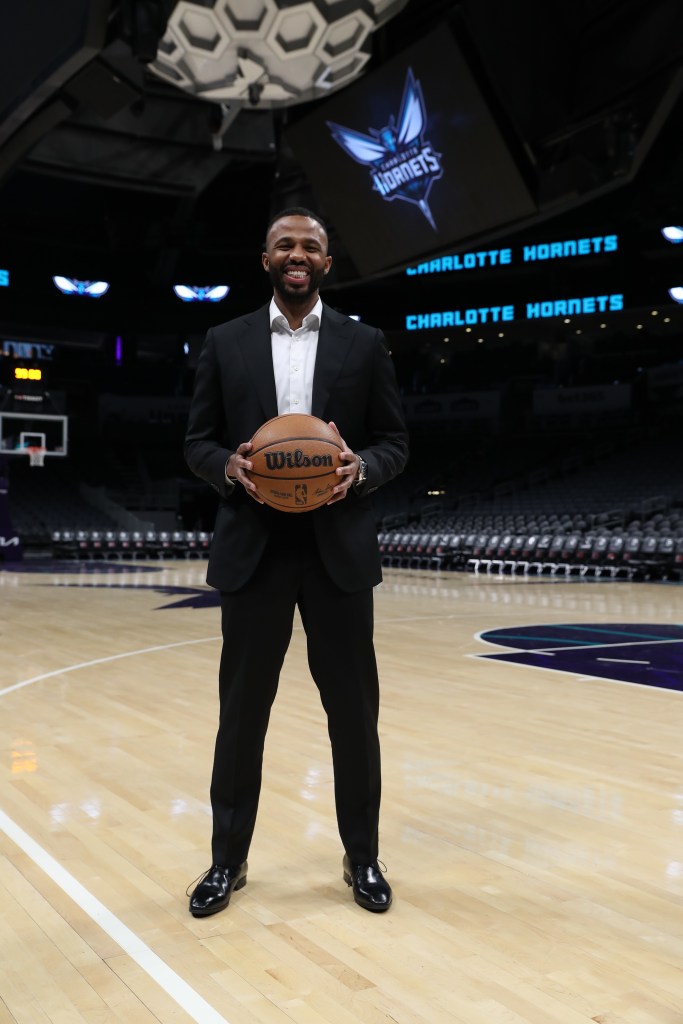
With the state of Black GMs at that time, were you encouraged or discouraged that an opportunity was on the horizon before you got the Charlotte job?
I was encouraged. It’s no secret. I just don’t feel like we [African Americans] get the same opportunity. But I was encouraged when my name kind of got put in the mix of people [the Hornets] wanted to interview. I’m not going to hide from it, but of course it helped that I had a relationship with [Hornets co-chair and former Hawks part-owner] Rick Schnall. But at the same time, I knew that I know how Rick operates. He’s not handing me anything. I have to go in there, perform, and earn the job.
So, I told him, “Just because of our relationship from Atlanta, I just want to be clear. I don’t want anything given to me. I want to earn this. And for whatever reason, if you go hire some of these other names, I’m still gonna kick your ass on the golf course, and we’re gonna be friends. But I don’t want anything handed to me at all.” So, no, I was encouraged by the opportunity.
Where does your competitive nature come from?
Just growing up, I saw that my parents were competitive. My dad played basketball — not in college or anything, but he played — and he’s always pushing. He’s the one to put the ball in my hands early. My mom’s very competitive, too. But she’s more like board games, kickball, four square, and cards. So, she wants to win anytime we play games, she’s trying to win as well. And my great-grandparents from Mississippi had 14 kids. So, I grew up with a huge extended family, So, every time we’re around doing stuff, we’re always competing.
Why did you think they hired you for this job when you got hired? What were your emotions?
They just felt confident that I was going to be able to ultimately execute ownership’s vision of turning Charlotte into the premier franchise. They said that during the interview process, like that was their goal. You know, it’s no secret Charlotte was kind of the laughingstock [of the NBA], if you will, or just wasn’t very highly thought of as an organization. And they had a goal to change that around. They felt confident that I could help carry out that vision. They took a shot on me, knowing that I was relatively young. But at the same time, they know that I’m prepared. I work. I put the time in. I take this very seriously. They trust me with their vision. And I was ecstatic. Very thankful. I don’t take it lightly. One, that these opportunities don’t come open a lot, especially for us [African Americans]. And two, just encouraged that I was going to also be able to turn around and help others from a hiring and staffing standpoint.
Did anybody tell you not to take the Hornets GM job because of the state of the franchise at that time?
No one told me not to take it. A couple of people just said, “If for whatever reason you feel uncomfortable [about taking the Hornets job], you’re still in a great spot in New York.” Sean and I are very close. Nets owner [Joseph Tsai] and I, we have a great relationship as well. So, I could have easily stayed in Brooklyn and could have waited for the next thing to pop up. Of course, there’s no guarantee. But no one said, “Do not take it.”
How would you describe this tenure with the Hornets so far?
Overall positive. My main goal, I really — I love helping people, so I wanted to help others, especially from a staffing standpoint. It’s great to be able to lead that process and go hire people and put assemble a team together, not a team on the floor, but a basketball operations team. And then two, I want to leave the Hornets in a better place than when I got there. I know it’s very simple, but I would argue so far it’s a better place than when I first got there. …
We’ve done relatively well in the draft. I would say I think we’ve done a tremendous job from a flexibility standpoint, collecting the second-most draft picks in the league. So just being super opportunistic and proactive with some of these deals, being able to win some deals in the margins. And again, just continuing to add talent through the draft. We’ve done a nice job.
What would it mean to you to get this franchise to the playoffs? What do you think it would mean to this patient fanbase?
Everything, it really would. I know what this fanbase has had to go through and their experience. And again, the [last] season that we had, they felt like we were right there, and give the credit to our team. Our guys played amazing last [season]. Charles, I think they did a great job. The Carolinas love basketball. Absolutely love it. So, it would mean the world to me to get to the [playoffs]. Our fan support, the last stretch of [last] season and that play-in game [in Charlotte], it was unbelievable. Spectrum Center was loud. [Hornets television color analyst] Dell Curry was like, “This was just as loud as it was when I used to play here.” So that would that would be amazing to get us there.
You know the fans, I know they’re chomping at the bits, because they want it now. I do feel for them. Nothing against the previous regime or whatnot, but they had their plan, and for whatever reason it worked or didn’t work. But I come in and I’m preaching patience, too, and they’re like, “We’ve been preaching patience for the last 10, 15 years.” I am confident we will get there with our flexibility now. We have some really good players. First and foremost, I love our system, coaching staff, everything. But then we’ve got a ton of flexibility. We have picks. We have this TPE [Traded Player Exception]. We got we got a lot that we can maneuver with.
What can be learned from your story?
Life is probably not going to go how you think it’s going to go. Growing up, I thought I was going to play in the NBA. Whether I was in high school, college, I still thought I was going to the NBA. I didn’t, but that doesn’t mean the journey stops, right? You go to be open-minded to different avenues. I never thought I would work in the front office. I didn’t even know that was an option. I moved home back home to Missouri because I was going to go play overseas. So, I was sleeping on my mom’s couch, and that’s when [then-Hawks assistant coach Darvin] Ham called and said, “Hey, Danny Ferry got the Atlanta job and wants to interview you for an internship.” So, I’m a man of faith. Put God first, trust in Him, and I think positive things ultimately will happen.
Where did you learn the thick skin trait from?
My parents, my grandparents. What we go through is nothing compared to what they went through. And I’m not even talking about basketball. I’m talking about life. I’ve seen them get prejudiced [against] or just the struggles that they’ve gone through. This, to me, if the trade doesn’t work out, I still get to live. I can walk. I can breathe. Not to say I don’t take this stuff serious, from a perspective standpoint. So, growing up and watching, my great-grandparents [on my mother’s side] were from Clarksdale, Mississippi, and hearing some of their stories. …
There’s not much that people can say that’s going to break me, especially if I don’t know you. And even my dad’s family — most of the time, you have tunnel vision. You just worry about yourself and your life and how things are so much bigger than this. And I have siblings; they have their own struggles as well. They’re all younger than me — half-brothers, half-sisters. But you know, I don’t say half; they’re full. They’ve had some adversity as well and they inspire me as well. So, the way I look at it, they can [criticize] and I’ll be fine. Whatever people have to say about me on Twitter or whatever it is, I’ll be fine.
The post Charlotte Hornets GM Jeff Peterson has ‘thick skin’ to succeed in NBA appeared first on Andscape.
What's Your Reaction?
 Like
0
Like
0
 Dislike
0
Dislike
0
 Love
0
Love
0
 Funny
0
Funny
0
 Angry
0
Angry
0
 Sad
0
Sad
0
 Wow
0
Wow
0