





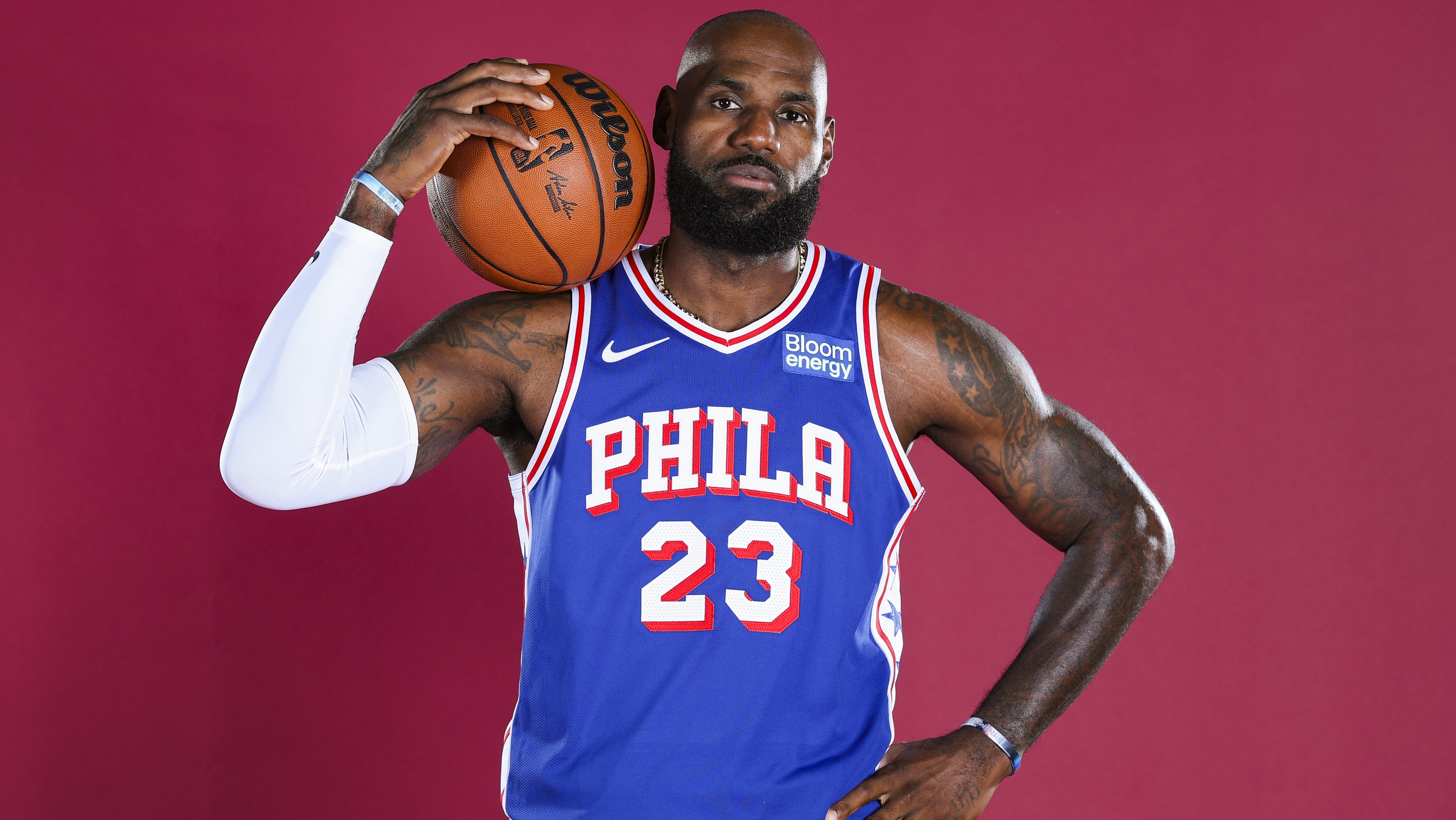

Who are college sports really being protected from?

The timing is symbolic, if not ironic.
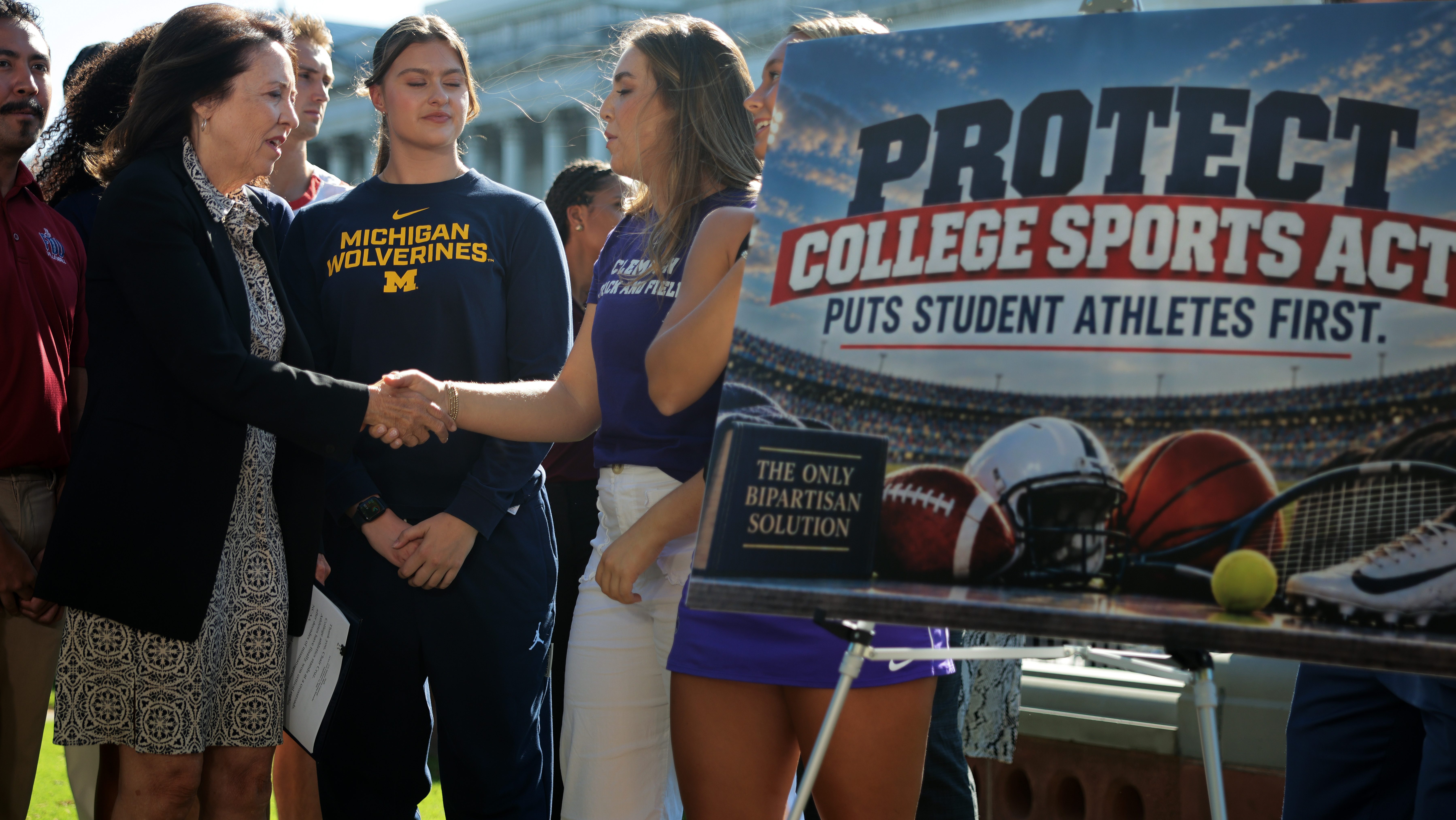
Speaker Mike Johnson announced Wednesday afternoon that he’s sending House of Representatives members home early until after November’s midterms. The decision effectively pauses the Protect College Sports Act (PCSA). A bill designed to bring order to college sports has now been delayed for months by the very institution eager to do so.
If it ever becomes law at all.
A decade ago this month, the phrase A Seat at the Table was not only associated with Solange’s new album. It was also tied to a feverish public discourse. One of the now-masterpiece’s interludes, “F.U.B.U. (For Us By Us),” featured a montage of Master P discussing the origin story of No Limit Records. In America, Black America, especially, the man born Percy Miller is one of the country’s greatest living hustlers.
P’s reasoning was simple. A record executive had a million-dollar check ready. All Percy Miller had to do was agree to the terms and conditions. In P’s mind, though, he’d be selling himself short to fall for the first offer. If this “white man” would offer him that, he surmised during the interlude, what’s to say his actual worth wasn’t 40 to 50 times more?
In 2016, the question centered on music. In 2026, it’s still very much about art. But now that art focuses on another American religion and pastime: college sports. Just months ahead of what could be the most consequential midterm election in modern American history, college sports are near the epicenter of a country in flux.
That’s because college athletes have moved beyond asking if they’ll ever be compensated for their worth. Now the discussion has evolved. It’s become more than just being let in the room. The present-day rhetoric centers on how much those same athletes can actually control their worth. Hence, the Protect College Sports Act lives at the heart of a true American debate.
Kevin Dietsch/Getty Images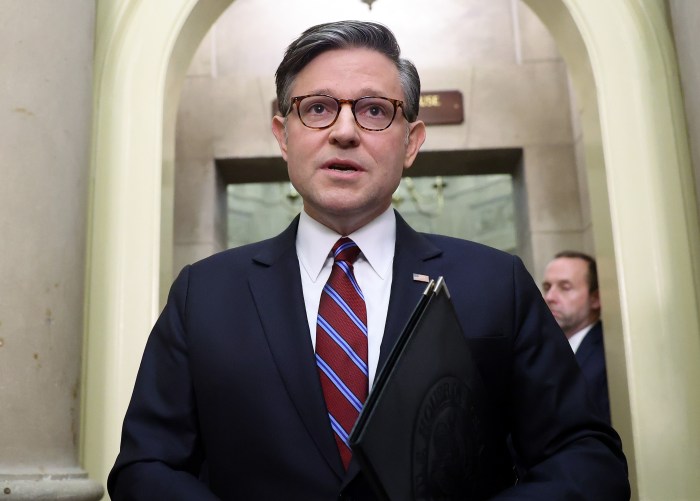
The bill intends to do exactly what its title says. It aims to tackle issues such as transfer portal chaos, rampant spending and mounds of litigation. On Tuesday, the Senate voted 74-24 to advance the process one step closer to a final vote that never came.
This followed Sen. Ted Cruz’s (R-Texas) College GameDay appearance on Saturday speaking in support of the legislation he co-sponsors. Three days later, NAACP President Derrick Johnson argued against the bill on SportsCenter.
At the crux is a simple truth: College sports need to be protected. The current name, image, and likeness (NIL) system might as well be athletic calculus, given how perplexing it can be to anyone attempting to understand its intricate ruleset. Restrictions on transfers and years of eligibility feel nonexistent. Olympic and nonrevenue sports demand protection, too.
Brandon Copeland, executive director of Athletes.org and former 10-year NFL veteran, views the bill’s title as an oxymoron.
“I think the bill should be called the Protect College Schools Act,” said Copeland, a graduate of the University of Pennsylvania’s prestigious Wharton School of Business. “It gives them an antitrust exemption.
“[Some] will tell you it’s limited and all that stuff, but it’s an antitrust exemption — which is, frankly, only given to professional leagues in terms of the sports entertainment industry. The only other leagues that have a federal antitrust exemption are pro leagues that have collectively bargained with their players’ associations to determine the rules.”
For nearly as long as college sports have existed in America, the conversation around labor, economics and fiscal responsibility has existed. Before July 2021 — when NIL completely revamped the landscape — college sports created its own folklore around the veil of “amateurism” and the idea of a “student-athlete.” Institutions enacted rules that, without exaggeration, made labor profits non-negotiable. Athletes participated in the system but never came close to owning it.
As it stands, no independently represented players’ associations or independent representatives for athletes are in the negotiation process. Some believe supporting the bill means speaking on behalf of the players. Many others, including Copeland, feel it’s ultimately caving to the NCAA.
“It leaves the athletes the most vulnerable,” Copeland said. “You’re giving a serial antitrust violator a federal antitrust exemption. What have they proven to show you, ‘Hey, I’m a different person? I deserve this authority over the lives of [countless] athletes every single year.’ This is also going to leave a lot of women’s and Olympic sports damaged and broken without representation.”
The concept of collective bargaining shows up in every argument about the PCSA. In many ways, it’s the same argument it’s always been. If athletes collectively decided to stop playing, then the NCAA would cease to exist. So why do those responsible for making college athletics the behemoth — financially and culturally — that it is today, and has been for generations, have to fight so earnestly for a pie they’re the most important ingredient in?
NFL and NBA players live in the same ecosystem as the commissioner. To represent them, the players have a union that allows them to negotiate. If the owners want to extend the season, they can’t do it without running it by the players first. The leverage they hold is understood.
Currently, college athletes have nothing of the sort, making their hope for a playing field that at least acknowledges their existence even harder.
“The transfer portal window is the same thing as the free agency,” Copeland reasons. “But as pro athletes, we negotiate.”
The system, as currently constructed, needs addressing. The harsh truth, however, is that the system has always needed fixing.
For so long, one side benefited from an infrastructure never intended to create an even distribution of wealth. Now the other side has access to power, economically and otherwise, which it never did before. Oversight is required. It’s necessary, but only to map out how power should be wielded. Critics of the PCSA argue this isn’t that.
Cooper Neill/Getty Images
Solange named the album A Seat at the Table not out of vanity. Rather, over the course of the album, she weaves an intimate portrait of power’s intimacy.
Power requires representation. The schools have representation, as do the conferences, the NCAA at large and even Congress. When President Donald Trump held a roundtable discussion on the future of college sports in March, politicians, athletic directors, coaches, conference commissioners, media executives and more attended the White House event. The only perspective missing from the room — then and now — was that of the players, who remained essentially voiceless.
“There’s no independently represented players’ association or independent representative for the athletes that is negotiating these decisions,” Copeland said.
With that in mind, the PCSA is actually an incomplete sentence. From whom do college sports need to be protected? Athletes? And why does only one side get to dictate the rules of engagement when it comes to protection?
“There’s only a very small subsection of schools that can actually afford to participate at some of these levels they’re discussing. So, to me, I think it’s white noise,” Mike Kravchenko, associate director of major gifts at The University of Chicago Booth School of Business, said on the Conduct Detrimental: THE Sports Law Podcast last month.
“It’s been a very big focus of the administration to protect college sports and bring it back to its glory. And I think a lot of the pressure is coming from that. Whereas less so on figuring out what’s actually going to work … it’s more of a visual thing than what I imagine to be an actual practical application.”
Should the PCSA graduate from bill to law — and survive the inevitable lawsuits it would face — the players won’t have full institutional mobility to govern their careers. Another body will determine financial future. Critics say it will be as close to life in college sports before July 2021 as realistically possible.
Money is a major motivator behind the Protect College Sports Act. But it’s not the only factor either. It’s about power and control from an institution that knew no other avenue until half a decade ago. In fact, the term “student-athlete” was never intended to celebrate education.
Right guard Ray Dennison died Sept. 25, 1955, just 30 hours after being injured on the opening kickoff between his Fort Myers A&M Aggies and Trinidad Junior College. Billie, his widow, sued the school for workers’ compensation benefits.
Walter Byers, then the NCAA’s executive director, envisioned the entire system collapsing if schools had to pay workers’ compensation for their athletes. Byers immediately set the distinction between what college athletes were and what college employees were. Byers’ “student-athlete” system would essentially sit as the scripture college sports revolved around for the next 65 years.
“So who can tell me what my value is?” Copeland asks rhetorically. “How can some random system tell me how valuable I am to this brand? … I agree with that Master P quote, but the system is built off insanity and built as a house of cards.”
The PCSA view of what dictates a “fair market” system shapes the process to eliminate “sham contracts” and create more fertile ground for what it views as legitimate endorsements. Under the PCSA, a college athlete could be required to submit NIL deals for approval to determine if they fall under “fair market value.”
“You think Deion [Sanders] does that before he does a State Farm commercial?” Copeland pondered. “If you’re at a university playing basketball, and you get a deal from a car dealership up the street — well, that fair market value will be determined based off whether another non-athlete-student could command the same rate or not. What? We ain’t the same.”
Whether a school should do everything in its power to prohibit its students from being scammed has never been the debate. Of course it should.
Where the debate comes in is whether the school should be the judge, jury and executioner when it comes to an athlete’s fair market value. All roads lead back to Master P’s quote.
Tom Williams/CQ-Roll Call, Inc via Getty Images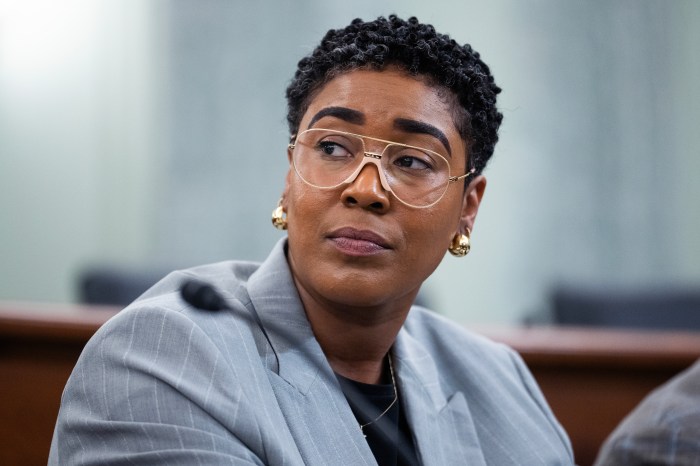
A number offered isn’t a direct confirmation of worth. Sometimes it’s about what the other side believes it can get away with compensating you. The two realities couldn’t be further apart.
Another reality is that college sports’ most lucrative labor force is inherently Black. According to an NCAA report detailing the 2024-25 academic year, nearly 90,000 Black student-athletes (16 percent of all athletes) participated in all three NCAA divisions. This marked the highest total on record and a 17% increase over the past decade. Black athletes make up 43% and 40% in “revenue-driving sports” football and men’s basketball, respectively, and 28% in women’s basketball.
Leverage in college sports is a relatively new concept. Historically, these athletes had little to no control over money they could earn, whether they could transfer and how their likeness was used.
“I used to be the judge, jury and executioner and have your whole livelihood in my hands,” Copeland said of the NCAA. “I control you.”
The collegiate ranks have been billed as chaotic in recent months, hence the need for the Protect College Sports Act. While no perfect business model exists, college sports bring a bottom line nearly every business would envy. College sports account for $19 billion annually, and the interest continues to skyrocket. Television ratings increased 9% in 2025. The strain the current system has put on athletic departments across the country is palpable.
Yet, in many cases, athletes are blamed.
“It’s absolute fearmongering,” Copeland said. “Ted Cruz went on [College] GameDay and talked about how college athletics was in chaos. He cited the LSU and NFL players cases, and then the gambling case. He used that as the reason Congress had to step in. As [ESPN’s] Dan [Murphy] said, the two cases he cited, the NCAA and the schools successfully shot it down. Without Congress.”
“Chaos” is one of those buzzwords people use when they’re attempting to convince people that something needs to be controlled. It’s true that there is chaos in 2026 college sports, though.
NIL policing needs improvement, as does the transfer portal. Smaller athletic departments cringe at the thought of a five-year plan. Yet, acknowledging chaos is one thing. Determining who has the power to fix it — while leaving its labor force largely unrepresented — that’s the real root of the chaos.
The irony is almost comical. Much like the Save America’s Pastime Act did with minor league baseball in 2018, Congress’ intervention here could carry unintended consequences. A bill designed to bring “stability” to college sports may actually lead to the one thing the NCAA has fought vehemently against for years: players organizing themselves.
“If there is something passed where it really does hamstring the rights of players,” Sam Ehrlich, Boise State University professor in the College of Business and Economics, said on the Conduct Detrimental podcast, “then the players have extra incentive to unionize and try to do something better.”
Tom Williams/CQ-Roll Call, Inc via Getty Images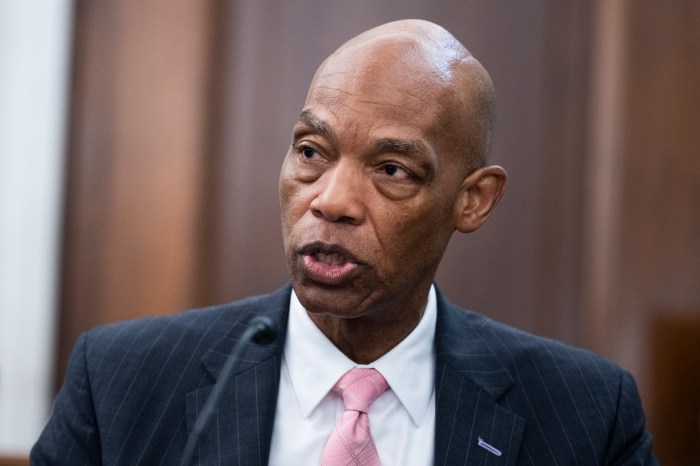
A decade ago on an album that centered the themes of identity and power better than nearly any this century, Master P cemented his place with very simple but poignant questions.
What do you think I’m worth?
And why should I believe you?
Ten years later, both questions sit at the foundation of the Protect College Sports Act. It’s less about how much these athletes deserve to be paid than who gets to decide it. And why don’t they have any say in the decision-making process?
“The athletes have not made the decisions that have led to this point,” Copeland said. “I would tell people, ‘Don’t hate the player, hate the game.’ The athletes didn’t make the game.”
On the other side of the PCSA are college athletes who aren’t asking to burn the establishment to the ground. They’re simply asking what so many athletes before them — such as like UCLA basketball great Ed O’Bannon — did before they were even born. Why is it that, for generations, they’ve been responsible for so many sitting at said table, yet they don’t even get to curate the menu?
A seat at the table is the goal. But it was never the end goal.
The post Who are college sports really being protected from? appeared first on Andscape.
What's Your Reaction?
 Like
0
Like
0
 Dislike
0
Dislike
0
 Love
0
Love
0
 Funny
0
Funny
0
 Angry
0
Angry
0
 Sad
0
Sad
0
 Wow
0
Wow
0