




The Price of Play: Jalen Hurts And The Black QB Trap



America and the NFL have a problem with Black quarterbacks.
Look at Jalen Hurts, the celebrated Black quarterback of the Philadelphia Eagles, whose recent health crisis has forced an undeniable hiccup for a league that prioritizes entertainment value over players’ physical safety. After Hurts sustained a calf injury in early October, team doctors found a superficial blood clot ahead of a game in London.
Doctors cleared him to play and to fly home afterward. A follow-up check back in Philadelphia revealed the clot had traveled to his lungs, resulting in a diagnosis of deep vein thrombosis and bilateral pulmonary emboli, a potentially fatal condition. The diagnosis is expected to sideline him for the rest of the season. While the NFL cleared the Eagles medical staff of wrongdoing, the players’ union is now investigating the quality of care he was provided.
For Black professionals, knowing that Hurts was pushing his body to the edge of survival is an all-too familiar reality. Mainstream professional spaces have a long and sordid history of working Black employees into the ground and exploiting our resilience as an infinite resource. We are often told we have to be twice as good to get half as much. Part of that equation comes with working harder and longer hours each day and understanding that as we do, we will face headwinds most of our non-Black colleagues never encounter.
There is an unspoken rule among Black folks in the modern workplace that if we want to get ahead and counteract systemic bias, we must outwork everyone around us, mask our vulnerabilities and weaknesses, and show up to produce elite results even when we are burnt out and internally suffocating. Even when we push through and get the job done, we are less likely to be acknowledged, promoted, or rewarded for our efforts.
We also know from studies that Black patients are expected to endure more physical pain and the medical community at large is less responsive in fielding our requests for support in managing pain and treatment. This dynamic becomes more complicated in an intensely physical sport like football, where the expectation that players buck up and play through injury can collide with those existing racial medical biases that routinely ignore and underestimate Black pain.
We may never know the details of the conversations that ultimately led the Eagles or the league to greenlight Hurts to play with a blood clot. Given the pressure and the eagerness to win, Hurts may have pressed the team to let him play.
The Eagles and the NFL have a responsibility to err on the side of protecting players when they’ve been diagnosed with any life-threatening medical condition. The Eagles and the NFL have established firm concussion protocols they enforce even when a player insists they are ok.
In Hurts’ case, unique pressure clouds any medical judgment tied to the sport’s most visible and coveted role. For generations, the quarterback in American football has been cast as the player a team and its fans trust to make smart split-second decisions, pilot the offensive drive, and lead the team, with performance often dictating whether the franchise tastes victory or suffers the agony of defeat.
For decades, the cultural script for a starting quarterback in America was rigidly defined as the clean-cut golden white boy who commands the huddle and dates the head cheerleader. It took nearly fifty years for the National Football League to entrust this role to a Black man.
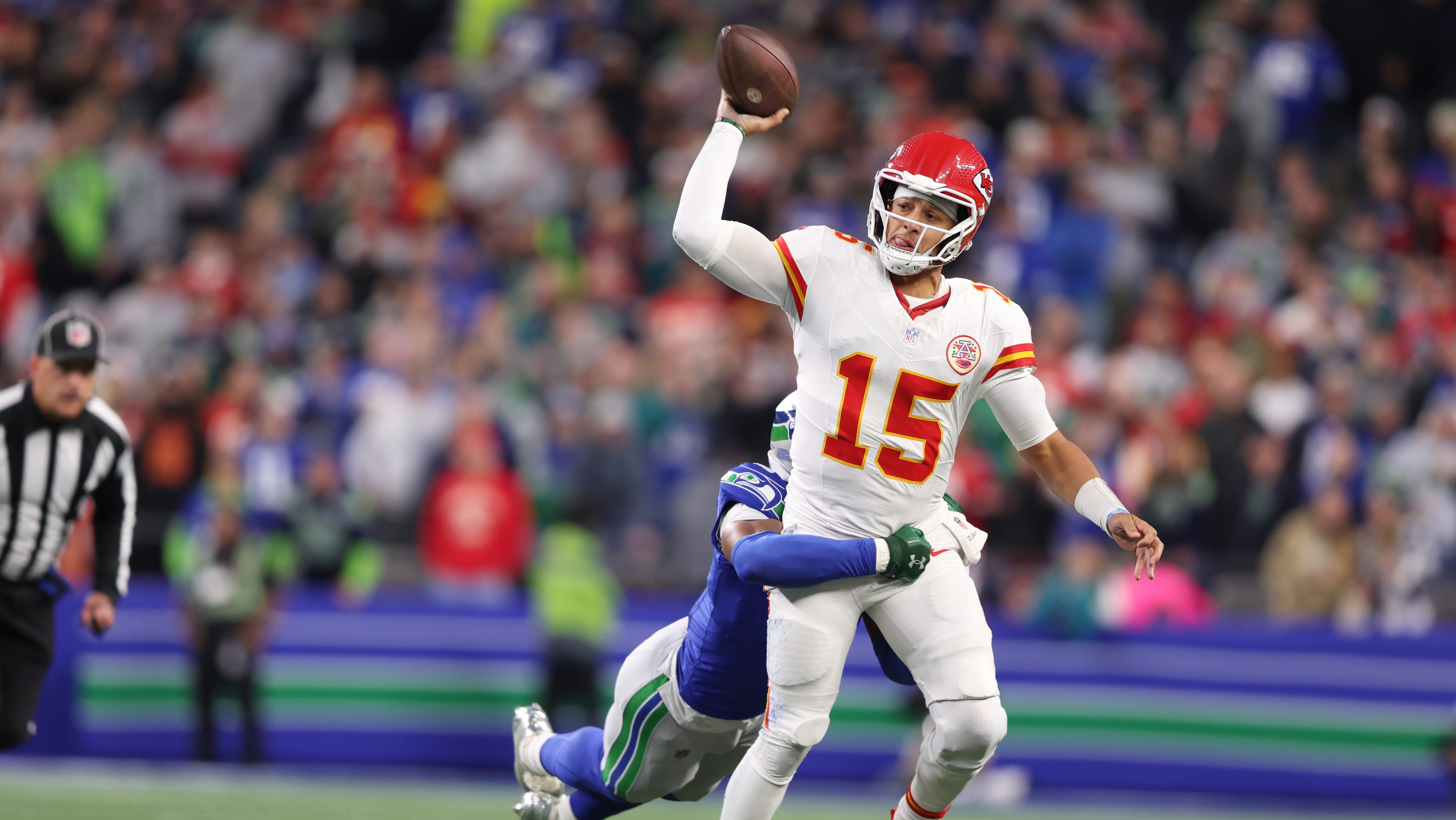
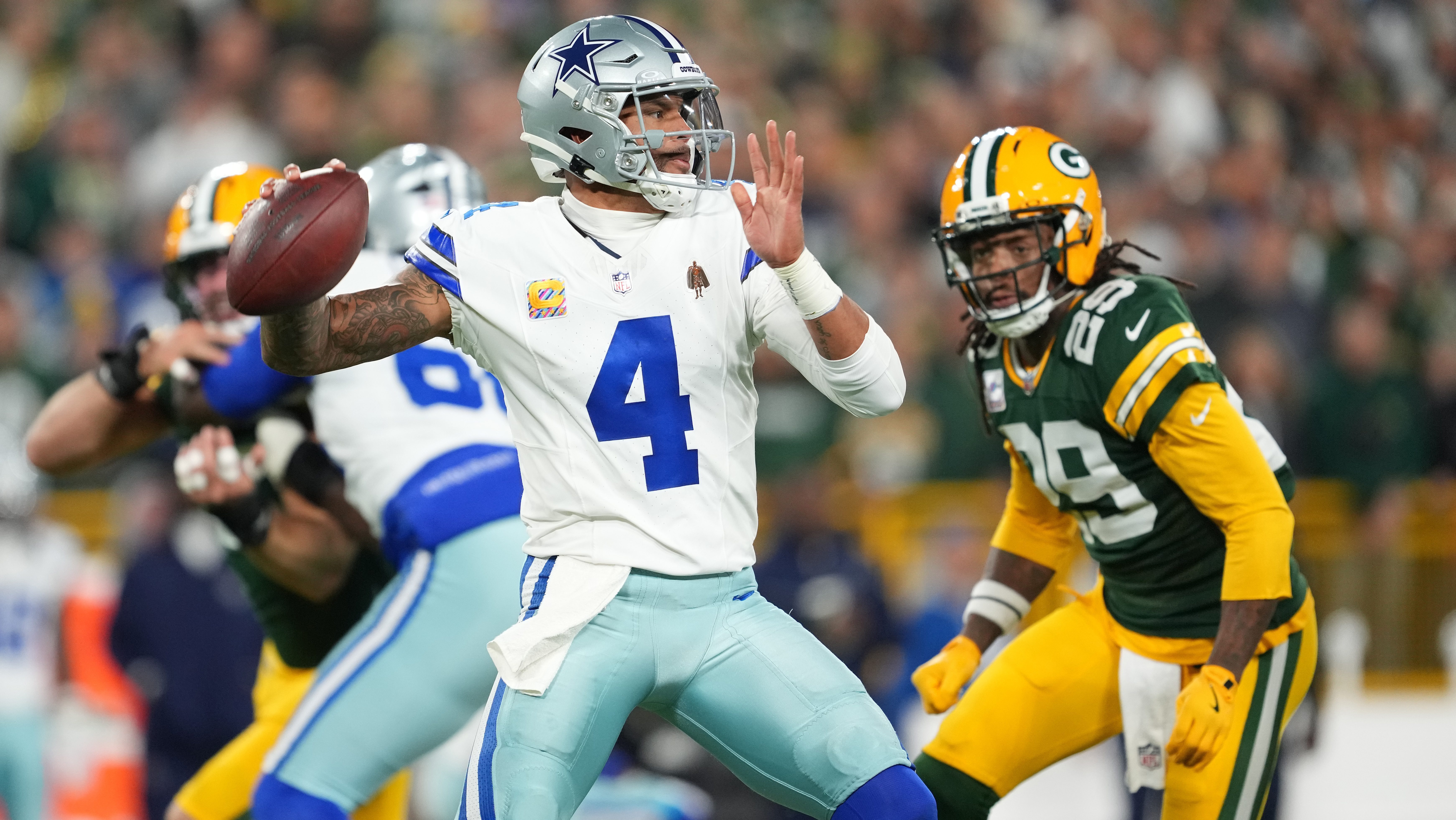
In a league that is majority Black, only 15 of the 32 quarterbacks expected to start were Black at the beginning of this season. Jalen Hurts was one of them. When the Philadelphia Eagles drafted him in 2020, he inherited a crown and a cross. As a franchise, the Eagles have long relied on Black quarterbacks, a legacy paved by Randall Cunningham, Rodney Peete, Donovan McNabb, Michael Vick, and now Jalen Hurts. Through these men, the team has logged more starts with a Black quarterback than any other team in league history.
Philadelphia is a notoriously tough sports town, and the Eagles fanbase is its own beast. Eagles fans in the city of brotherly love infamously booed Santa Claus during a bleak 1968 season, when one spectator noted that on that day they were tired of losing and “all against everything.” In the late 90s a jail and “Eagles court” were installed below Veterans Stadium to handle rowdy fans after a fan fired a flare gun into the visitor stands during a game.
Eagles fans are known to be louder than home team fans during away games, cementing a national reputation for hostility that Eagles fans proudly wrap into the oft-repeated defensive mantra, “No one likes us, and we don’t care.”
Widespread fan hostility has never spared Eagles quarterbacks from vitriol. For the Black men who have steered this franchise, that vitriol has shown up differently when the Eagles’ quarterback has been Black. Hurts hasn’t been the Eagles first or only Black quarterback in recent memory.
Donovan McNabb was the team’s quarterback for a decade, ending his tenure with the team in 2009, and was regularly targeted with deeply coded racial skepticism. His mechanics, leadership, and ability to win came under intense scrutiny. The Eagles Hall of Famer, who is still considered one of the best quarterbacks of all time, noted on HBO’s Real Sports that Black quarterbacks are forced to do a little extra because the sports world is harsher on them than its white stars.
A Duke University study on media portrayals shows that McNabb was right. When Black quarterbacks win, commentators praise their physical prowess, but when they lose, the media targets their leadership, intellect, and decision-making under pressure. The study found that the media described Black quarterbacks as athletic five times more often when their team won. When they lost, they used more than three times as many adjectives to describe Black quarterbacks as incompetent leaders.
In many ways, Hurts has emerged as an anomaly as a quarterback and player in the NFL and has proved to have little interest in conforming to what a largely white institutional sports media machine believes a franchise quarterback should look or sound like. Unlike the hyper-visible flashiness of former Philadelphia 76ers star Allen Iverson, Hurts’ temperament conveys a level of stoicism that gives critics little to grasp. He speaks in measured phrases and maintains an unshakeable poise even as he’s been on the receiving end of brutal critiques around whether he’s a “clutch” quarterback, and other evaluations that judge him more harshly than his white peers.
In a world where elite athletes almost universally sign with the same small group of mostly white male agents, Hurts has intentionally built his team outside that circle. He made a conscious, revolutionary decision to entrust his career, his management, and his brand to an all-women management team, three of whom are Black, led by his savvy agent Nicole Lynn. In many ways, this curation of his inner circle symbolizes a refusal to be tokenized within a professional sports ecosystem that often rewards Black players who alter their identities to appear nonthreatening.
The NFL has maligned Black quarterbacks who refuse to alter their identities. Former San Francisco 49ers quarterback Colin Kaepernick has been blackballed from the league for almost a decade after he used his platform to protest violence against Black Americans.
Kaepernick’s ongoing exclusion from the league exposes a double standard that governs the NFL, where corporate tolerance for any perceived political allegiance is applied exclusively to the margins of conservative alignment. New York Giants’ star Jaxson Dart has kept his job as quarterback even after proudly introducing President Donald Trump at a political rally and praising Charlie Kirk’s contributions to American society. Former New England Patriots quarterback Tom Brady kept his starting quarterback role even after it was revealed he had a MAGA hat in his locker. More recently, San Francisco 49ers star Nick Bosa kept his job after crashing a postgame tv broadcast wearing one.
Hurts’ 5-year, $255 million contract with the Eagles expires in 2028. The contract extension, signed in 2023, made him the highest-paid player in the league and the first player with the Eagles to have a no-trade clause. The true test of Hurts’ leverage and importance to a franchise that has struggled under new offensive coordinators has arrived. With his fully guaranteed money dropping off significantly next year, and a blood clot keeping him off the field this season,
Hurts’ future now lies in the hands of a league that views even the most highly paid Black stars as temporary and easily replaceable assets. The conversations around Hurts’ life-threatening medical condition and future should serve as a harsh reminder for Black folks in professional workspaces that corporations will always prioritize their bottom lines, and that we need to prioritize our self-care over workplaces that will never truly love us back.
SEE ALSO:
Jalen Hurts Out For Season With Multiple Blood Clots
Meet Jalen Hurts’ All-Woman Management Team
What's Your Reaction?
 Like
0
 Dislike
0
 Love
0
 Funny
0
 Angry
0
 Sad
0
 Wow
0