![Trump Didn’t Win The Nobel Peace Prize, So He’s Helping Smear The Woman Who Did [Op-Ed]](https://newsone.com/wp-content/uploads/sites/22/2026/10/17915758433969.jpg?quality=80&strip=all&w=1024&crop=0,0,100,683px#)








The Beat Did Not Die. It Found Another Body

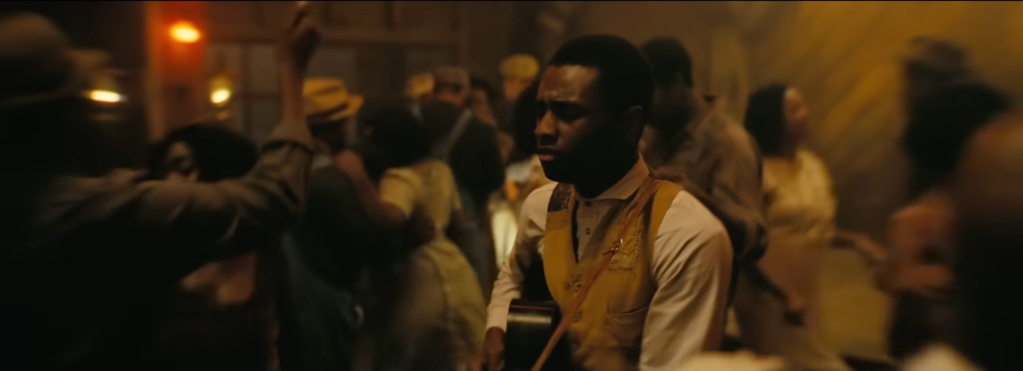
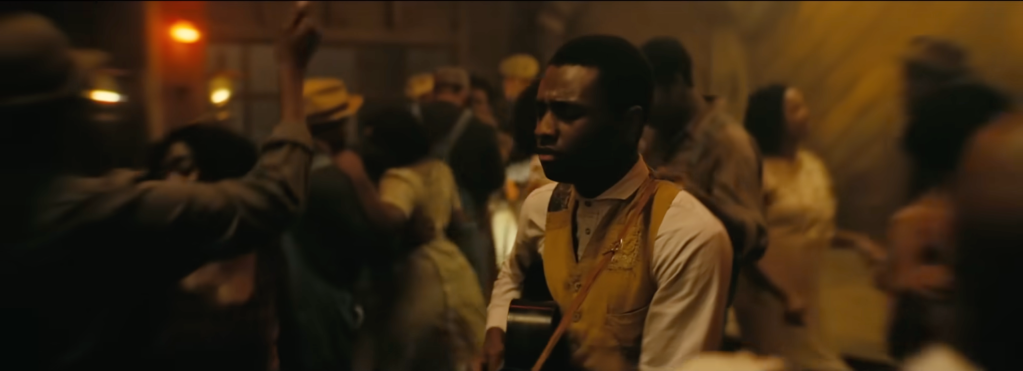
When the ngoni enters the Juke Joint in Sinners, the room shifts. The sound is small, sharp, ancient, almost easy to miss if you’re only listening for volume. But that little stringed voice opens a door. Suddenly, the blues is not alone in Mississippi. It has ancestors in the room.
That is the brilliance of Ryan Coogler’s Surreal Montage. It does not treat Black music as a straight line. It treats it as a circle. Past, present, and future arrive together, each one carrying rhythm in a different body.
At DanceAfrica 2026 at the Brooklyn Academy of Music, that circle became visible again. The Bantaba, the gathering space, was not just a performance frame. It was a living classroom. Drummers, dancers, elders, children, vendors, aunties, teachers, and witnesses all moved inside one shared field of energy. Not everybody knew the full history of what they were watching, but everybody could feel that something was being carried.
Chief Ayanda Clarke named the responsibility clearly: when we understand the history, culture, and intention behind the energy, we can create a legacy and lineage that does not disappear. When we know the “whys,” he said, we can use cultural expression to counteract purposeful erasure.
That same intelligence lives in the harvest celebrations of Upper Guinea, in the Hamana region near Kankan, in villages like Fisadou. There, music and dance are not separate from life. The djembe and dundun do not simply accompany the gathering. They organize it. The village dances to celebrate the harvest, to honor nature, to strengthen connection, to remind the community that survival is not only labor, it is also joy.
This is why Baba Abdel Salaam’s words keep echoing: you can take away the drums, but you cannot take away the beat.
That beat travels.
It travels from the savannah to Brooklyn. From the Bantaba to the dance studio. From the harvest ground to Chicago footwork. In Chicago, the feet move fast, cutting the floor into rhythm, speed, precision, and invention. It may not look like the village at first glance. But look again. The body is still talking to the drum, even when the drum has become a track, a sample, a bassline, a machine.
Kofi Osei Williams put it plainly: yes, you are dancing and drumming, but you are also part of the culture, part of the community, part of the rituals, part of us uplifting the world.
That is the through-line.
Black dance is not just movement. It is memory with a pulse. It is community organizing itself through rhythm. It is the body learning how to stay connected across oceans, cities, generations, and technologies.
The beat did not die. It found another body.
SEE ALSO:
What's Your Reaction?
 Like
0
Like
0
 Dislike
0
Dislike
0
 Love
0
Love
0
 Funny
0
Funny
0
 Angry
0
Angry
0
 Sad
0
Sad
0
 Wow
0
Wow
0

![Pentagon Says Nidal Malik Hasan’s Execution Will Be Livestreamed, And We Need To Talk About Why [Op-Ed]](https://newsone.com/wp-content/uploads/sites/22/2026/10/17915591144765.jpg?quality=80&strip=all&w=637&crop=0,0,100,424px#)