






Masquerade Is Not Disguise; It Is Wearable Art And Wearable Altar


When the Zaouli mask appears during the Surreal Montage in Ryan Coogler’s Sinners, the room changes. The body beneath the mask moves with impossible speed, feet flashing like something human and more-than-human at once, while the upper body remains steady, composed, almost untouchable. It is not just a dance. It is an arrival.
Zaouli, created by the Guro communities of central Côte d’Ivoire, is often celebrated for its dizzying footwork and breathtaking control. But to only admire the speed is to miss the deeper thing. The mask is a presence. The dancer does not simply perform under it. He becomes responsible to what the mask carries: beauty, spirit, social cohesion, ancestral force, village memory.
That is why this moment in Sinners opens so beautifully into New Orleans.
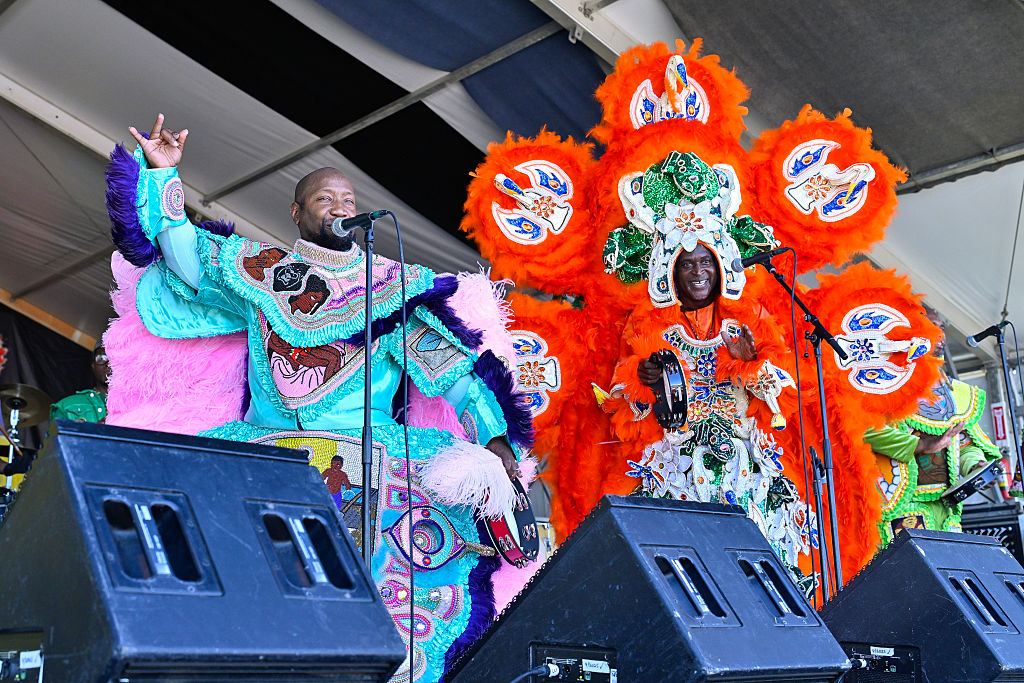
Big Chief Shaka Zulu, of the Golden Feather Hunters, made the distinction plain to me: “A costume you put on to cover who you are, a suit you put on to reveal who you are.”
In Black Masking culture, the suit is not a decoration. It is wearable art, yes, but also wearable altar. Hundreds of days of sewing, prayer, thought, sacrifice, creative energy, and communal labor gather in the beadwork. Bead by bead. Sequin by sequin. Hand by hand. When the body steps into that suit, it steps into accumulated spiritual labor.
So when a community protects the form, it is not protecting spectacle. It is protecting memory made visible.
From there, the video moves to the masquerade in Janjanbureh, Gambia, where the Oku/Olu presence carries another story of rupture and reconstruction. These are people whose ancestors were captured, displaced, intercepted before the Atlantic crossing was completed, and liberated, and who were resettled in Freetown. They were not returned home. They had to create home again. Out of rupture came new kinship, new religious life, new cultural forms, new ways to remember.
That makes the masquerade even more powerful. The mask becomes a way of carrying what displacement could not destroy.
And then New Orleans enters again through the Second Line.
The Divine Ladies Social Aid and Pleasure Club moves through the street with brass, fabric, umbrellas, handkerchiefs, steps, sweat, and joy. The First Line leads, but the Second Line turns the whole neighborhood into a moving ceremony. Shaka reminded me that handkerchiefs can wash away bad spirit, and umbrellas can catch spirit from the heavens. The street is not only street. It is procession route. It is communal altar. It is body, sound, and spirit in motion.
Across Zaouli, Black Masking, Oku/Olu masquerade, and Second Line, the lesson is not that all Black traditions are the same.
They are not.
The lesson is that Black people, across rupture, migration, captivity, resettlement, and survival, have repeatedly found ways to let the body carry what history tried to break.
The mask does not hide the culture.
The mask reveals the force still living inside it.
SEE ALSO:
‘Sinners’ Surreal Montage Connects Ancestral, Modern Black Music, Dance
The Beat Did Not Die. It Found Another Body
What's Your Reaction?
 Like
0
Like
0
 Dislike
0
Dislike
0
 Love
0
Love
0
 Funny
0
Funny
0
 Angry
0
Angry
0
 Sad
0
Sad
0
 Wow
0
Wow
0