






Mark Tatum lays out Basketball Africa League’s next transition

Now six seasons in, the Basketball Africa League is becoming more of a league.
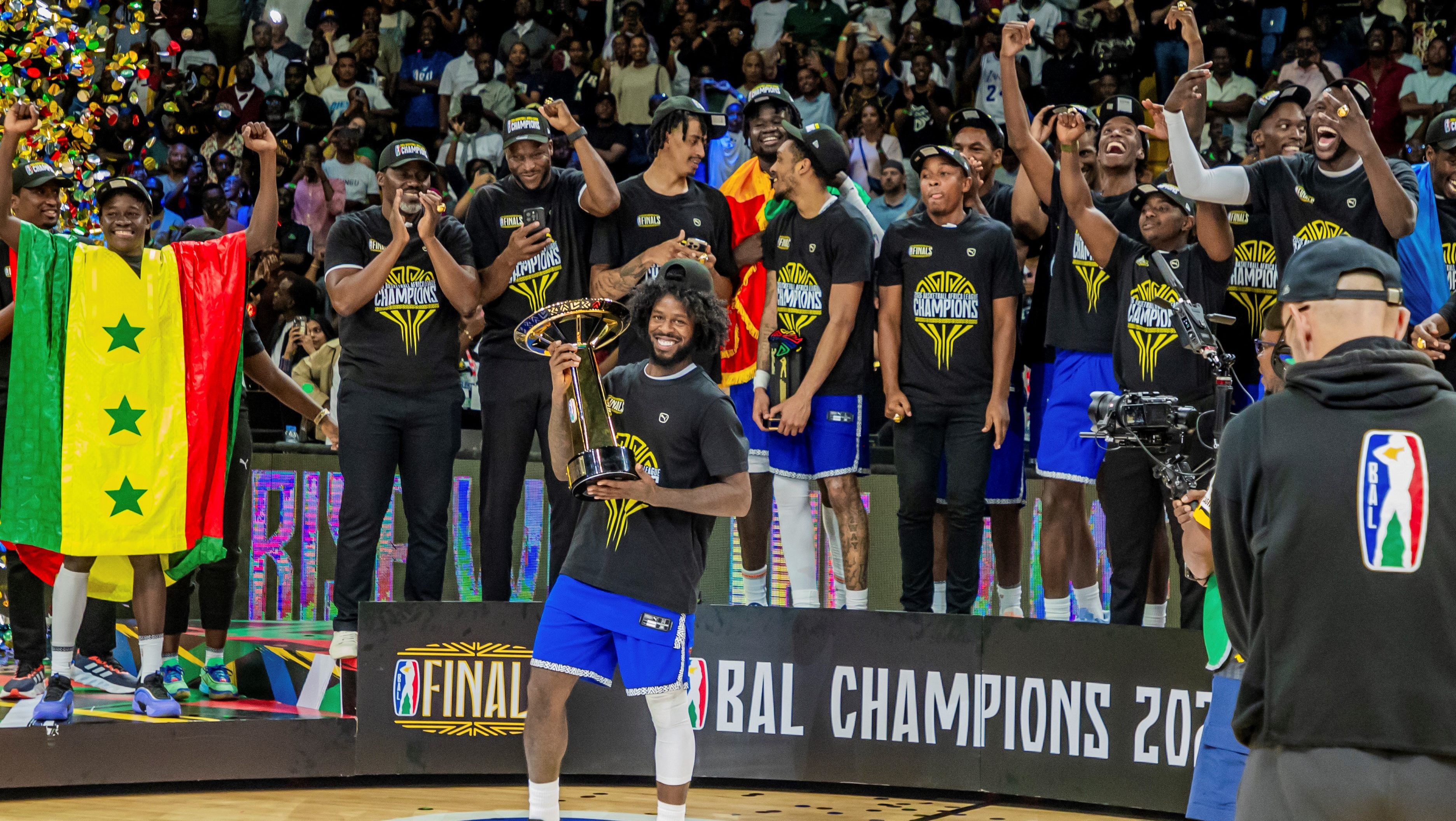
Rwanda’s RSSB Tigers won the 2026 BAL in their inaugural tournament season by defeating Angola’s Petro de Luanda 90-88 in the championship game in Kigali, Rwanda, on Sunday.
After its inaugural 2021 season was held in a bubble in Kigali because of the coronavirus pandemic, the subsequent five BAL seasons took place across multiple locations in a tournament format.
More than 110,000 fans attended BAL games this season, including record attendance for the group phase games in South Africa and Morocco.
But more change is coming. The 2026 BAL Investor Summit and Innovation Summit took place May 22-26 during the playoffs in Kigali and centered on the league’s transition to a franchise model. The BAL plans to slow-walk a shift from a tournament-based qualification system to a semi-closed, franchise-based model with 10 permanent franchise teams and two annual qualifying slots.
NBA deputy commissioner Mark Tatum said bids are being considered for the BAL from across the continent, with a quality arena needed in each location. Tatum added that there could be permanent franchises added, perhaps to the 2027 or 2028 BAL season.
“We are in the process now of transitioning the BAL from a completely open league and model where every year, 12 different teams could participate in the league,” Tatum told Andscape in a phone interview Monday. “In order to qualify now, you have to win your national championship. So, we basically take 12 national champions. And of course, those national champions can change every single year. So, after the first six seasons, we’ve decided that now is the right time to transition the BAL from an open model to more of a franchise model and a semi-closed model.
“We think that is a reflection of the success of the league over its first six seasons and the enormous growth opportunities for that we see going forward for the league by having the addition of permanent franchises. So, what permanent franchises will do is they will create partners of ours who are going to invest in developmental opportunities in basketball in particular cities.”
The following is a Q&A with Tatum in which he talks about the process of getting permanent franchises in the BAL, the good and challenging that comes with this new format, how the BAL is helping the NBA prepare for NBA Europe, the projected cost of BAL franchises, the completed 2026 BAL season, which cities are ready to add franchises, African representation in the NBA Finals and much more.
Tayfun Coskun/Anadolu via Getty Images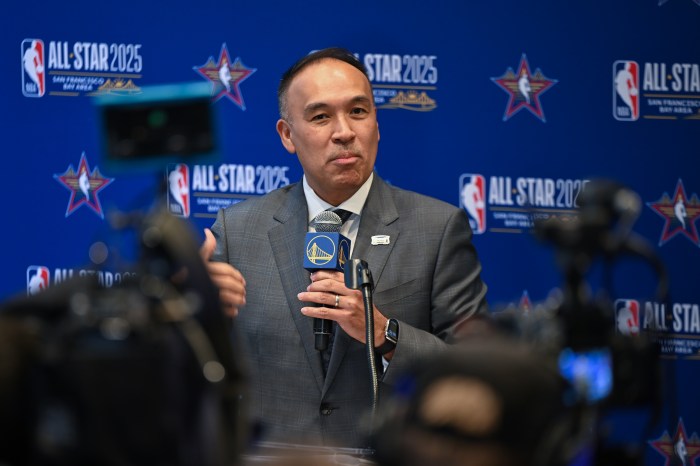
Can you summarize the BAL Innovation and Investor summit and what took place?
Last week, we had our first ever BAL Investor Day, and we brought together more than 250 leaders from across the global sports investment developmental communities to really give people a deeper look at where the BAL is headed. There were ministers of sports from several countries there. There were high net worth individuals from mostly African countries.
So, you had the sports ministers from Angola, Ghana, Senegal, Côte d’Ivoire, Benin. We had tremendous representation. And one of the things that they were talking about is the importance of sports infrastructure.
What are the benefits that come with buying a BAL franchise?
They create long-term, locally rooted teams that are going to deepen fan engagement in these key markets. They’re going to unlock new commercial opportunities. They’re going to build new arenas and infrastructure. They’re going to create grassroots programs and academies. So, we’re going to get a group of partners now in these key African cities who are going to invest in basketball in these franchises. And it’s going to help create these new sports and entertainment brands across Africa with the support of the NBA and the BAL.
You can now start establishing brands like Petro de Luanda or a Zamalek and the [champion] RSSB Tigers. So, we brought all of these potential investors, government officials into Kigali to showcase the BAL. As you know, [recently] we tipped off the Season 6 playoffs. What we did with these investors, we had attendees from more than 25 different countries. We had different speakers. [Rwanda] President [Paul] Kagame spoke, I spoke, [Dallas Mavericks president] Masai [Ujiri] spoke, [former NBA star] Luol Deng, [former WNBA star] Chiney Ogwumike. What we did was just reinforced the opportunity here and why we think it’s so compelling to own a franchise in the Basketball Africa League.
We showcased the sports complex in Kigali, where they have the stadium, the arena, the Zaria court with the hotel and conference center. They have the sports bar. They have retail. It’s, in essence, the “L.A. Live” of Africa. And we took them on a tour of that and we showed them what was possible in their respective cities and countries. We talked to them about the economics of sports, the surrounding real estate and the power of sports to create jobs. Over the first six years of the BAL, we’ve created nearly 37,000 jobs, and that number is expected to grow to more than 650,000 in the next 10 years. Since 2021, the BAL has contributed more than $250 million to Africa’s GDP. And that number is expected to grow to $5.4 billion by 2034.
Can a current franchise buy in to the BAL, or do they have to start from scratch?
We’re talking to a combination of existing franchises, some of which are playing in the BAL and have played in the BAL. People were represented there from Petro de Luanda and Nairobi City Thunder. We also are talking to a group of investors [who], some of them have soccer clubs in Africa but want to invest in basketball. And some just see the opportunity to start a team from scratch or acquire an existing team.
Do existing African franchises who have played in the BAL have an advantage in trying to become a permanent team?
I’d say we are looking for the right partners in each market. A team that is [or] has played in the BAL, it’s likely that they have done certain things in their respective markets that have been very positive. Whether that’s investing in infrastructure, investing in basketball development in their market. So, there’s no doubt that those teams will likely have the characteristics that we’re looking for in a good partner. That being said, well-financed soccer clubs, for example, who come to us with a plan to build a new arena and invest in basketball, those could be very compelling, too.
So, I don’t want to say it gives them an advantage. We’re going to be looking at this on a city-by-city basis to identify who the right partners are. But again, for a team to be able to win their national championship and play in the BAL, it shows that they’re doing something right in their respective city and country. So, there may be an advantage, but it’s not the only way and it’s not the only people that we’re considering as we think about the right partners to establish these franchises going forward.
Which African cities have the basketball franchise and arena ready to be in the BAL as a permanent franchise now?
I would go to the BAL cities that we played in. Clearly Kigali. I’d say Kigali has the best arena on the continent. That’s why we’ve played all six seasons in Rwanda and Kigali, including five of the six playoffs and finals. So, Kigali is ready. Uh, they’ve got the infrastructure. They’ve made the necessary investments in basketball. So, they’re a key market. I would say Pretoria, South Africa, where we had the BAL finals last year. They could use a new arena. There’s no doubt about that. But the arena they have to date in Pretoria, we’ve hosted three exhibition games there. So, it, it’s suitable in the short term. But we would want a partner that’s going to invest in a new building there.
Dakar, Senegal, that building is suitable as well. Rabat [Morocco] has an arena that we played BAL games in and is ready to go. I’d say Cairo [Egypt]. Cairo has the infrastructure that’s ready to go. There’s certainly been reports of projects in Nairobi [Kenya]. We think that Nairobi is an important market, but they don’t have an arena today that is suitable. But there are some [budding] projects there. And then Lagos [Nigeria], of course. Lagos also does not have the right facilities, but, but we’re talking to partners. There’s a building in Lagos where they’ve broken ground. We got an update from the investors there on the progress that they’re making and they’re continuing to build and make good progress there. So, we expect that Lagos will have an arena.
And there are two more. Rwanda where Petro de Luanda [play]. That’s an important market for us and we need to establish a franchise there. And then Accra [Ghana]. We met with a bunch of Ghanaians. The minister of sports from Ghana was in Kigali. We met with several investors from Ghana there. And again, they shared with us their plans to invest in an arena. So, it’s part of the plan. It’s part of why we want to establish these franchises, because we want these partners to know that they have a permanent spot in the Basketball Africa League, which will lead them to giving them the comfort to invest in these arenas for the long term.
There are no locks. That’s the process that we’re going through right now. We hired an investment bank, Moelis, to run our process. And Moelis has been engaging with hundreds of investors. We have a virtual data room that’s been available where people have had to sign NDAs and go into and look at our financial model. So, ultimately the marketplace will decide where we end up doing these first franchises. But the cities I laid out are cities that we’re targeting and talking to, investors in each one of those cities and each one of those markets. So, the market with arenas will decide who will get the franchise’s first. And that’s the process that we’re going through right now. Our first round of nonbinding bids are gonna be due [in late June]. That will be a good indication of where the interest is gonna be coming from and where some of our first markets are gonna end up.
Theo Kine/NBAE via Getty Images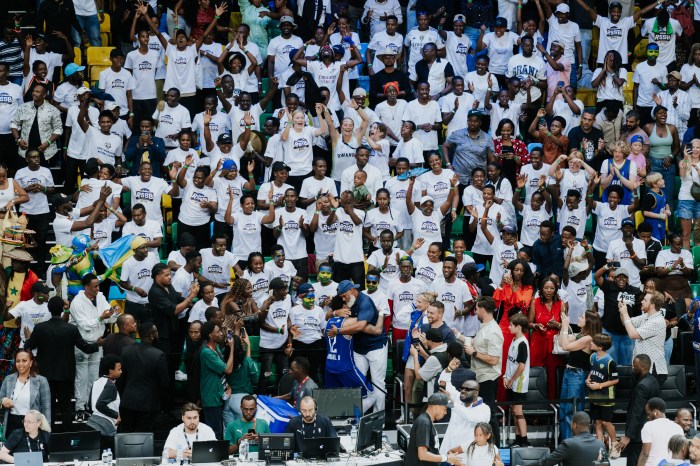
There have been some reports that BAL franchises could cost in the $50 million to $75 million range. Is that accurate?
The market will decide that. We certainly think that the value of these franchises is in that range. In some markets it, it could be higher. In big markets like Lagos or Johannesburg, Cairo — these are huge markets. Ultimately, the market will decide on what the right price is and what it depends on. The competitive landscape will as well. But certainly, we feel like this is a once in a lifetime opportunity to get in on the ground floor and own one of what’s expected to be only a handful of franchises that we sell here on the continent in the first couple of years. But ultimately the market will decide the value of these franchises.
Is what you guys are doing with the Basketball Africa League helping you in any way with what’s to come with NBA Europe?
We obviously run the top, best operated basketball league in the world that is based in North America. We also run the top continental league in Africa. And we’re about to embark on the top continental league in Europe. And I think for us, it’s all about investment in the game of basketball. It’s all about driving partners to invest in infrastructure, in basketball development, and player development. It’s creating economic opportunity in those marketplaces. And so there are parallels to what we’re doing in Europe.
Obviously, Europe is a much more advanced stage relative to the commercialization of sport than Africa is. In Africa, what we’re doing showing that sports is a driver of economic growth. It’s a driver of jobs. And so, in that way, it’s a little bit distinct from Europe, whereas in Europe it’s already a pretty established business. And we just think there’s a huge opportunity in Europe to align the business of basketball in Europe with the interest and the affinity for basketball in Europe. There’s a misalignment there. And in Africa, it’s a creation of a whole new industry around the business of sports and specifically the business of basketball that will drive jobs, drive GDP growth and player development.
Guys like [former Raptors forward] Ulrich Chomche, [Phoenix Suns center] Khaman Maluach, those guys got their start playing in the BAL. Ulrich getting drafted in the NBA and then obviously Khaman going on to Duke and then being drafted in the NBA top 10 picks. So, there’s going to be a lot more of those stories of young players getting discovered, identified, given an opportunity to play on the [African] continent. And then the very best of them will come play in the NBA. Some might go to Europe, some will stay in Africa. And we’re going to make it such where you can make a pretty good living playing basketball on the continent or Europe. You don’t have to leave the continent in order to make a living playing basketball.
What will scheduled games and travel look like, since it won’t be a tournament-based slate anymore?
They will host games. We’re still working on that. By having franchises and by having those partners who are going to invest in infrastructure in their particular markets, that’s going to lead the way for us to be able to transition to a more home and away model where when you have more arenas that are suitable to play in. And as transportation between countries becomes easier and easier, it will be easier for us to be able to create a schedule where teams will be able to go play in other teams’ home markets and teams will be able to host games in their home markets.
So, we are working through all of that right now. But that’s very much an important part of the transition here. We, you know, the neutral site games have been great. And by the way, I should say in this sixth season, we’ve set record attendance, we’ve set record viewership, record social media engagement, record merchandise. So, we’ve proven that fans want to see this great basketball and fans are willing to travel to neutral markets. This year in Pretoria, we set a record for the number of fans that came, as well as in Morocco. And again, it wasn’t just to see the home team, it was to see all the teams that are playing there. And we’ll set a record in Kigali this week. …
So, we’ve demonstrated that fans will travel. But let’s stay you have the Nairobi team playing and hosting a game in Nairobi in Nairobi, that game is going to be better attended. You’re going to get more Kenyans at that game than you will going to Kigali or Joburg or Morocco to watch that Kenyan team. So, that’s where we are going to get to and that’s what the franchise model will help us facilitate.
People often forget how big Africa is. Any worry about travel time or costs of travel?
The ministers talked about this. They talked about more visa-free travel between countries. A few countries like, Kenya, Ghana, all African Union countries can travel visa-free into their countries. And so, they talked about that. They talked about the need for better transportation infrastructure. For better arena infrastructure. So, I think it’s coming and the government officials recognize that. And I’m really optimistic that this Basketball Africa League is going to encourage it even more and going to at least have people have the conversation about, how do we make this better?
So, it’s going be a transition. There’s no doubt about that. And again, in the transition, even with franchise teams, we may still have some transition of having neutral site games. But certainly, what we want to do with the initial franchise teams is we want to get them in the business of hosting events. So, for example, let’s say we establish the Kigali franchise. Then instead of us doing the event, maybe it’s the Kigali team hosts and operates the event. We want to give them that experience in hosting these events so when they are hosting the home matches, they have that capability to do that. The operational expertise and capability to be able to do that. So, we’re really building capacity here and building capability in putting on major events, and that is one of the other goals of this too, is building organizational capabilities and capacity of these investors and of these franchises.
You still anticipate a BAL with set franchises starting in 2028?
We haven’t set the number yet. I would say in this first year, we’re looking to start off with four franchises. And then after that we would look at expanding or selling a few more after that. I do think the ultimate goal is 10 permanent franchises over some period of years. But we haven’t finalized that number yet.
Any interest in former NBA players owning one of these franchises?
We’re engaged with several former players, both African and non-African, about becoming investors in the African franchises. So, there has been a lot of interest from our former players in this opportunity.
What did you think about the 2026 BAL season and the growth of the league?
It’s been an incredible season. This was a record-breaking season. We broke records of attendance in South Africa and Morocco. The final will reach fans in more than 200 countries and territories. Our viewership this season generated a 1,000% year-over-year increase in total watch time. We had a record 20 marketing, merchandizing and partners that supported the BAL this season. We had record merchandise sales this year. So, by every metric, we saw record growth. That’s why we’re so encouraged by this next phase. With the BAL, we’ve proven the concept. We’ve proven that there is demand for high-level basketball on the continent. We’re just seeing the numbers going up and to the right. So, we’re thrilled with this record-breaking season.
What are your thoughts on the RSSB Tigers winning in front of a home country crowd in Kigali on Sunday?
The RSSB Tigers becoming the first Rwandan team to win the BAL championship and doing so on their home soil is an important milestone for the continued growth of basketball in Rwanda. Their remarkable run has captivated fans across the country and is a testament to the impact that the BAL is having on so many countries across the continent.
What do you think about the Africa representation in the 2026 NBA Finals?
The 2026 Finals will showcase the tremendous impact that Africa is having on the NBA. Players like Victor Wembanyama, OG Anunoby, Bismack Biyombo, Mohamed Diawara, Ariel Hukporti and Pacôme Dadiet, all of whom were either born in Africa or have direct roots there, are an inspiration to fans across the continent and a reflection of the enormous talent pool that the BAL is helping to showcase.
The post Mark Tatum lays out Basketball Africa League’s next transition appeared first on Andscape.
What's Your Reaction?
 Like
0
Like
0
 Dislike
0
Dislike
0
 Love
0
Love
0
 Funny
0
Funny
0
 Angry
0
Angry
0
 Sad
0
Sad
0
 Wow
0
Wow
0