





Kenny Burns Talks Music Toxicity & Hip Hop’s Future at BET


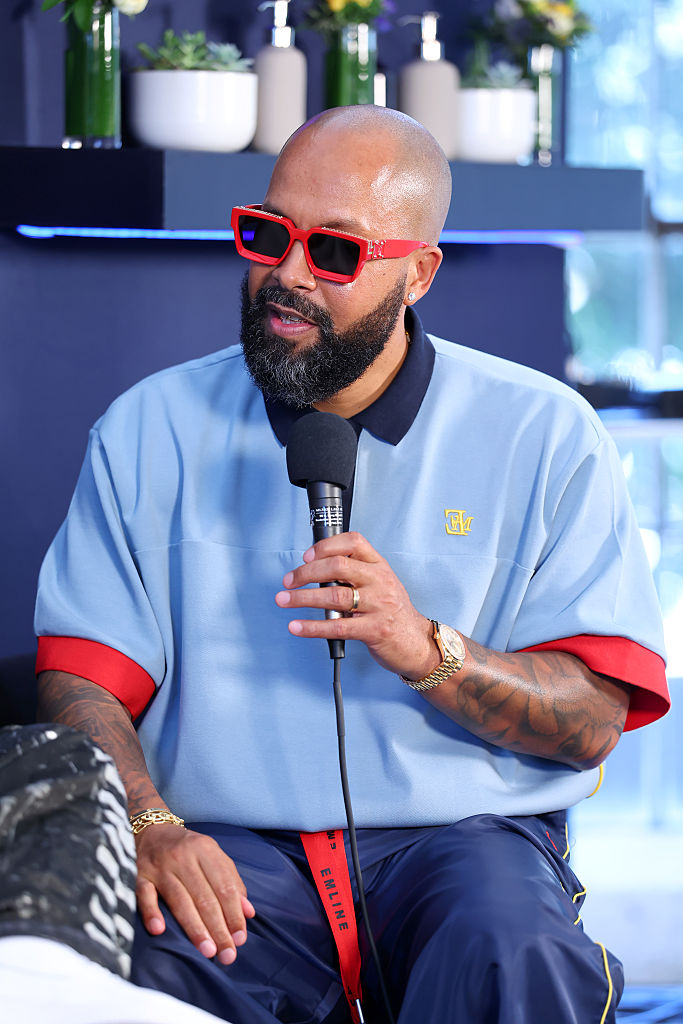
At the 2026 BET Awards, culture veteran Kenny Burns argued that today’s young generation is the first without a real “soundtrack” to their lives. He linked music toxicity, social media overload, and shrinking career ambitions, while celebrating 26 years of Black excellence and his son’s first award show.
We caught up with Kenny Burns—known by many as “the culture man”—on the red carpet at the BET Awards for an honest conversation about where Black culture, hip hop, and the next generation are heading. The chat went well beyond the usual red carpet small talk. It touched on music toxicity, the chaos of social media, the rise of Generation Alpha, and why human connection matters more than ever.
Kenny Burns has spent more than 20 years shaping culture across music, fashion, spirits, radio, and marketing. He worked with JAY-Z and Monica early on, helped sign Akon, discovered Wale, and served as vice president of Roc-A-Fella Records. Today, he hosts The Kenny Burns Show on Atlanta’s V-103 and reaches thousands with daily motivational content. That perspective gives weight to his concerns about where the culture is going.
Here’s what he had to say.
TRENDING: 25 Unforgettable BET Awards Performances
Why does the message matter so much to Kenny Burns?
Anyone who follows Kenny Burns knows the daily motivation is the heart of his content. So why pour so much energy into a positive message?
For Kenny Burns, it comes down to the noise. “We’re in a chaotic stream,” he explained. Yes, we all have the right to speak and say how we feel. But, in his view, “some things should not make it through the threshold.”
That belief shapes everything he posts. In a feed crowded with negativity, he sees encouragement as a form of cultural responsibility.
How does the NWA era compare to today’s music?
Kenny Burns is quick to point out that he’s no stranger to raw, unfiltered expression. “I’m a part of the NWA era—’F the police’ and all that,” he said. But there’s an important difference.
Back then, the music carried nuance. “We embraced it all because we had a gumbo of contribution,” he said. Conscious records, spiritual records, socially aware records, and harder material all lived side by side. The mix gave the culture balance.
That balance, he argues, is what’s missing now. When one flavor dominates everything, the culture loses something essential.
TRENDING: Iconic Black Artist Who Never Won a Competitive BET Award
What does Kenny Burns mean by “too much toxicity”?
Kenny Burns offered a simple personal example. “When I walk into any store and there’s too much of everything, I shut down,” he said. He feels the same way about culture and social media right now.
“Sometimes too much is harmful to us,” he explained. “It’s too much toxicity.”
His worry isn’t a single song or post. It’s the volume. When negativity becomes the default setting across music and social platforms, it starts to shape how an entire community sees itself.
Why does Kenny Burns say this is the first generation without a soundtrack?
This is one of the most striking ideas from the conversation. Kenny Burns believes today’s younger generation is “the first generation that doesn’t have a soundtrack to their life.”
Think about it. If most of the music centers on toxicity, death, and despair, where are the dream sequences? Where are the songs that push you forward?
“What’s there to look forward to?” he asked. For Kenny Burns, music has always been a source of encouragement that carries people through hard times. He worries that role is fading.
How is the loss of human connection affecting young people?
The conversation deepened around connection. Kenny Burns sees a generation living without real human contact.
“Everything is via text message and emojis,” he said. The result is young people who struggle to “properly emote in real life.” Screens have replaced face-to-face exchange, and something human gets lost in the translation.
What happens when Generation Alpha takes the lead?
As Generation Alpha steps forward, Kenny Burns predicts a difficult adjustment. “I think it’s going to be a civil war of sorts in the mind,” he said.
His proposed solution is direct: education has to stay paramount. “You have to go at least through high school,” he said. The concern is that too many young people now want to skip that path entirely.
What does “37% want to be content creators” really mean?
Kenny Burns shared a statistic that anchored much of his concern: 37% of a generation wants to be content creators. The problem, in his view, is that “the majority of content you see is garbage.”
He’s especially wary of the money behind it. Companies are backing content with “no substance” and no real return on investment. His warning is blunt: “When the money’s gone, they’ll be gone.”
He also mourns what’s being lost along the way. He remembers a time when teachers and writers held respected roles, before so much of that work shifted into the digital space.
Why does Kenny Burns “blame the music”?
When the talk turned to career ambitions, Kenny Burns was direct. Friends in the industry keep asking him the same question about young people: what are they actually going to do? Many aren’t drawn to traditional paths like becoming a doctor, nurse, or scientist.
His answer? “I blame the music.”
For Kenny Burns, music doesn’t just entertain. It shapes ambition. When the soundtrack lacks substance, so do the dreams it inspires.
What can we learn from the Marvin Gaye era?
Kenny Burns pointed to the past for a better example. “In our parents’ generation, you had Marvin Gaye,” he said. Those social records “meant more than just” entertainment.
He described that music as “indigenous almost”—something that reflected who people were and who they were meant to be. “We need more examples like that,” he said. The lesson is clear: conscious records carried purpose, and purpose is what’s missing today.
How do you stay true to the culture while adapting?
This isn’t a call to reject change. Kenny Burns believes you can evolve and stay grounded at the same time.
Using his son as an example, he praised a young artist who “understands that he can be himself” while making content. “There’s adaptation, there’s adjusting all things,” he said. “But you have to be true to something.”
That’s the balance he champions: move with the times, but never lose your foundation.
Why does celebrating 26 years of the BET Awards matter?
Amid the warnings, Kenny Burns made space for celebration. “I am happy that we’ve at least celebrated 26 years culturally speaking,” he said.
Looking back to the very beginning and watching the evolution clearly moved him. He was thrilled to be surrounded by peers, friends, and people he admires. “Everyone here are peers, friends I want to meet,” he said. For a man who has spent his life building the culture, that recognition means a great deal.
A proud father moment: St. Fronic’s first award show
The most personal moment came when Kenny Burns spoke about his son. At 22, the young artist raps under the name St. Fronic, and the BET Awards marked his very first award show.
“He gets to see what it looks like,” Kenny Burns said with obvious pride. For a father who has spent decades inside the culture, watching the next generation step in—on their own terms—is a full-circle moment.
What the next generation needs from the culture
Kenny Burns left us with more than a red carpet soundbite. He left us with a challenge. The conversation he started touches everyone who cares about hip hop, the impact of social media, and the future of Black culture.
His message is one of accountability. The music we make, the content we support, and the examples we set all shape what comes next. A generation searching for its soundtrack is counting on the rest of us to provide something worth hearing.
To keep this conversation going, tune in to The Kenny Burns Show, available on all streaming platforms, and follow @KennyBurns for daily motivation and cultural commentary.
What's Your Reaction?
 Like
0
Like
0
 Dislike
0
Dislike
0
 Love
0
Love
0
 Funny
0
Funny
0
 Angry
0
Angry
0
 Sad
0
Sad
0
 Wow
0
Wow
0