![Trump Didn’t Win The Nobel Peace Prize, So He’s Helping Smear The Woman Who Did [Op-Ed]](https://newsone.com/wp-content/uploads/sites/22/2026/10/17915758433969.jpg?quality=80&strip=all&w=1024&crop=0,0,100,683px#)


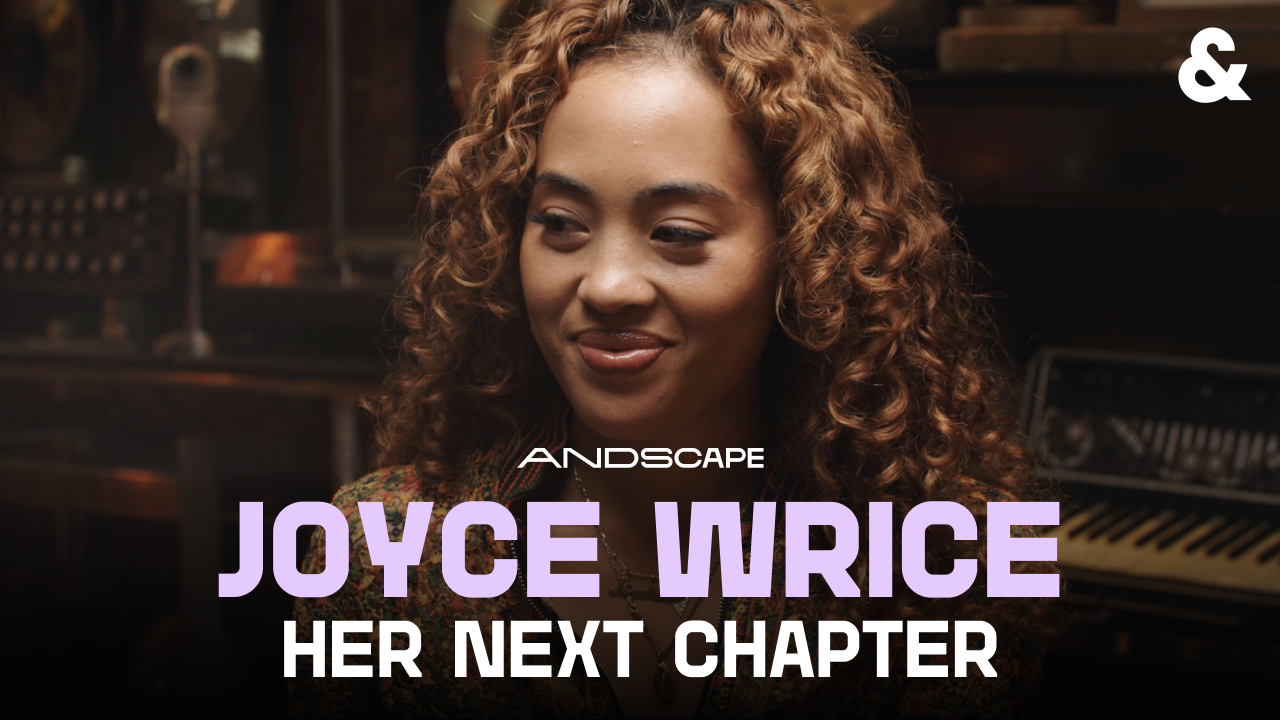





Did social media kill the reality TV star, or did it amplify them?


In an era when content creators are striking it big on platforms with their highly personal content, where does that leave the reality TV star?
In the early 2000s, during the dawn of reality TV as we know it, to get a show, a person had to be famous already or get famous somehow—bonus points if it came through a marriage to someone already famous, a “leaked” sex tape, or a scandalous crime.
Now, as figures are plucked from algorithmic obscurity by the unpredictable machinery of virality, the equation has changed.
There’s a new kid on the block: the social media star who can garner an audience seemingly overnight. Naturally, reality TV figures—who helped create the modern mold for raw and highly personal content—step into that role very well. Maybe a little too well.
It’s part of how figures like Cardi B broke the mold as one of the first genuine celebrities to emerge from social media. Her early online persona built an audience that led to “Love & Hip Hop” before she eventually branched out into rap superstardom. Since then, several more have followed, including Pretty Vee, who turned millions of followers into an acting career after a long-running stint on “Wild ’N Out,” and DreamDoll, who amassed an online following before landing on “Bad Girls Club” and later “Love & Hip Hop.” Really, the list goes on.
Chelley Bissainthe of “Love Island” fame had a modest but growing following before she stepped foot into the villa. VH1 even has a series called “The Impact” dedicated to social media influencers. And while Tareasa Michele Johnson—better known as the online personality ReesaTeesa—may not have landed on a reality TV show yet, she did achieve the kind of fame aspiring actresses dream about with her viral “Who TF Did I Marry” TikTok saga. For many viewers, it became their introduction to the lengthy, deeply personal, multi-part storytelling format that now dominates the platform.
“I thought the ReesaTeesa series was really interesting because it just shows kind of the power of personal narrative and independent production online,” said Chelsea Peterson-Salahuddin, an assistant professor at the University of Michigan’s School of Information.
TikTok is also how we got “The Secret Lives of Mormon Wives.” Once one person starts speaking publicly about a situation online, everyone else—named and unnamed—often comes out of the woodwork to tell their side. Before long, there’s an entire Hulu series about Mormon wives who “soft swing” and cause each other drama. You genuinely couldn’t make this stuff up if you tried.
But producers clock this. They aren’t just paying attention to the shock value or the raw personalities. They’re taking note of the views and realizing they already have a logline, a cast, a core demographic, and built-in metrics ready to go. They even have the content already.
While it might appear to some that the social media star has killed the reality TV star—or is on the way to doing so—it may be more accurate to say social media has decentralized fame. Particularly in Black culture, where reality television has historically relied on hyper-conflict, scandal, and narrow archetypes, social media has shifted power away from networks and toward creators themselves. Platforms like TikTok and Instagram now allow personalities to build audiences, shape narratives, monetize directly, and engage with fans in real time without waiting for television executives to validate them.
“Reality TV is highly edited,” Peterson-Salahuddin, a self-described Bravoverse fan whose research is in the way racially marginalized communities, particularly Black women and femme and queer folks, engage with different types of media and technology, noted. “People say it’s a platform for people to tell their stories, but it is a platform for people to tell their stories in a way that is edited and produced in a way that the production company or the network needs it to be produced.”
She added that “a lot of Black women, honestly, [have been] harmed in that process, because their stories sometimes get edited in such a way, or sometimes they attempt to edit them in such a way, where they’re trying to perpetuate a stereotype. They’re trying to pit the two Black women against each other, and a lot of that doesn’t happen because of the way they’re telling a story. It happens because of the way that networks often choose to edit.”
However, the autonomy social media has granted many reality stars over their own narratives has also created a bit of a double-edged sword. From the Bravoverse to the Zeus Network, by the time some of the most popular reality shows return for a new season—or even for the reunion—fans already know much of the juicy drama.
When Porsha Williams divorced her second husband, Simon Guobadia, fans didn’t learn about it through “Real Housewives of Atlanta.” They learned about it online. The same thing happened when, following the divorce, she publicly moved on with a woman in her first public queer relationship.
Fast forward to Season 17 of “The Real Housewives of Atlanta”, which is currently airing, where fans have had to pretend they don’t already know what’s around the corner as her newly divorced storyline begins with her still entertaining male company. It’s the same way viewers have had to pretend not to know yet about castmate Pinky Cole’s bankruptcy saga or act surprised entering the “Summer House” reunion, fully aware of how the cast dynamics have changed since filming wrapped.
And if it’s not the reality stars themselves posting, Peterson-Salahuddin noted, it’s often the networks uploading previews, highlight reels, and behind-the-scenes clips that go viral online and give away entire episode arcs without viewers ever having to sit through the full hour.
Regardless, the future of reality television may not be a battle between traditional stars and social media personalities so much as an ecosystem where they coexist. Social media may continue to serve as a launchpad for new talent and diverse stories to break through traditional gates while simultaneously amplifying the stars already inside them.
“I don’t think it’s replacing, I think it’s just becoming a new part of this kind of entertainment circulation and economy that’s happening,” Peterson-Salahuddin said. “And I think reality TV and social media go hand in hand a lot of the time.”
What's Your Reaction?
 Like
0
Like
0
 Dislike
0
Dislike
0
 Love
0
Love
0
 Funny
0
Funny
0
 Angry
0
Angry
0
 Sad
0
Sad
0
 Wow
0
Wow
0
![Pete Hegseth Shows Off Weak And Wimpy Workout Again [Op-Ed]](https://newsone.com/wp-content/uploads/sites/22/2026/10/17915524447154.jpg?quality=80&strip=all&w=1024&crop=0,0,100,683px#)