












Black Catholics Demanded An Apology For Slavery, Pope Leo XIV Just Gave Them One


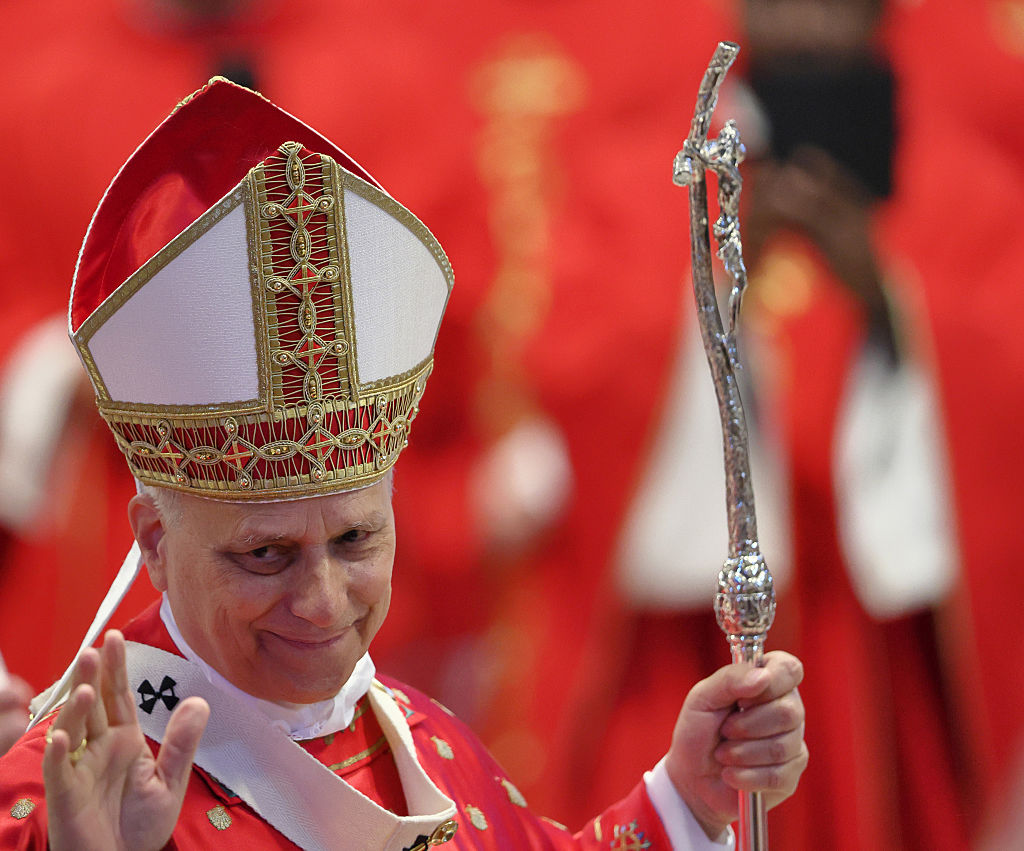
Pope Leo XIV issued a historic apology on May 25, openly acknowledging the Holy See’s role in legitimizing slavery and condemning the Church’s centuries-long silence on the practice. In the document, the pope described that legacy as a “wound in Christian memory,” according to ABC7.
The apology was delivered in Magnifica Humanitas (“Magnificent Humanity”), Pope Leo XIV’s first encyclical, which focuses on the ethical dangers posed by artificial intelligence and emerging technologies. Throughout the document, the pope drew a direct connection between the trans-Atlantic slave trade and modern systems of technological exploitation.
“Neither can we deny or diminish the delay with which both society and the church came to denounce the scourge of slavery,” he wrote. “It is impossible not to feel deep sorrow when contemplating the immense suffering and humiliation endured by so many. In stark contrast to their immeasurable dignity as persons infinitely loved by the Lord. For this, in the name of the church, I sincerely ask for pardon.”
Leo acknowledged that although the Catholic Church had long preached the dignity of every human being, it took centuries before Church leaders formally recognized slavery as incompatible with Christian doctrine.
For many Black American Catholics, scholars, and activists, the statement marks a long-awaited moment. For decades, they have called on the Vatican to directly confront its institutional role in the colonial slave trade rather than offering broad apologies centered only on individual Christians.
In an interview with ABC 7 NY on May 26, University of Dayton historian Shannen Dee Williams — author of the 2022 book Subversive Habits — called the pope’s apology a “monumental step toward the kind of essential truth-telling and reparation that many Catholics have prayed and worked to witness.”
“The Catholic Church has never been an innocent bystander in the history of white supremacy,” Williams said. “Black Catholics have waited a long time to hear the Vatican speak honestly about the church’s leading roles in the trans-Atlantic slave trade and chattel slavery–and thus by extension the enduring systems of anti-Black racism in the world today.”
The history of the Holy See and slavery.
Although the Vatican has long maintained that the Church upheld the dignity of all people as children of God, several 15th-century papal decrees authorized European powers to conquer territories in Africa and the Americas and enslave non-Christians.
Per The Associated Press, among the most significant was the 1452 papal bull Dum Diversas, issued by Pope Nicholas V, which granted the Portuguese crown the authority “to invade, conquer, fight and subjugate” “Saracens, and pagans, and other infidels, and enemies of the name of Christ,” while confiscating their lands and property. According to the Associated Press, the decree also authorized the Portuguese “to reduce their persons to perpetual slavery.”
That decree, along with the 1455 papal bull Romanus Pontifex, became a cornerstone of the Doctrine of Discovery, the religious and legal framework used to justify European colonial expansion, the seizure of Indigenous lands, and the trans-Atlantic slave trade.
According to the Rev. Christopher J. Kellerman, author of All Oppression Shall Cease: A History of Slavery, Abolitionism, and the Catholic Church, the permissions first granted by Nicholas V were later reaffirmed by Pope Callixtus III in 1456, Pope Sixtus IV in 1481, and Pope Leo X in 1514. Similar privileges were eventually extended to Spanish monarchs in the Americas.
While the Vatican formally repudiated the Doctrine of Discovery in 2023, it did not rescind the original papal bulls. Church officials instead point to the 1537 decree Sublimis Deus, which affirmed that Indigenous peoples possessed inherent dignity and should neither be enslaved nor deprived of their liberty or property.
In Magnifica Humanitas, Pope Leo XIV connected these historical injustices to modern forms of exploitation fueled by the digital age, including abusive labor conditions tied to the mining of rare minerals essential for AI technologies.
Anthea Butler, senior fellow at Oxford University’s Koch History Center, told The Associated Press that the pope’s acknowledgment of the Church’s role in slavery was necessary if the Vatican hoped to credibly address today’s forms of technological exploitation.
“For descendants of enslaved persons, this is once again a much needed apology from the pope,” Butler said.
In his apology, Pope Leo XIV also warned that the Church must firmly confront exploitation tied to the digital revolution “if we want to avoid the need to ask for pardon again in the future for having failed to respect the treasure of human dignity that is required by our faith.”
He further noted that his predecessor and namesake, Pope Leo XIII, did not explicitly condemn slavery until 1888, decades after many nations had already abolished it.
During an interview with NBC 10 Philadelphia, Pratt Professor Tia Noelle praised the significance of the apology, explaining that the pope directly “invoked the church as an institution,” rather than placing responsibility solely on himself.
“He has taken this conversation to the next level and taken it to the institutional level, which has not happened before. And because of that, it is truly impossible to overstate the importance of what has happened with this document today.”
SEE MORE:
Why Does Donald Trump Keep Beefing With The Pope? It’s His Job
What's Your Reaction?
 Like
0
Like
0
 Dislike
0
Dislike
0
 Love
0
Love
0
 Funny
0
Funny
0
 Angry
0
Angry
0
 Sad
0
Sad
0
 Wow
0
Wow
0