







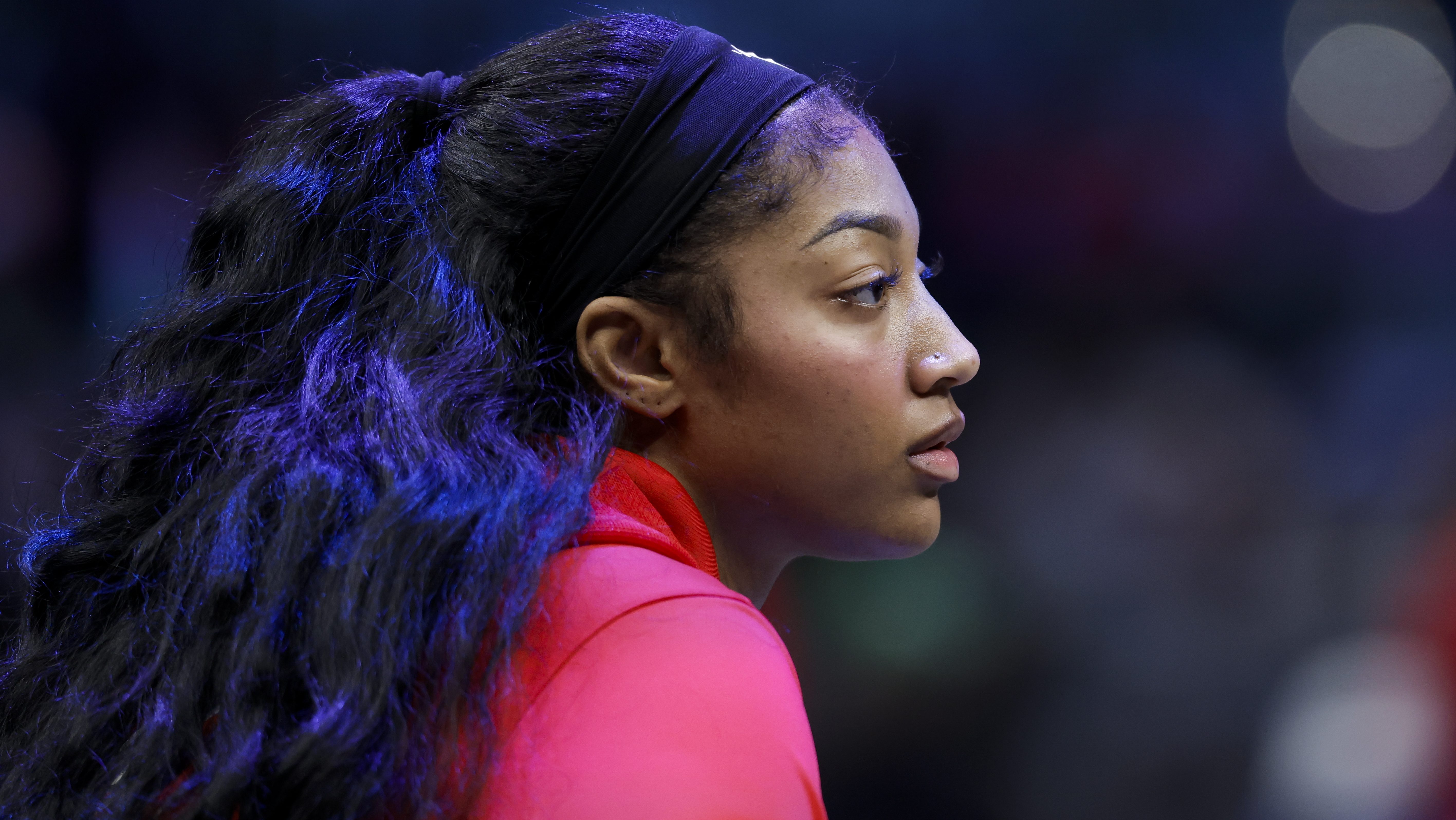
Angel Reese’s dream isn’t over

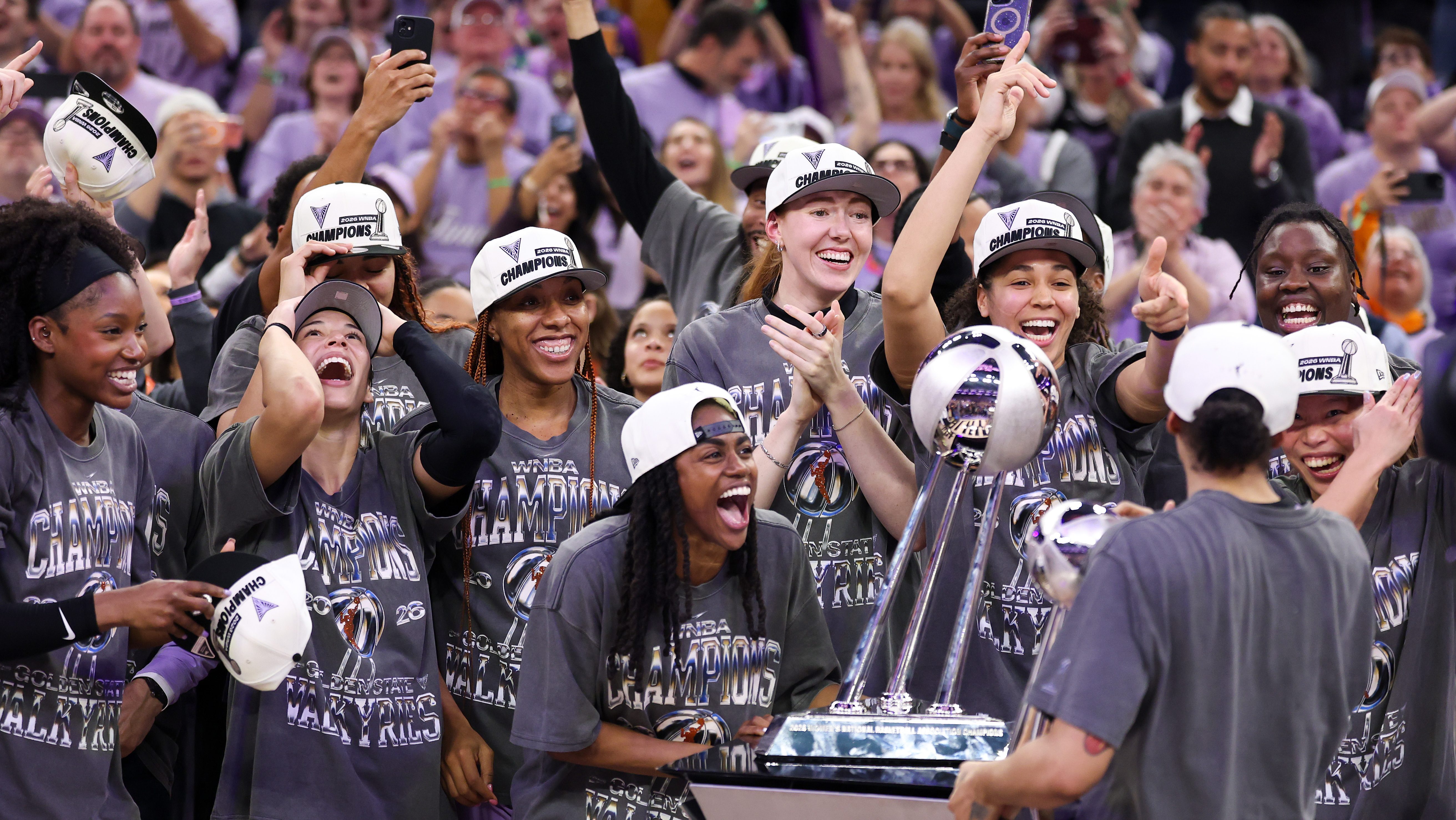
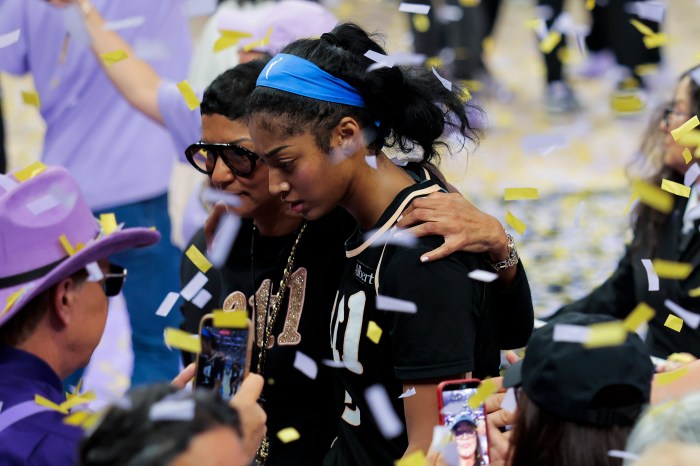
Here’s the scene, if you choose to direct it: Angel Reese walks off the court at Oakland’s Chase Center. The WNBA Finals’ winner-take-all Game 7 has just ended, with Reese’s team, the visiting Atlanta Dream, losing a brawl to the Valkyries by a razor-thin five-point margin. Golden State fans are celebrating their team’s championship in just its second year of existence. Purple and yellow confetti is floating down from the rafters, the court barely visible.
But a camera catches Reese, arm in arm with her mother, also named Angel. Your eye may be trained to focus on the young superstar, her head low, the agony of the loss across her face. But make sure you pay attention to her mother. Notice her, please, before you pan away.
Because you don’t want to miss the knowing smile on her face.
End Scene.
Heather Diehl/Getty Images
That Angel Reese, the dejected, frustrated player who couldn’t pull off the championship win, is the one far too many have wanted and waited to see. The one who closed the series 12-for-42 from the field, with 19 turnovers, in the last four games of the Finals.
The detractors have waited to make memes of her cocky “too small” gesture from Game 3 for 10 long days, but it stretches back much further than that. This Black girls’ career-long detractors have despised her ever since she waved five fingers in front of her face in college in 2023, and this is the humbling they’ve been waiting to see all season. This is the way they’ve always wanted Angel to look.
Angel Reese came into the WNBA as a lifelong winner. She was a McDonald’s All-American in high school, the No. 2 recruit in the country, and won a national championship at LSU. But she came to the league with baggage that was not her own — holding the distinction of being one of the most beloved and hated figures in sports.
This is where we have to discuss the thing. The 2023 NCAA national championship game saw Angel Reese’s LSU Tigers taking on the Iowa Hawkeyes, whose best player, Caitlin Clark, had become America’s sweetheart. How could she not? She was a dynamic shooter who launched 30-foot 3-pointers a la Stephen Curry. It was clear her entry into the WNBA would have a transformative impact on women’s basketball.
What gets lost in all of this is that Reese was also wildly popular. In 2023, she had more NIL endorsements than any other athlete, male or female. She’d coined the moniker “Bayou Barbie” and had a no-brainer Reese’s Peanut Butter Cup endorsement on the way.
The national championship had the makings of a blockbuster matchup. There was the LSU powerhouse, and the Black girl with the makeup, long hair and runway looks, towering over the competition. On the other side, the Midwestern underdog program with the bare-bones white star whose game harnessed enough personality to captivate the country.
There was really no reason, though, to believe the game itself would be competitive or that two players who don’t share a position would be a part of any meaningful rivalry.
That was until Reese used Clark’s own celebration — the “you can’t see me” five-finger wave the Hawkeye star had been using against her opponents all tournament — to talk trash while LSU was blowing out Iowa. The next great race battle in sports was born.
It’s hard to argue that there’s been a more unfairly maligned professional athlete in America.
Angel Reese suddenly became the big, bad bully. A household name. And the loud Black girl who needed to be taught a lesson.
She also became the towering enemy to the WNBA’s impending golden child. As bad-faith actors used Clark as an avatar for their disdain of the WNBA’s Black and queer players, Reese became the easy target for that same hatred.
It’s a hatred that never subsided. It’s hard to argue there’s been a more unfairly maligned professional athlete in America. For the first two years of her career with the Chicago Sky, whole social media pages were dedicated to highlights of her missed shots or bad passes. It wouldn’t matter if she had a good game or not, especially since so much of the battle to embarrass her came from people who don’t watch the games anyway. By the middle of Reese’s rookie year, the narrative had been written: She was a bad offensive player.
But something weird happened along the way — Reese was finding her stride.
As the first professional season progressed, her WNBA Rookie of the Year claims grew louder. She recorded 15 consecutive double-doubles — a rookie record — while also setting rookie benchmarks for total and offensive rebounds.
Still, online trolls shared highlights of Reese rebounding her own misses, coining the pejorative “Mebound.” Fake, viral Reese quotes flooded the internet to mock her intelligence, insult her game, and made her the butt of online jokes.
The Angel Reese career arc felt more harmful than hopeful. She was accumulating statistics and accolades, but she was part of a dead-end franchise. Every move resulted in a daily deluge of insults online and off. She was still one of the most popular figures in sports, but what was the endgame? How could she drag herself into a winning situation?
Rich von Biberstein/Icon Sportswire via Getty Images
That’s when the Sky’s front-office ineptitude became a blessing, sending Reese to Atlanta to join a Dream squad that was the No. 3 seed of the last season’s playoffs and featured two bona fide stars in Rhyne Howard and Allisha Gray.
Just as importantly, Reese was being welcomed into a city that was tailor-made for her brand of athlete celebrity — one where rappers, politicians and housewives sit courtside. It is a city that knows what it means to cover a Black celebrity in love when radicalized attacks target them. A Black star in a Black-as-hell city, the player and the community perfectly complemented each other.
But that doesn’t matter if Reese doesn’t produce on the court — which she unquestionably did. Adding her to an already stout defense made the Dream a nightly nightmare, and she remained a relentless double-double machine.
The Dream powered through the season, becoming a dominant defense — ranked No. 2 in the league — led by Reese, who carried her shot-blocking and lockdown perimeter defense from Chicago. Any guard thinking they could win a switch against Reese quickly learned otherwise. Reese became Atlanta’s emotional anchor and the WNBA Defensive Player of the Year.
Then, she took it to another level.
Over the final 10 games of the season, Reese averaged 19 points on 56 percent shooting and made 35 percent of her 3-pointers. She also had the league’s best plus-minus during that stretch.
And you could see the improvement. Her touch around the rim was improving. She was more confident attacking taller defenders off the dribble to create her own shot. And the Dream were undefeated whenever she made a 3-pointer. She maintained that dominance to sweep the Mystics and Liberty — the latter requiring her to stifle an all-time great in Breanna Stewart.
Adam Hagy/NBAE via Getty Images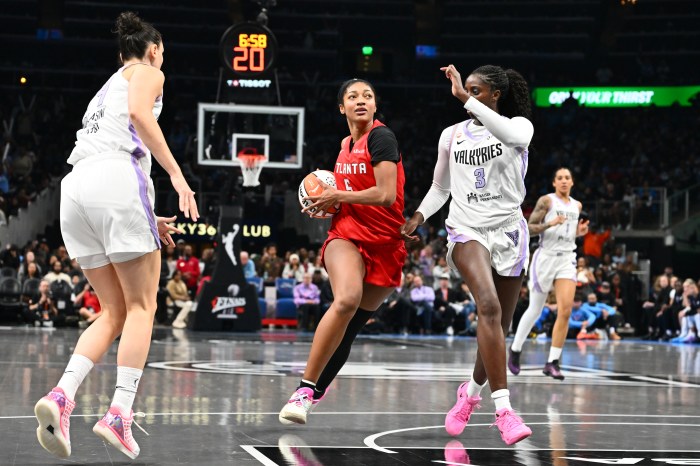
But the Finals showed us Reese’s final form, and the potential that had become reality.
Against the Valkyries’ league-best defense, Reese was unstoppable and the driving story through the first three games. She’d hit 3-pointers, yell at her opponents, and challenged her teammates — both encouraging them to stay confident and barking at them when they missed assignments. Her masterpiece was a 30-point, 16-rebound evisceration of anyone in her way in Game 3.
This was the Angel Reese we were promised.
Reese is experiencing what so many greats before her have experienced: a first Finals that left her wanting more.
There’s still more to gain, though. The final four games of the series — in which the Dream lost three — will be the ones Reese replays in her head all offseason. It was her first time facing a dedicated defense locked in on double-teaming her to force the ball out of her hands.
Sometimes, Reese wasn’t aggressive enough with the ball; she took only seven shots in the decisive Game 7. At other moments, the Atlanta game plan failed to find creative ways to insert her into the offense. Either way, Reese is experiencing what so many greats before her have: a first Finals that left her wanting more.
After not reaching the playoffs in either of her first two seasons, we finally get to see what Angel Reese, the comeback player, looks like. The one who was so close to glory and fell short. The one who hasn’t had this level of expectations since she exceeded them at LSU.
We’re going to see what an Angel Reese, whose offensive danger is game-planned against every game, does to find her shots. The Finals produced mixed results. She’s got plenty of years to leave no doubts.
Heather Diehl/Getty Images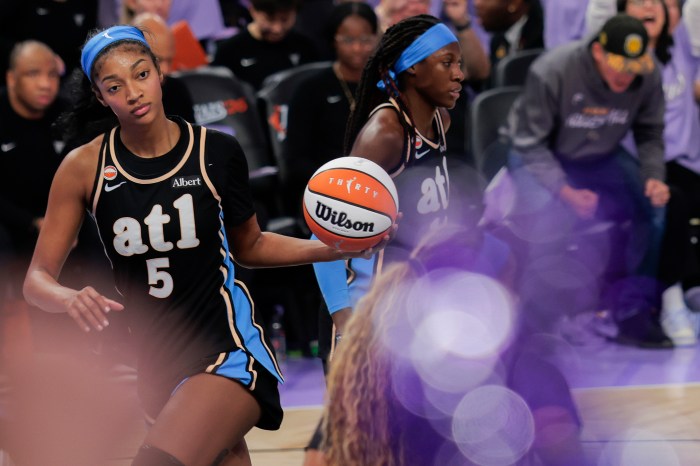
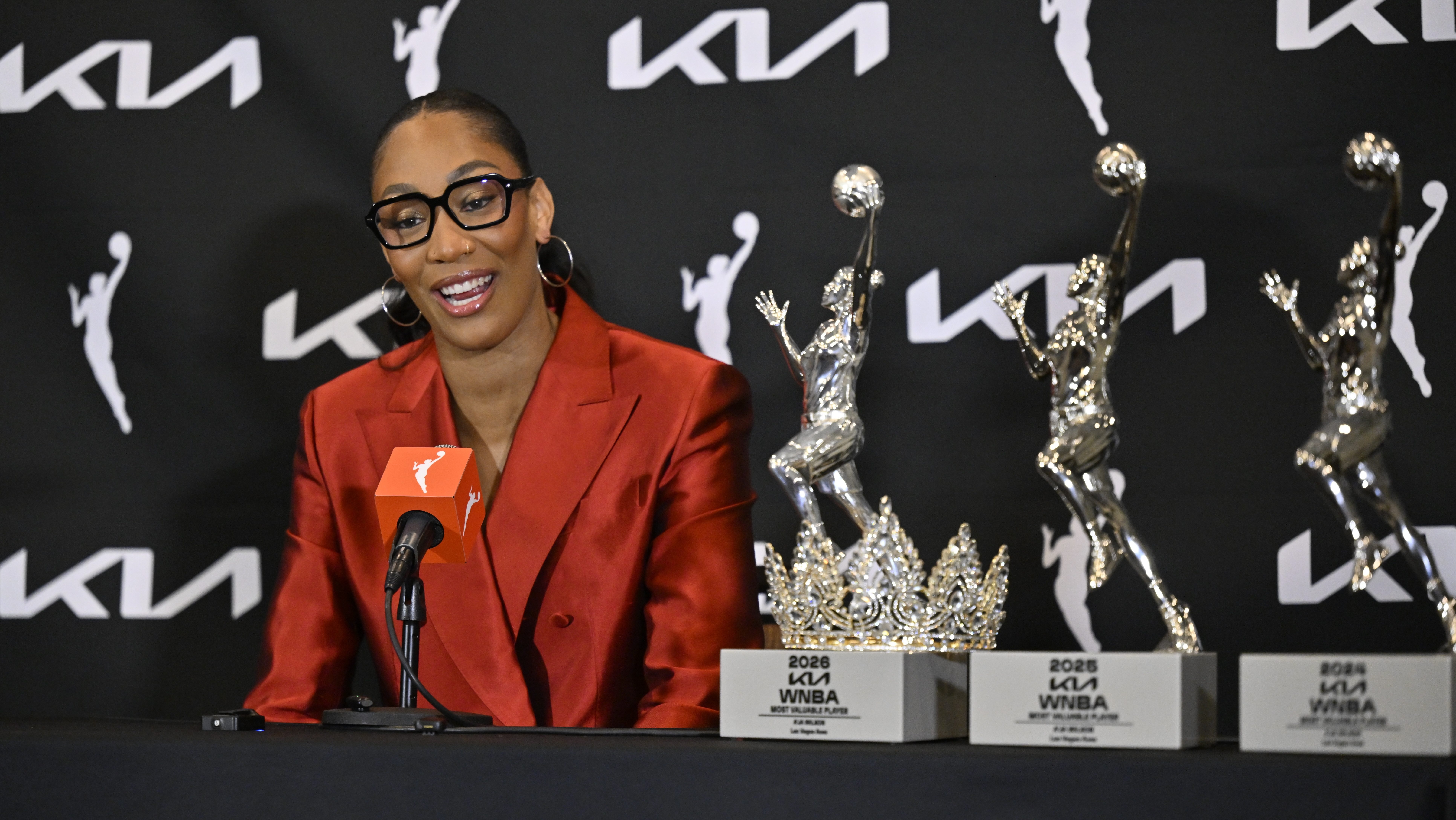
The noise will be loud this offseason. Especially for those who will use Angel’s trash talk against her. They’ll say she only talked when she was ahead. They should know that she was pointing at the bench, yelling at opponents and getting in her teammates’ faces in Game 7, too. They’ll keep making memes, fake quotes and pretending Reese hasn’t elevated to maybe the best two-way big in the league outside of five-time MVP A’ja Wilson.
But that’s her ceiling now: best in the game.
It’s on her to reach it.
We do know she’ll come back as the same loud, intense, passionate, unapologetic Black girl who continues to inspire kids in Atlanta and around the country. The person who will get in your face whether up 20 or down 30. The girl who wanted to be a Barbie. Who wanted to be the best. Whose sheer greatness makes the worst of us furious. The kid from Maryland who’s become the South’s adopted daughter. That isn’t going away, no matter how many points she scores or turnovers she commits.
Here’s your next scene. It’s the offseason work that starts today: Angel Reese adding to her game and getting better, like she has every offseason since she was a child.
Maybe it’s a midrange game. Maybe it’s improved 3-point shooting or refining her post moves. While you’re filming, remember her mother’s smile. It’s a smile that knows a child who always comes back better than ever.
Now, don’t forget to keep the camera rolling. You don’t want to miss what’s next.
The post Angel Reese’s dream isn’t over appeared first on Andscape.
What's Your Reaction?
 Like
0
 Dislike
0
 Love
0
 Funny
0
 Angry
0
 Sad
0
 Wow
0