




The stakes couldn’t be higher for Bad Bunny at the Super Bowl

Snoop Dogg at the 1995 Source Awards, it was not. But Bad Bunny’s message at Sunday night’s Grammy awards was direct, nonetheless.
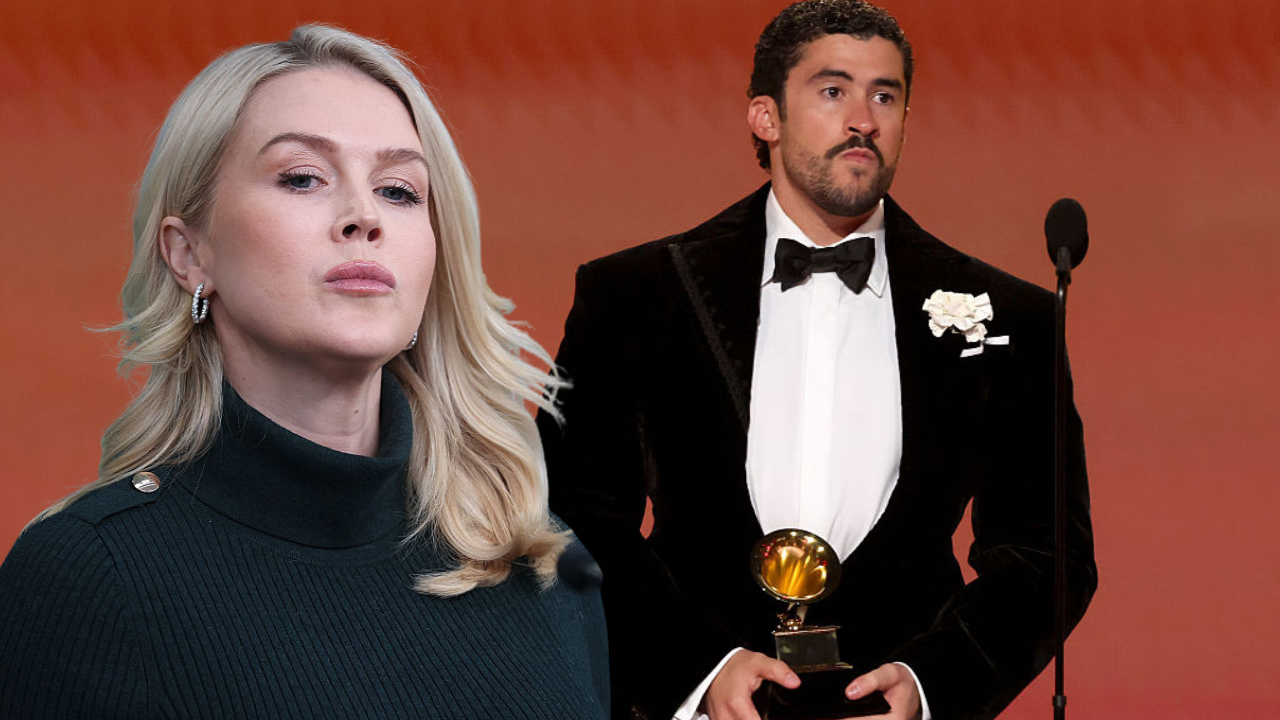
“Before I say thanks to God, I’m gonna say: ICE out,” the Puerto Rican artist said to raucous applause inside Los Angeles’ Crypto.com Arena.
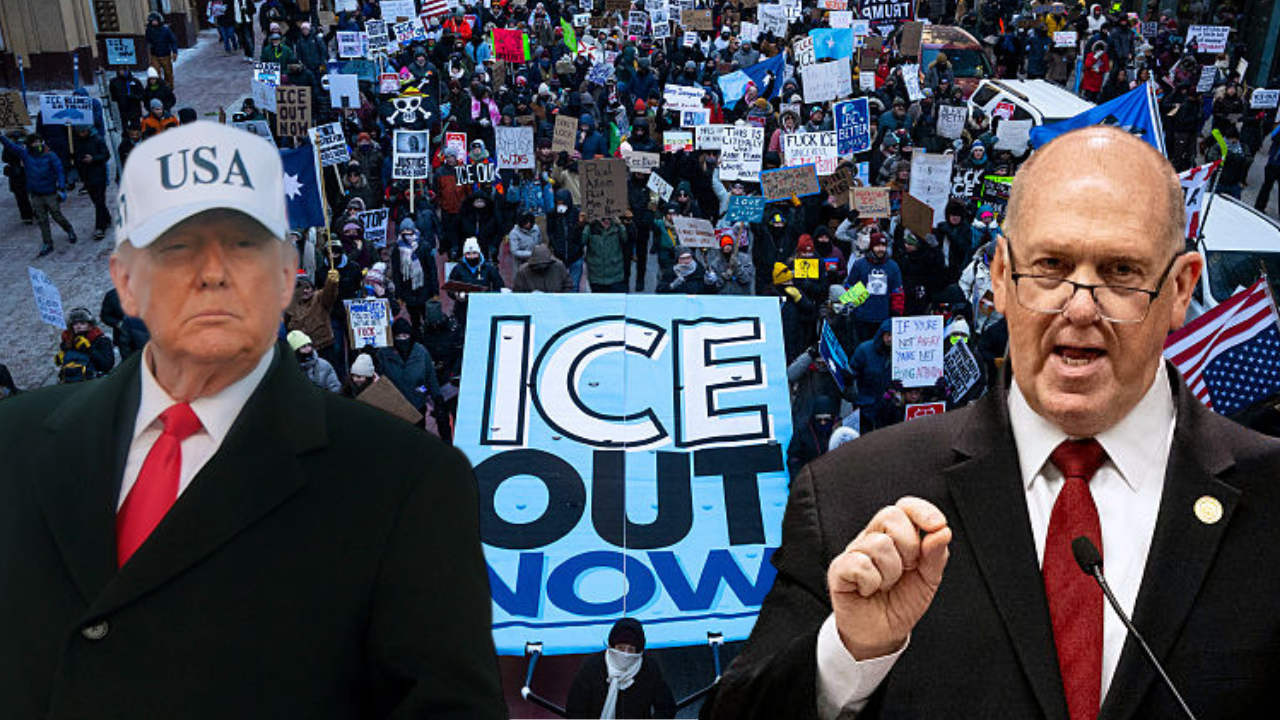
Benito, as he’s affectionately known to fans, spoke out against Immigration and Customs Enforcement (ICE) practices at a time when the agency’s policies represent the focal point of the Trump administration’s immigration crackdown. While the NFL confirmed ICE will not be among law enforcement at Super Bowl 60, the anticipation around what Bad Bunny will do, or say, at the big game is deafening.
Before heading to Levi’s Stadium in Santa Clara, Calif., Bad Bunny took home three Grammys, including the first Spanish-speaking LP to win the coveted Album of the Year award for Debí Tirar Más Fotos, his sixth solo project. But it was during his acceptance speech for winning Best Música Urbana Album when he delivered a pointed critique of ICE.
“We’re not savages. We’re not animals. We’re not aliens. We are humans, and we are Americans,” Bad Bunny said, before imploring fans to fight back with love.
“The hate gets more powerful with more hate,” he continued. “The only thing that’s more powerful than hate is love. So, please, we need to be different. If we fight, we have to do it with love.”
This year’s Grammys were arguably the most politically charged in the awards show’s long, complicated history. ICE was a primary target of artists such as Kehlani, Billie Eilish, Justin Bieber, Olivia Dean, and more — as was Donald Trump, who has threatened to sue host Trevor Noah for a joke he made about deceased, disgraced sex trafficker Jeffrey Epstein. Given Bad Bunny’s massive appeal worldwide and his highly anticipated, and likely politically-charged Super Bowl performance, his Grammy comments reverberated at a different frequency.
If Kendrick Lamar’s 2025 Super Bowl halftime performance presented a history lesson of America’s centuries-long relationship with racism and its complex relationship with Black culture, Bad Bunny’s show comes at a time when America’s political temperature is at an all-time high.
Recently, The Athletic polled 58 anonymous NFL players about the upcoming halftime show. Nearly 60 percent approved of the choice to pick Bad Bunny as the headliner, while roughly 41 percent did not. Focusing on the disapprovals sheds light on a much larger conversation around immigration and race in America whether those players intended to or not.
One player said there were “better examples of character and morality” than Bad Bunny. Another said the performer should be American. The irony of the latter is that Bad Bunny is Puerto Rican, and Puerto Ricans are American. But even if he weren’t, that has never mattered before.
The Super Bowl halftime show has routinely featured non-American acts, like U2, Coldplay, Rihanna, The Rolling Stones, Paul McCartney, The Weeknd, and more. One player who wasn’t involved in the survey, and approves of Bad Bunny’s selection (which may or may not have something to do with his girlfriend Cardi B‘s 2018 hit with the Puerto Rican star, “I Like It”), is New England Patriots wide receiver Stefon Diggs.
Emma McIntyre/Getty Images
“I don’t know what he’s sayin’,” Diggs said, dancing and listening to Bad Bunny on his phone during Super Bowl media availability, “but it’s good!”
Though on opposite sidelines come Sunday, Seattle Seahawks star defensive end DeMarcus Lawrence echoed Diggs’ sentiment, including a subtle message to the MAGA universe.
“We have so many cultures and ethnic backgrounds in America. I think it’s time to start embracing all of them,” the 12-year NFL veteran said. “That’s what really makes America great.”
From the moment Bad Bunny was announced as the halftime performer last year, tensions and political rhetoric immediately boiled to the surface. The NFL undoubtedly has its own issues with race and positions of power (i.e. its ever-smaller number of Black head coaches) — and conduct detrimental to the league, thanks to the newly released Epstein files. But choosing Bad Bunny is a business decision for a league that seeks to further establish its footprint abroad.
“Bad Bunny, and I think that was demonstrated last night, was one of the greatest artists in the world,” NFL commissioner Roger Goodell said in a Monday news conference, referencing the Grammys. “And it’s one of the reasons we chose him.
“The other reason is that he understood the platform he was on. This platform is used to unite people…and I think other artists in the past have done that. Bad Bunny understands that and I think he’ll have a great show.”
An “alternative” halftime show be damned. There is no gaudier choice than Benito. Listening to all of Bad Bunny’s 2025 streams would take somewhere in the neighborhood of 124,620 years. That would be the year 126,646. Adding in the metrics, mass appeal, and now the political tension of the moment and what’s on the line Sunday is, in some ways, even more paramount than whatever team hoists the Lombardi Trophy.
Bad Bunny doesn’t need to introduce himself on Sunday. The world already knows his name. He’s there to party with a purpose, and it doesn’t need to be slowed down by trying to make an overarching point. His presence as a Spanish-speaking American headlining one of the most-watched events in the world at a time when this country’s political climate is fraught, at best, is a profound statement on its own. On Sunday, Bad Bunny will be calling everyone to the dance floor even as American politics tries to decide who even gets to be in the club.
The choice to tap Bad Bunny for the Super Bowl isn’t politics usurping sports more than it is spectacle highlighting a reality seen every day on TV screens, cell phones, and with our own eyes. Bad Bunny is there to weave truth with jubilation and fighting power with gyrating hips. Some may change the channel. Others may use the moment to take a break. Most will be glued to their TV.
Last year, Kendrick Lamar set the record for the most-watched halftime show of all time with 133.5 million viewers. Given the stakes and the artist, that achievement could very well fall. Whether the Seattle Seahawks avenge their heartbreaking Super Bowl 49 loss or the New England Patriots kick-start a new dynasty, the final score will matter.
But what history may remember even longer is an artist known for his rhythm forcing America to acknowledge a beat it couldn’t tune out if it tried.
The post The stakes couldn’t be higher for Bad Bunny at the Super Bowl appeared first on Andscape.
What's Your Reaction?
 Like
0
Like
0
 Dislike
0
Dislike
0
 Love
0
Love
0
 Funny
0
Funny
0
 Angry
0
Angry
0
 Sad
0
Sad
0
 Wow
0
Wow
0