![The Lakers Look More Like The Country Club Than Showtime [Op-Ed]](https://newsone.com/wp-content/uploads/sites/22/2026/10/17924362130137.jpg?quality=80&strip=all&w=1024&crop=0,0,100,682px#)








SZA reveals autism diagnosis, shedding light and awareness about how Black health goes underdiagnosed


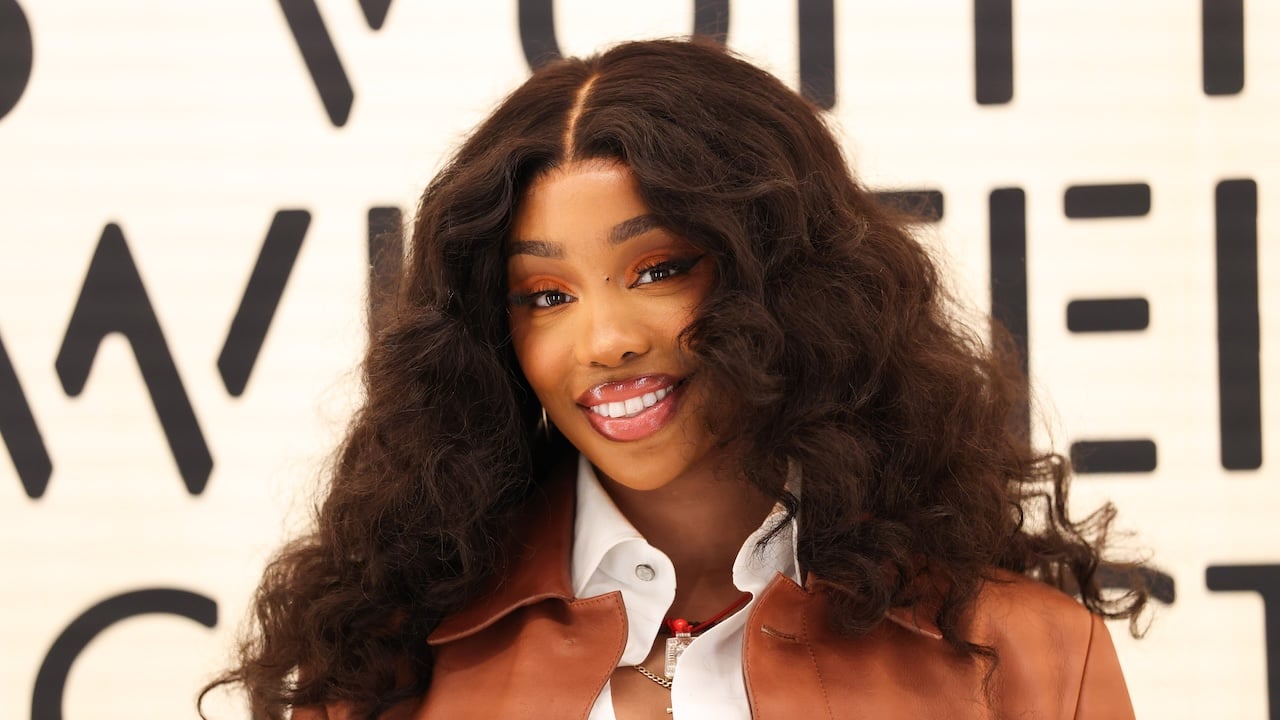
The Grammy winner shared a personal moment on Instagram. It might also have helped other Black men, women, and children find a moment for a proper diagnosis.
Grammy Award-winner SZA made a personal declaration on her private Instagram account earlier this week, specifically regarding her health and the science behind how she navigates life.
In a since-deleted post, she informed fans that she has autism spectrum disorder and, in particular, a high-functioning variant of the syndrome where individuals can have challenges at times when it comes to social interactions, non-verbal communication, and select interests and behaviors, according to the Cleveland Clinic.
“Finally took the time (and) got formally diagnosed,” she wrote in the post, which The Jasmine Brand and other outlets later shared. “Aspergers/high functioning autism/smarter than u n–as so stop playing in my face cause pattern recognition told me and I WILL get to the bottom of it thanks.”
She added, “Pretty sure this is why I’m taking AI so personally, btw. And also why I’m in every comment section, lol.”
The news was met with several Black women applauding SZA for her revelation, also sharing that they were on the spectrum and her visibility was important for others to become informed about autism and not use it as a catch-all.
“as someone that’s also level 1 autistic, sza publicly talking about her recent diagnosis is so important,” one Threads user wrote.
Another added, “SZA just got diagnosed with high-functioning autism as an adult. I hope her transparency encourages other adults to go get evaluated instead of just wondering their whole life.”
Others on social media noticed that SZA’s revelation was being dismissed, showing a “lack of grace” to someone who chose to share their story with people they somewhat trusted in a curated online community.
“A late diagnosis often comes after a lifetime of misunderstanding, masking, trauma, and having to unlearn the language everyone has used for decades,” one Threads user wrote as part of a lengthy response to the backlash SZA faced. “People don’t instantly know the terminology that every online disability space prefers. They learn through community.”
View on Threads
For years, Black people with autism have found themselves with unique challenges, from receiving a proper diagnosis to having a community that supports being outspoken and not seeing the syndrome as a burden. According to Autism Speaks, Black children are more likely to be diagnosed with autism than their white or Hispanic counterparts. And the journey to even get a proper diagnosis is one that plenty of families find themselves struggling with.
The alienation of Black people with disabilities has prompted many people to step up and establish organizations, from Autism In Black, The Color of Autism Foundation and more. Even with those organizations, the biases are heavily prevalent when it comes to Black people and autism. In a recent CDC study, Black children are typically diagnosed only if they show a form of intellectual disability. According to the CDC, more than 50 percent of Black children have an intellectual disability, compared to 31 percent of white children.
“None of those factors seem to explain the discrepancy we’re seeing among Black autistic children being more likely to have intellectual disability, so I think there’s some questions to be answered,” Dr. Brian Boyd, William C. Friday distinguished professor at the University of North Carolina at Chapel Hill, said. “Is the issue timing of identification—that they are being identified later and therefore not getting access to services as soon? Are they not getting the same intensity and amount of services? These issues are something that we still have to understand.”
Earlier this year, comedian Ron Funches revealed he was diagnosed with autism spectrum disorder after he was voted off from the NBC reality show “The Traitors.” Funches said the diagnosis was a relief due to his treatment on the show, saying he felt “misunderstood” and “isolated.”
“I honestly didn’t know I myself had Autism,” he wrote in a post on Threads. “I thought I was just an ally and parent of an autistic child but the way I felt I wasn’t being comprehended or understood while I thought I was being direct… made [me] start the process of going to get a diagnosis.”
A similar situation occurred with former “BET College Hill” star and comedian Willie Macc, who has utilized social media to shed light on his late diagnosis with autism, and how being on the spectrum played out in real time on cable TV.
“At 37, I found out OFFICIALLY i was on the spectrum and I told my son we might both be wired different,” he shared in a Facebook video in June. “He said ‘Yeah old man, I know.’”
Several celebrities have been outspoken in acknowledging autism as a disability, including Sherri Shepherd, Tisha Campbell, Toni Braxton, Faith Evans and Holly Robinson Peete. SZA’s revelation wasn’t one for mockery or derision; it was a moment of reflection and deeper understanding, showing that it is never too late to learn what makes you who you are.
As Black women routinely find themselves unheard when it comes to their health, SZA took an active stance with hers, something Black girls and others can see themselves in.
What's Your Reaction?
 Like
0
Like
0
 Dislike
0
Dislike
0
 Love
0
Love
0
 Funny
0
Funny
0
 Angry
0
Angry
0
 Sad
0
Sad
0
 Wow
0
Wow
0