






On Clive Davis and the death of a music mogul

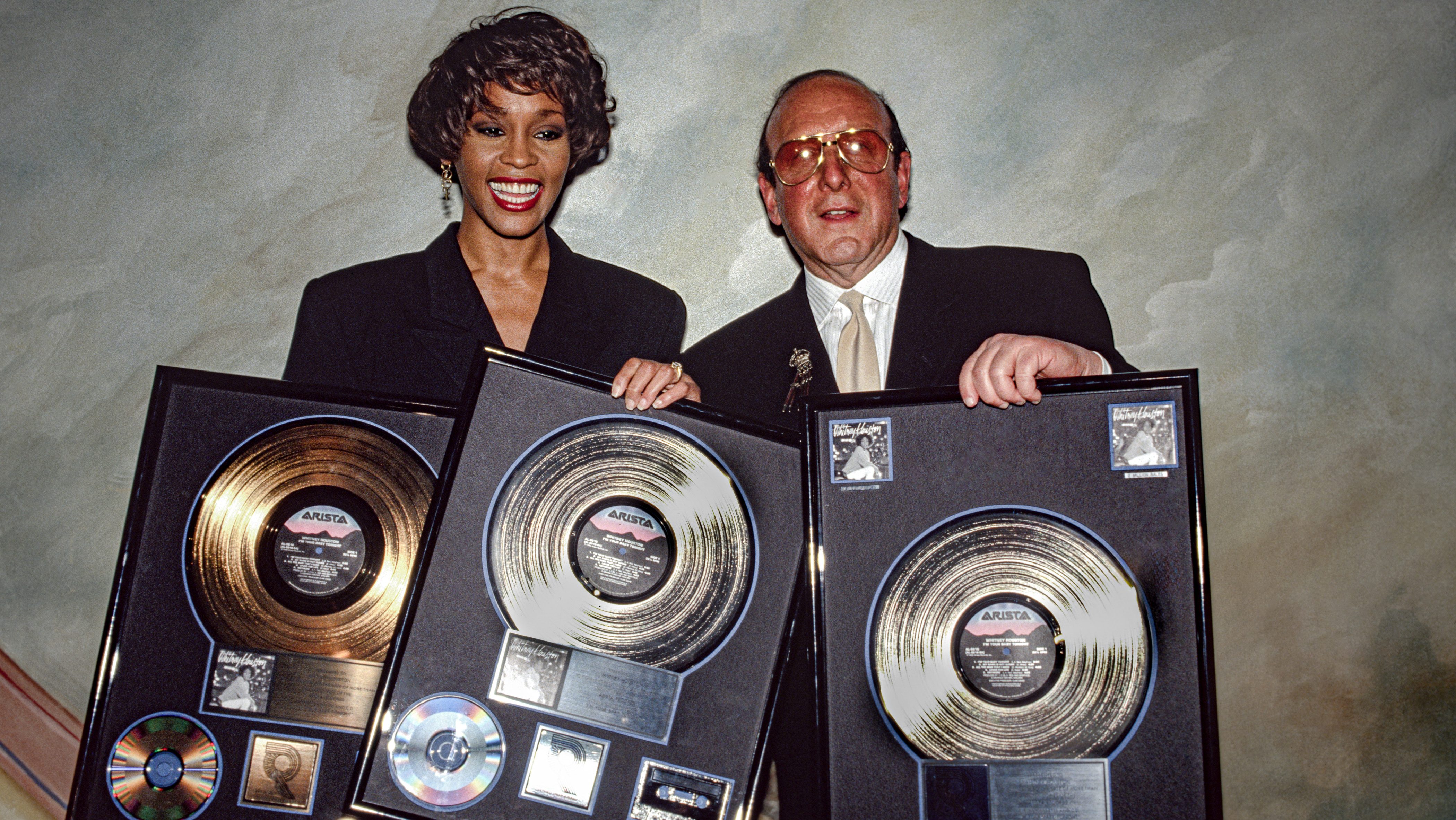
The best way to encapsulate the complex, game-changing legacy of Clive Davis, the legendary label head who died Monday at 94, is through his discovery and meticulous shaping of Whitney Houston into a global pop star.
The year was 1983. Months earlier, Davis orchestrated the gold comeback of the Queen of Soul, Aretha Franklin, with her Luther Vandross-produced album Jump To It. Davis was looking for fresh talent to add to his Arista Records roster, which included soft rock behemoths Air Supply, crossover R&B singer-songwriter-guitarist Ray Parker Jr., and trailblazing pop vocalist Dionne Warwick.
He found it during a showcase at a New York night spot.
“It was at a club called Sweet Water…” Davis said in a 2015 People interview, recalling when he first saw Houston perform. “She was doing back up singing for her brother and mother Cissy Houston and then did two solo songs that were essentially her ‘audition’ for me.”
Davis was completely floored by Houston’s powerful cover of George Benson’s “The Greatest Love of All.” “To see this young 19-year-old find meaning in that song … she was bringing it to a whole other level that I had never heard before,” Davis added.
Davis moved to sign her quickly. “[My mother] knew how knowledgeable Clive was of music, of songs, of lyric and melody,” Houston said of that life-changing meeting to Entertainment Tonight. “What to listen for is what he and I went through in those offices. … We love beautiful love songs. We love classic melodies. We love songs that tell stories of life and love… I think we’re both romantic at heart. That’s what makes us very close.”
Yet when Davis began lining up producers and songwriters to work on what would become Houston’s self-titled, history-making 1985 opening salvo — Whitney Houston remains one of the biggest-selling debut albums by a female singer — he had one eyebrow-raising stipulation.
“Anything that was too Black sounding was sent back to the studio,” former Arista marketing director Kenneth Reynolds said in the 2017 documentary Whitney Houston: Can I Be Me? “And to say Black sounding, if you have a problem with that, is to say it’s too George Clinton, it’s too Funkadelic, it’s just too R&B. We want Joni Mitchell … we want Barbra Streisand.”
And thus we have the unvarnished dichotomy of a music industry titan who, throughout his 66 years in the business, has been both lionized and vilified. Dyana Williams, an influential radio host, community activist, and co-creator of Black Music Month, praised Davis, the hit man who, during his stint with Columbia, made such music-shifting signings as Janis Joplin, Sly and the Family Stone, and Earth, Wind & Fire.
“I know people have their [valid] criticisms of him, but Clive Davis remains one of the most prolific A&R executives and label presidents,” Williams told Andscape. “He had a lot of success with Columbia Records, a lot of success with Arista, and a lot of success with J Records. And those labels were elevated by Black music, so it wasn’t lost on Clive to continue to do business with Black folks.”
Davis began his career as general legal counsel at CBS subsidiary Columbia Records and rose to administrative vice president and general manager by 1965. In 1972, he commissioned a Harvard Business School report titled “A Study of the Soul Music Environment,” which examined the growing commercial power of Black music and how the industry could better capitalize on it.
At Columbia, Davis leaned into that shift.
In the early 1970s, the label expanded its focus and partnered with Kenny Gamble and Leon Huff’s Philadelphia International Records, producing hits from Billy Paul (“Me and Mrs. Jones”), Harold Melvin & The Blue Notes (“If You Don’t Know Me by Now”), and The O’Jays (“Back Stabbers”).
The approach became a template across the industry and a flash point: Critics argued that major, white-led labels were capitalizing on Black music’s growth while squeezing out independent, Black-owned companies.
That tension would come to define Davis’ career, and nowhere was it more visible than in his shaping of Whitney Houston.
Even as he leaned into the commercial power of Black music, Davis remained a pop obsessive, pushing Houston toward crossover success that would make her one of the best-selling artists in the world and, at times, drawing criticism that she was being steered too far from her roots.
By 1989, that approach had made Houston one of the world’s best-selling acts. Fueled by a string of Davis-stamped hits such as “I Wanna Dance with Somebody (Who Loves Me),” her sophomore album, Whitney, would go on to sell more than 25 million copies. But that same year, she was famously booed at the Soul Train Awards for sounding “too white.”
“You’re not Black enough for them,” Houston said in an interview about the stinging criticism, which would ultimately inspire her to embrace her soul and church roots over the next decade. “You’re not R&B enough. You’re very pop. The white audience has taken you away from them.”
“It bothered her and me,” Davis later told Vibe. “I mean, Whitney is a Black woman. It’s silly and shallow, the criticism you get when you cross over.”
Michael Ochs Archives/Getty Images
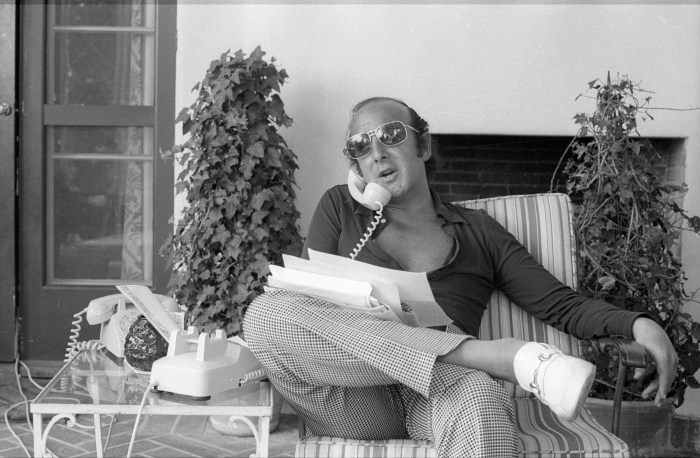
He was born in Brooklyn, New York, on April 4, 1932. After losing his parents as a teenager, he moved to Queens, New York, with his sister. The initial plan was to pursue a legal career. After earning a political science degree from New York University College of Arts and Science, Davis received a full scholarship to Harvard Law School and graduated in 1956.
It was at Columbia Records that he scored a job as a contract lawyer. That’s when Davis’ career path took an unexpected turn. “I accidentally discovered I had a totally unexpected and unexplained gift – ears,” he said. “This was quite a surprise, but I could, and would, discover great all-time artists.”
Yet Davis’ career came perilously close to crashing and burning.
In the spring of ’73, he was embroiled in a payola scandal involving a CBS employee with alleged mob ties. There were claims that the label was implicated in bribery and other misconduct tied to radio promotion, according to Time. Davis was accused of misappropriating $94,000 in corporate funds and falsifying expense reports. He was charged with tax evasion and pleaded guilty on one count but was later exonerated on much more serious fraud charges.
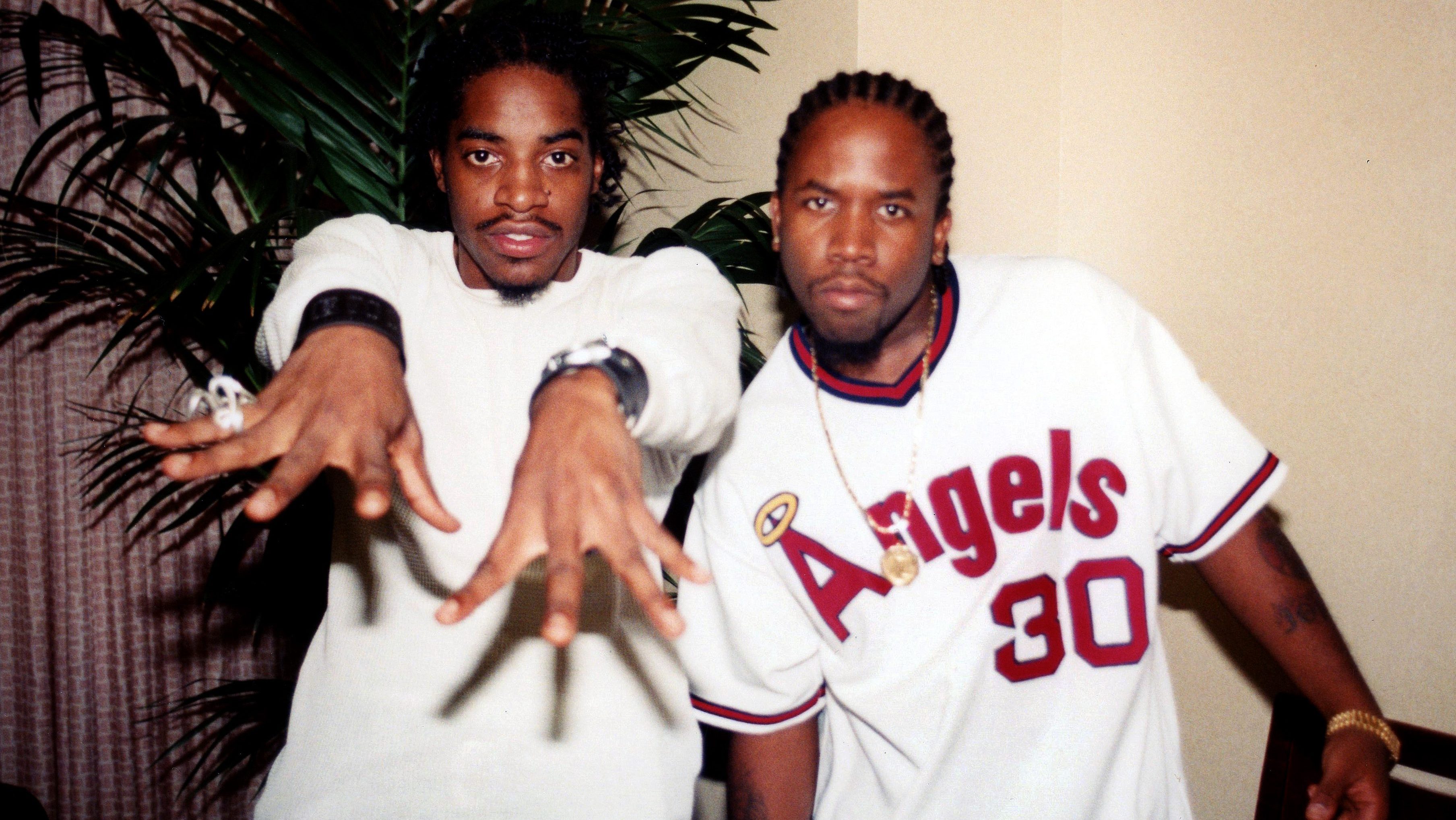
Davis, who was subsequently fired, called the ordeal a “witch hunt,” and soon founded Arista Records in November 1974. Fifteen years later, Davis partnered with L.A. Reid and Babyface on LaFace Records, a deal that fueled a 1990s run anchored by Toni Braxton and TLC. Through LaFace, he also backed the early releases of OutKast and Goodie Mob, helping to push Atlanta’s hip-hop scene into the mainstream.
Davis also took a chance on Sean “Diddy” Combs’ fledgling New York-based Bad Boy Records in 1994. The distribution pact through Arista helped launch the multiplatinum, larger-than-life hip-hop giant the Notorious B.I.G. and acclaimed R&B songstress Faith Evans, among others.
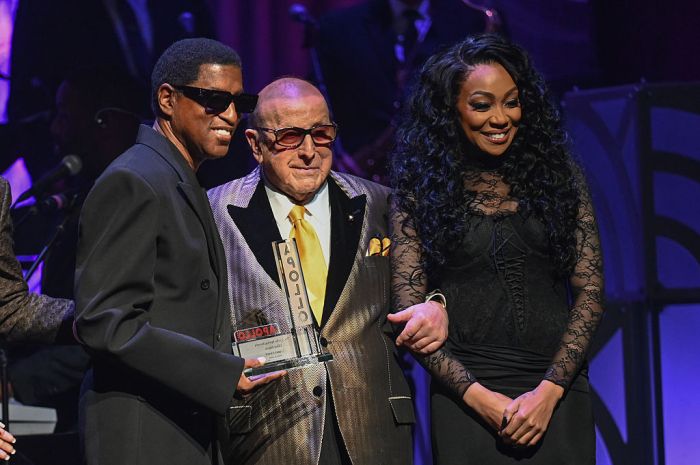
Immediately after Davis’ death, tributes poured in. Alicia Keys posted about her Rock Hall of Fame inductee and mentor, calling him “the Rock… who transformed dreams into reality, leaving an indelible mark on music and lives worldwide.”
Springsteen said of Davis via Instagram, “At 22 years old, he changed my life when he signed me to Columbia Records. … He treated me with the same respect and kindness as a 22-year-old nobody as he did after all my success. A great man. All our prayers and love.”
Guitar legend Carlos Santana praised the man who orchestrated his shocking 1999 comeback Supernatural, the multiplatinum, Grammy-winning Album of the Year: “Clive Davis was a visionary. He could hear the intangible before anyone else could see it. He believed in Santana from the beginning, and years later he believed in us again. That kind of faith is a beautiful blessing, and I will always be grateful.”
And music great Stevie Wonder lauded Davis’ uncompromising drive to push his artists beyond systemic racial barriers. “He, I think, gave them unconditional appreciation for their talent, for their gift,” Wonder said in a CNN interview Monday. “He would go through any windows, any doors, any places to get them heard. It wasn’t about, ‘Well, we can’t play them on this station.’ It was as the world should be. It should be color-free.”
Shahar Azran/Getty Images
Of course, critics of Davis will still have their say. They will point to his alleged callous treatment of late, gifted R&B vocalist Phyllis Hyman, who frequently clashed with the label head over the artistic direction of her music. According to those in Hyman’s camp, her refusal to go pop prompted Davis to devote his attention to the more malleable Houston, dropping Hyman from Arista in 1984.
“Clive Davis taught me to never be afraid, because I was terrorized by him,” Hyman later said in an interview before her death by suicide in 1995. “Whether he meant to do it or not, I’ll never know.”
As for his relationship with Houston, there were the proverbial highs and lows. Yes, Davis guided the most celebrated vocalist of her generation to unprecedented global success, as she would go on to sell more than 200 million albums worldwide. But Davis has faced accusations that he wasn’t attentive enough when it came to the superstar’s struggles with drugs.
It all came to a head one day before the 54th annual Grammys in 2012, when Houston’s body was tragically found in a bathtub at the Beverly Hilton Hotel in Los Angeles. Davis was set to host his legendary pre-Grammy party downstairs at the very same hotel. Most people in attendance thought the much-anticipated shindig should have been canceled out of respect for the beloved Houston.
Davis, however, pushed on, asserting that Whitney would have wanted the show to go on.
“I thought that was complete insanity,” Houston’s friend and idol Chaka Khan said during an emotional CNN sit-down. “And knowing Whitney, I don’t believe that she would have said the show must go on.”
And so we are left with a towering, mixed legacy. Clive Davis will go down as arguably the most influential music mogul, with a reach so extensive that his rich, diverse portfolio spans from discovering horn-driven pop-rock-jazz band Chicago in 1968 to signing American Idol alumnus and future Oscar winner Jennifer Hudson to J Records in 2006.
“At the end of the day, there has been no one quite like Clive Davis,” Williams said. “He will forever be a vital part of the history of the music business.”
Flaws and all.
The post On Clive Davis and the death of a music mogul appeared first on Andscape.
What's Your Reaction?
 Like
0
Like
0
 Dislike
0
Dislike
0
 Love
0
Love
0
 Funny
0
Funny
0
 Angry
0
Angry
0
 Sad
0
Sad
0
 Wow
0
Wow
0