![We Have To Talk About Trump’s ‘Trannie’ Attacks On Annie Andrews, Because How Is This Acceptable? [Op-Ed]](https://newsone.com/wp-content/uploads/sites/22/2026/10/17914799069482.jpg?quality=80&strip=all&w=1024&crop=0,0,100,683px#)

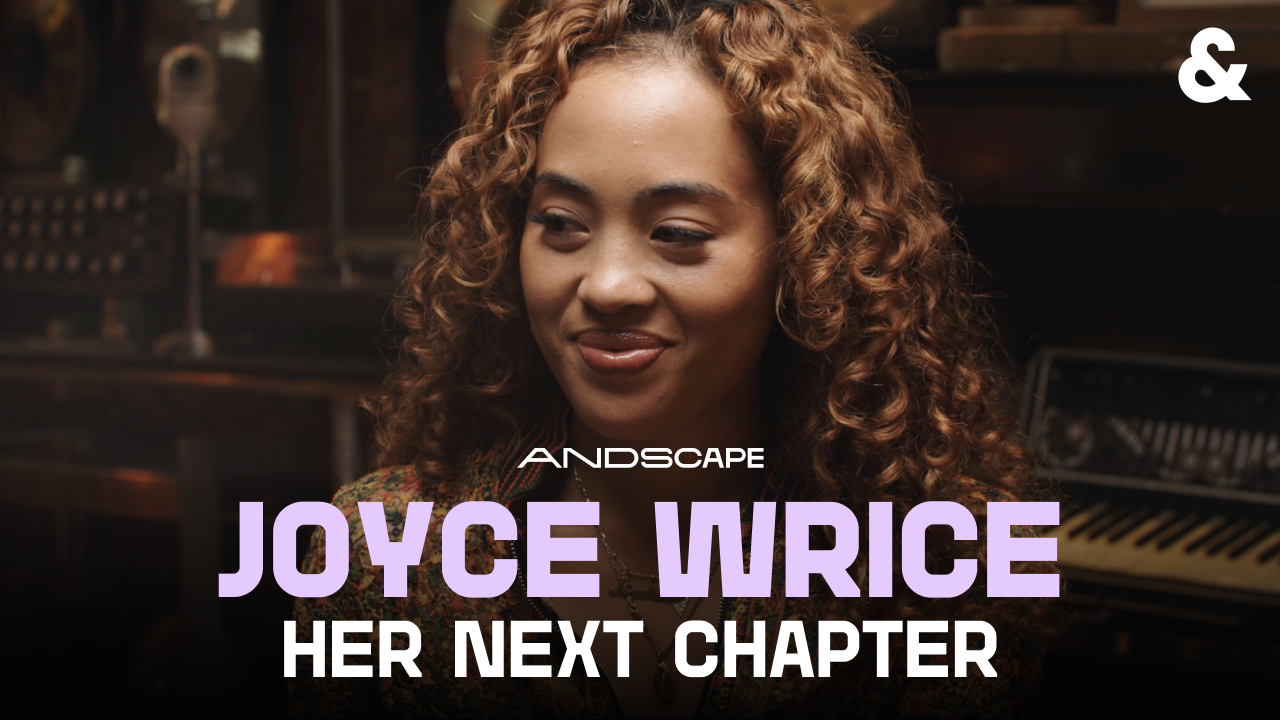







Monroe Alise, Possibility, And The Power Of Staying Ready


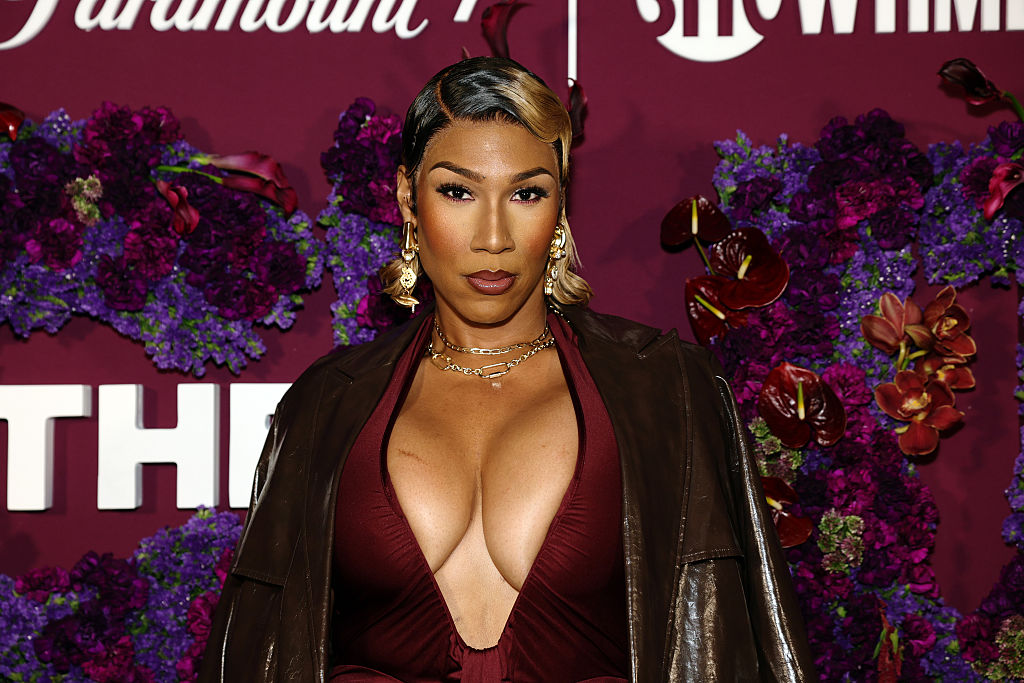
To many people, Monroe Alise seems to be having a moment.
She is back on The Chi as Isis, offering audiences a fuller portrait of Black trans womanhood on one of television’s most important Black dramas. This month, she returned to Washington, D.C., the city that raised her, as a Grand Marshal for the 2026 Capital Pride Parade. Her platform is growing. Her name is moving differently. Her work is reaching people who may only now be discovering what many of us have already known.
But as one of Monroe’s closest friends, I know this moment did not begin with a casting announcement, a camera call, or a parade route.
It began in the quiet. It began in the grind. It began in the years when she was working two jobs, sleeping for two hours, getting up for acting class, catching trains to New York for auditions, and driving between Washington, D.C., and Atlanta because the opportunity mattered enough to meet it with her whole body.
When I asked her what chapter of her journey people need to understand to fully appreciate what they are witnessing now, she did not start with the applause. She started with the struggle.
“The struggle season,” she told me. “The grind season. The putting in the work.”
That is the part people often miss when they talk about success. We see the arrival, but not the hours. We see the booking, but not the preparation. We see the public celebration, but not the private moments when a person has to decide whether they still believe in a future that has not given them evidence yet.
Monroe called those moments “tears of faith.”
Driving 12 hours between D.C. and Atlanta, sometimes unable to afford the ease of a flight or even more than 48 hours at home, she said she cried. Not because she did not believe, but because believing did not make the sacrifice painless.
“I knew that this was temporary,” she said. “I was thanking God for what was, and thanking Him in advance.”
That is the part of faith we do not always romanticize correctly. Faith is not always clean. Sometimes faith is a woman driving through exhaustion with a prayer in her mouth and no guarantee in her hand. Sometimes faith is crying while still moving.
And for Monroe, faith was never passive. It had work attached to it.
That is why “The Power of Staying Ready” feels like more than a title. It feels like the thesis of her life in this season. There are people who wait for an opportunity and call it faith. Monroe prepared for opportunity and called that faith, too.
She told me that when she first said she wanted to be an actor, she had to be honest with herself. She wanted the dream, but she was not yet investing in the discipline the dream required. She did not know how to do a self-tape. She did not know how to break down a script. She had not built the muscles to seize the opportunity when it came.
So she went to acting class. She studied. She practiced. She did the unglamorous work that rarely makes it into a press release.
“I wanted to be an actor so bad,” she said. “But I wasn’t doing anything to prepare myself for an acting role.”
That realization changed her. By the time auditions came, she was not just hoping. She was ready. When P-Valley became part of her journey, she had already been doing scene study. She had already been practicing virtual auditions. She had already been preparing for the kind of room she wanted to enter.
“Faith isn’t enough,” Monroe told me. “You have to match faith with preparation. Faith without works is dead.”
That kind of clarity matters in a culture that often flattens success into luck. People love to say someone “got put on” when they do not want to wrestle with how much work that person did before anyone could make a call on their behalf. But being near opportunity is not the same as being ready for it. Someone can open a door, but you still have to know what to do when you walk through it.
Monroe understands that distinction.
In our conversation, she was careful to name the difference between someone giving you an opportunity and someone’s visibility making room for what comes after them. She talked about honoring women like Laverne Cox and Toni Bryce, not because they handed her a career, but because their presence mattered. Their visibility created evidence. Their work left an imprint.
That is important for Black trans women, because so much of our work is done in the shadow of people pretending they do not see us until they need our language, our beauty, our pain, or our cultural labor.
Monroe understands that visibility is not vanity. Visibility is proof of life. It lets someone else say, “If she is possible, maybe I am possible too.”
That is why her role as Isis on The Chi carries so much weight.
The beauty of Isis lies not simply in her being a Black trans woman on screen. It lies in her being allowed to be a woman with a full life. A mother. A caretaker. A person in a relationship. A person with tenderness. A person with beauty. A person whose transness is not the only plot available to her.
That felt especially clear in Episode 5. In a story powerful for its simplicity, Isis went on a double date with her friend. That is it, and that is the point.
There was no need for her humanity to be defended in every frame. There was no need for her existence to be turned into a lesson plan before she was allowed to enjoy a night out. She was seen in the ordinary architecture of Black life: friendship, flirtation, laughter, getting dressed, going out, being in the world, and being desired without the scene having to apologize for her presence.
There is beauty in the simplicity of the Black trans experience, too.
Too often, the public meets Black trans women through crisis. We are reduced to legislation, violence, funerals, arguments, or symbolism. We become a talking point before we are allowed to be people. Our lives are mined for struggle, then questioned when we ask to be seen in joy.
But joy does not make the story less serious. Normalcy does not make the representation less political. Sometimes the most radical thing a Black trans woman can do on television is sit inside a scene where nobody is debating her right to exist.
That has always been part of the promise of Lena Waithe’s work on The Chi. In a Vanity Fair interview about the series, Waithe said the mission was “to make it really black, really human, and as authentic as possible.” In another public conversation about queer representation, Waithe said, “It’s important that people of a queer experience help tell those stories.”
That philosophy is visible in what Monroe is being allowed to do with Isis. The character does not have to carry every Black trans story at once. She gets to carry one woman’s life with care. And with new episodes of the final season continuing weekly, Episode 6 gives audiences another opportunity to see where Isis’s progression takes us next.
When Monroe and I talked about another scene from the season, she explained why it mattered that the moment was not built around a woman with a trans experience explaining pride or pain. It was a scene between two women, a mother and a daughter, navigating heartbreak, love, fear, and the possibility of circling back.
That may sound simple, but simplicity can be radical when your community is rarely allowed to exist without explanation.
For Black trans women, being shown in our fullness is not a small thing. With Isis, Monroe gets to offer something else.
“It feels like equity,” she said.
That word stayed with me.
Not visibility. Not diversity. Equity.
Because equity is not just being allowed in the room. It is having what you need to do the work once you get there. It is having stylists and makeup artists who affirm you. It is being lit with care. It is being framed with intention. It is being able to focus on your talent instead of worrying whether the production sees your humanity.
Cis women have been given that kind of care on screen for generations. They have been allowed to be beautiful, complicated, desirable, wounded, maternal, messy, and whole. Black trans women deserve access to that same range. Monroe’s work as Isis reminds us that our stories do not become less powerful when they are not centered on trauma. Sometimes the most powerful thing a Black trans woman can do on screen is simply exist in the fullness of her artistry.
And Monroe’s artistry is rooted in something deeper than ambition.
It is rooted in relationship.
That is one of her superpowers.
Some people build careers. Monroe builds relationships, and the career is one of the things that has grown from that foundation.
When she talks about community, she does not talk about networking in the shallow, transactional way people often do. She talks about reciprocity. She talks about checking on people as human beings. She talks about building connections that are mental, spiritual, and emotional before they are professional. She is clear that you do not enter a relationship with your hand out and call that community.
“If you come in the door asking for something, then it’s not a relationship,” she said. “It’s a business transaction.”
That is wisdom a lot of people chasing visibility have not learned yet.
Monroe has learned that proximity is not the same as care. Access is not the same as intimacy. Opportunity is not the same as relationship. The kind of community that allows a person to stay ready has to be authentic enough to challenge you, support you, correct you, house you, encourage you, and remind you who you are when the industry starts moving fast.
For Monroe, expansion has not erased her humility. If anything, it has deepened her gratitude.
When I asked what it felt like to return to Washington, D.C. as a success, as a Grand Marshal, and as someone being celebrated by the place that raised her, she paused inside the weight of it.
“God is something,” she said.
Then she talked about gratitude. Shock. The surreal feeling of being embraced by the same place where she once felt forgotten and unseen.
“The place where I felt forgotten and unseen, the place where I had to only be versions of myself and hide the rest, is now wanting the fullness of me,” she said.
That is what made her homecoming powerful.
It was not just that Monroe went back to D.C. with a television credit. It was not just that she stood at the front of a Pride celebration. It was that she returned as a model of possibility for the city that raised her.
We talk a lot about role models, but possibility models do something slightly different. They do not simply show us what to admire. They show us what can exist. They stretch the imagination of a community. They make the future feel less abstract.
For a young Black trans girl watching Monroe, the message is not simply, “You can be famous.” The message is deeper than that.
You can be prepared. You can be loved. You can be seen. You can be beautiful without apology. You can be skilled. You can be soft and strategic. You can be faithful and disciplined. You can be a daughter, a sister, a friend, an artist, and a leader. You can leave home in pieces and return in fullness.
When I asked Monroe to name who she is and why she is important, she began not with accomplishments, but with being.
“I am Monroe Alise,” she said. “I am a daughter. I am a sister. I am a niece. I am an aunt. I am a friend. Most importantly, I am a human being.”
Then she named the work: actress, singer, soon-to-be author, host, media maven, and one of the first Black trans women to perform vocally at the White House during the Obama administration’s transgender community briefing.
“I am important because visibility is important,” she said. “I am important because representation is important. I am important because someone is going to see me, see themselves in me, and see the things I have accomplished and say, ‘If she can do it, I can too.’”
That is the power of Monroe Alise in this moment.
Not perfection. Not celebrity. Possibility.
Her life is evidence that the dream is not always loud when it begins. Sometimes it starts with a long drive, a tired body, and a prayer. Sometimes it starts with a class you finally sign up for because you are done pretending desire is the same thing as preparation. Sometimes it starts with the right people seeing you before the world knows what to call you.
And sometimes, years later, the same city where you once felt unseen asks you to come home in full view.
That is what Monroe Alise is doing now.
She is not simply having a moment. She is meeting a moment she spent years preparing for.
What we are witnessing is not luck.
It is preparation. It is relationship. It is faith with works. It is the beauty of a Black trans woman who cried tears of faith and kept driving anyway.
It is the power of staying ready.
SEE ALSO:
Dominique Morgan, Peachie Wimbush-Polk On Trans Day Of Remembrance
When The Last North Star Sets: The Life And Legacy Of Miss Major Griffin-Gracy
What's Your Reaction?
 Like
0
Like
0
 Dislike
0
Dislike
0
 Love
0
Love
0
 Funny
0
Funny
0
 Angry
0
Angry
0
 Sad
0
Sad
0
 Wow
0
Wow
0
![Trump Says Iran Can ‘Take Out’ Los Angeles And San Diego Because He Hates America [Op-Ed]](https://newsone.com/wp-content/uploads/sites/22/2026/10/17913043229263.jpg?quality=80&strip=all&w=1024&crop=0,0,100,683px#)


![The White House And Legacy Media Are Gaslighting Us About What Trump Said About LA And San Diego [Op-Ed]](https://newsone.com/wp-content/uploads/sites/22/2026/10/17913882277131.jpg?quality=80&strip=all&w=1024&crop=0,0,100,683px#)