




10 actions from Trump in 2025 that have critically impacted Black Americans

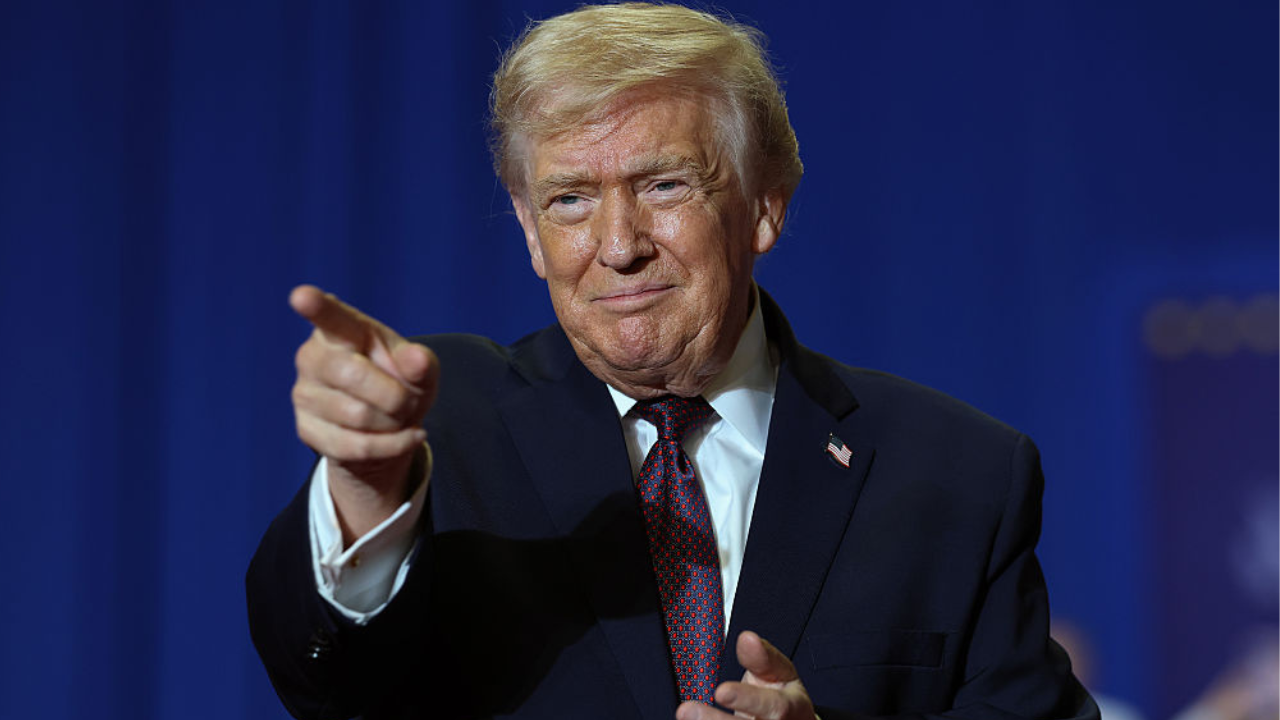
Since returning to the White House, President Trump has stalled progress on racial equity and driven up the Black unemployment rate after a historic low during the Biden administration.
President Donald Trump took several actions in 2025 that critically impacted Black Americans, seemingly undermining the community’s complicated racial history in the United States, as well as the policies used for decades to remedy it. The nearly year-long MAGA agenda has included the banning of DEI, the reversal of civil rights enforcement, and a redistricting campaign that is being legally challenged as a violation of the Voting Rights Act of 1965.
Here are 10 actions by the Trump administration that have affected the more than 48 million Black Americans who are living in the U.S.
Anti-DEI agenda
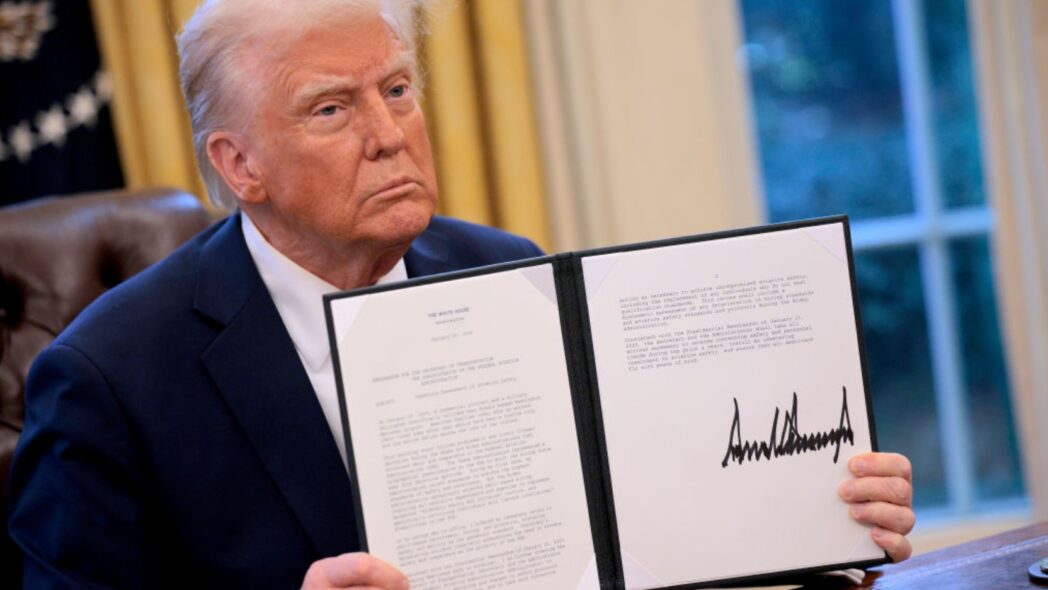
On his first day in office, President Trump signed an executive order calling for the end of DEI programs in the public and private sectors, marking the beginning of a series of orders aimed at eliminating racial equity initiatives. The “Ending Radical And Wasteful Government DEI Programs And Preferencing” order eliminated DEI programs, offices, and staff, including for federal contractors.
Other executive orders specifically targeted DEI in “woke” AI development and deployment, as well as the U.S. military–actions that experts and advocates warn will leave many Black communities behind and further widen racial gaps. Trump’s anti-DEI agenda has also resulted in Black federal workers losing their jobs and the dismantling of government offices like the Environmental Protection Agency’s Office of Environmental Justice, which was intended to enforce civil rights protections to ensure Black communities are safe from environmental harms and remedy past racial discrimination.
While many lawsuits have been filed (and won) against the Trump Administration’s attempts to swiftly dismantle DEI across industries, pressure from the White House has resulted in companies like Target, Amazon, and McDonald’s backing out of previous commitments to racial equity practices, including in hiring. More than 400 universities, which have been threatened by Trump with the loss of federal funding, including for research, have also caved to the pressure.
Deploying the military and federal police to Black-led cities
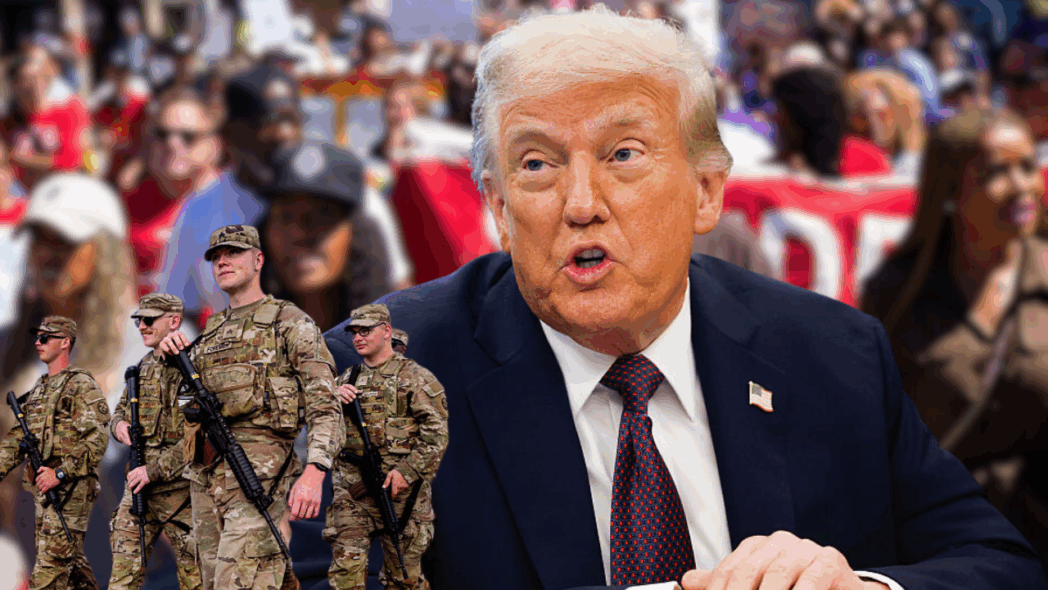
American cities led by Black mayors or with majority or significant Black populations saw what no American city has seen in modern history: the deployment of U.S. military troops to their streets. Under the guise of fighting crime and enforcing immigration laws, Trump has sent thousands of National Guard troops, along with a spike in federal law enforcement, to Washington, D.C., Los Angeles, Chicago, Memphis, and New Orleans. The deployments have created fear and tensions between communities and law enforcement, some of which have been violent.
Community leaders and elected officials, with some exceptions, have pushed back against what they say is Trump’s “militarization” of American cities. Noting record declines in crime in most of the targeted cities, critics say Trump’s goal is not about keeping cities safe, but about perpetuating racial stereotypes about Black and Brown communities, rather than providing federal funding that could help continue to drive down violent crime. They slammed Trump’s unprecedented use of the military as authoritarianism.
Black Economy left suffering

The Black unemployment rate reached its highest level (8.3%) since the COVID-19 pandemic as a result of President Trump’s economic and domestic policies, leaving millions of Black Americans jobless and unable to stay afloat during America’s affordability crisis. What’s more, Trump’s sporadic trade tariffs have caused the cost of goods to skyrocket, which has had a critical impact on Black businesses, which have a higher rate of hiring Black workers. According to a report by the Center for American Progress, Trump’s policies are disproportionately hurting the Black middle class and threatens to widen the already persistent racial wealth gap in America.
Dismantling the Education Department
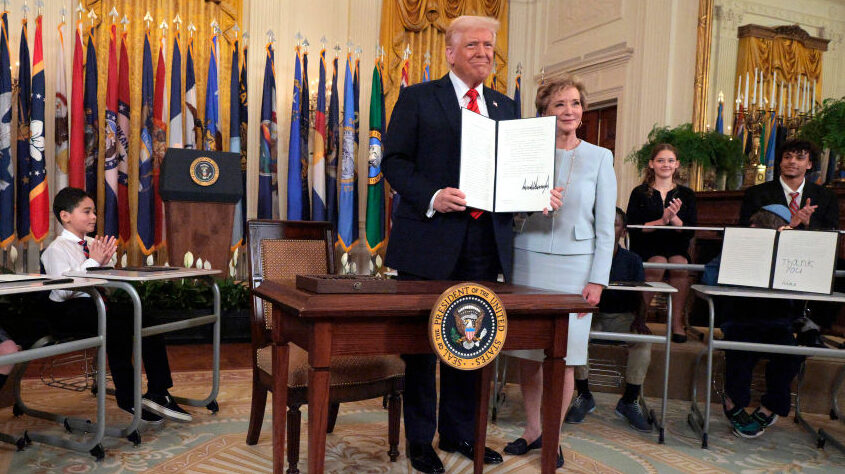
President Trump has made it clear that he would like to see the U.S. Department of Education completely dismantled. Because only the U.S. Congress can legally do so, the Trump Administration has critically defunded the DOE and terminated a third of its staff, including longtime Black federal workers.
The administration has sought to lay off as many as 1,300 employees through the use of reductions in force, or RIFS, which the Center on Budget and Policy Priorities (CBPP) has characterized as an abuse to execute their goal of mass layoffs across the federal government. After seeking to lay off hundreds of employees in the agency’s Civil Rights office, the administration has since ordered as many as 250 workers on paid leave to return to work as a result of their layoffs being challenged in court.
Amidst the seesaw legal battles at the Education Department, programs at the agency hang in the balance due to a lack of staff to administer them, such as the Free Application for Federal Student Aid (FAFSA), as well as staff who provide policy and legal guidance to states on implementing the department’s special education programs.
The Trump White House has also overhauled the Education Department, including historic cuts to funding for Pell Grants, which Black students disproportionately rely on to pay for higher education. The administration also overhauled the federal student loan system, such as limiting borrowing limits, which could make higher education more expensive and out of reach for Black Americans.
Whitewashing Black History
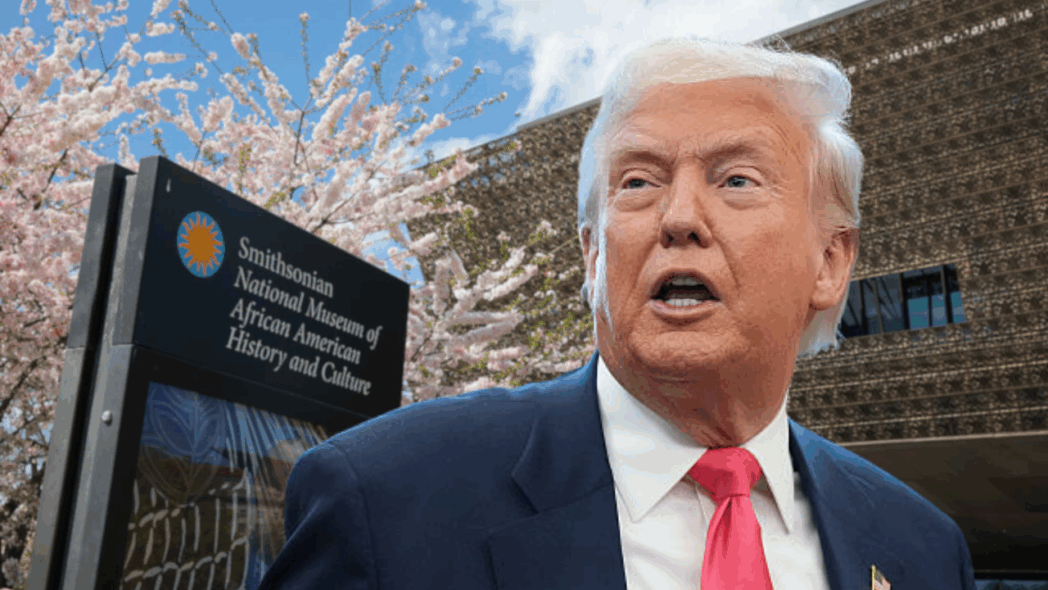
The Trump administration has taken several steps to undermine Black history. In March, Trump signed an executive order, “Restoring Truth and Sanity to American History,” which targeted national parks and public museums, including the National Museum of African American History and Culture. The order prohibits what it calls the “influence of a divisive, race-centered ideology.”
As part of Trump’s executive order ending the so-called “radical indoctrination” of public schools, the Trump administration has used the Education Department to pressure public schools to sanitize how Black history is taught in classrooms, threatening to withhold federal funding if they do not comply. However, the administration has failed to issue any guidance on what aspects of Black history are permissible.
Other actions undermining Black history have included the scrubbing of Black historical figures from federal websites. In April, the National Park Service removed and later restored the Underground Railroad and Harriet Tubman sites. In September, the Trump administration moved to remove relics of U.S. chattel slavery from National Park sites, including the 1863 photograph known as “The Scourged Back,” which shows an escaped enslaved man’s bare back marred by raised scars from repeated whippings.
Elimination of TPS for Haitian and African migrants
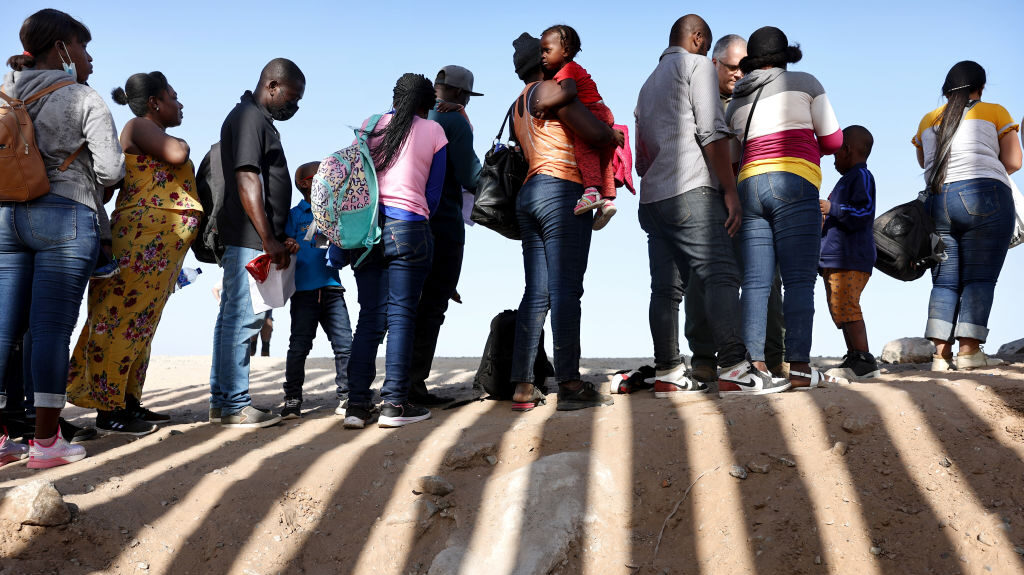
Since returning to office, President Trump has accelerated his anti-immigration policies, including the elimination of Temporary Protected Status, or TPS, for refugees fleeing turmoil in Haiti and other nations, including South Sudan. The action threatens the status of tens of thousands of immigrants and their families living in the United States. Trump has also issued travel bans on nationals from various African countries and Haiti, citing a supposed national security risk. The president’s ban of Black immigrants from the U.S. also came as he continued to use disparaging rhetoric against them, most recently calling Somali immigrants “garbage.”
Ironically, there is at least one group that Trump has embraced for refugee status in the United States: white farmers from South Africa. The decision to grant Afrikaners special refugee status came as a result of the president falsely spreading a conspiracy theory that white farmers are victims of genocide in South Africa.
Undermining the Voting Rights Act of 1965
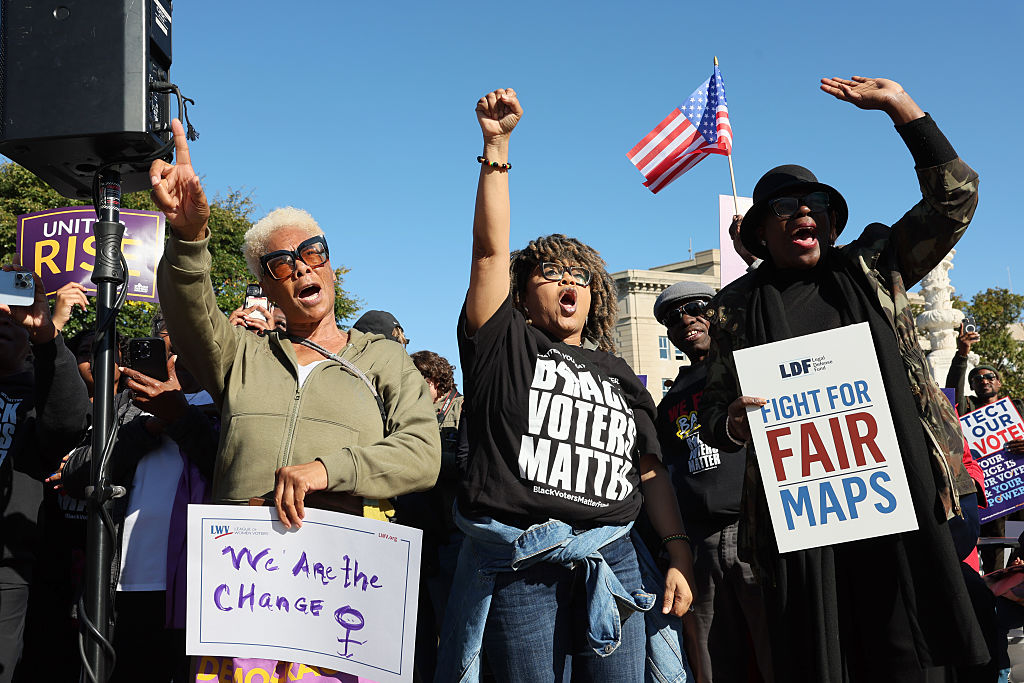
By demanding that Texas take the unprecedented action of redrawing its congressional map, five years in advance of the next U.S. Census, President Trump ignited a brewing battle over voting rights, which has protected Black voters from racial discrimination for 60 years.
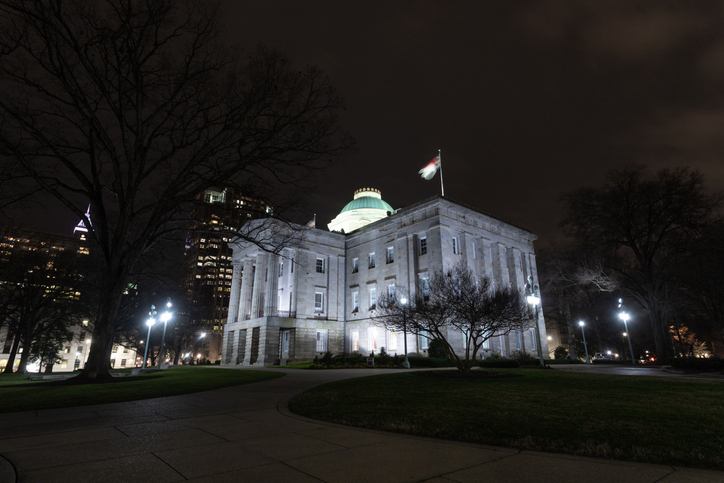
The redistricting efforts, which have been slammed as a scheme directly intended to undermine the power of Black voters, come as Trump tries to chart a path for his Republican Party to maintain a majority control of Congress. In Texas, for example, Republicans redrew their map to give their party an advantage of picking up five additional seats in the U.S. House of Representatives. The districts targeted were majority Black and Latino communities that are also represented by Black and Latino Democrats. Other states that have taken up the redistricting process, such as North Carolina and Ohio, have similarly targeted districts held by Black U.S. representatives.
Voting rights advocates say the actions taken by Republicans, by the direction of President Trump, are a direct and deliberate threat to Black representation in the U.S. What’s more, lawsuits challenging the maps say they violate the Voting Rights Act of 1965 and the constitutional rights of Black Americans, who were denied access to the ballot for centuries.
Attacks on Black leadership
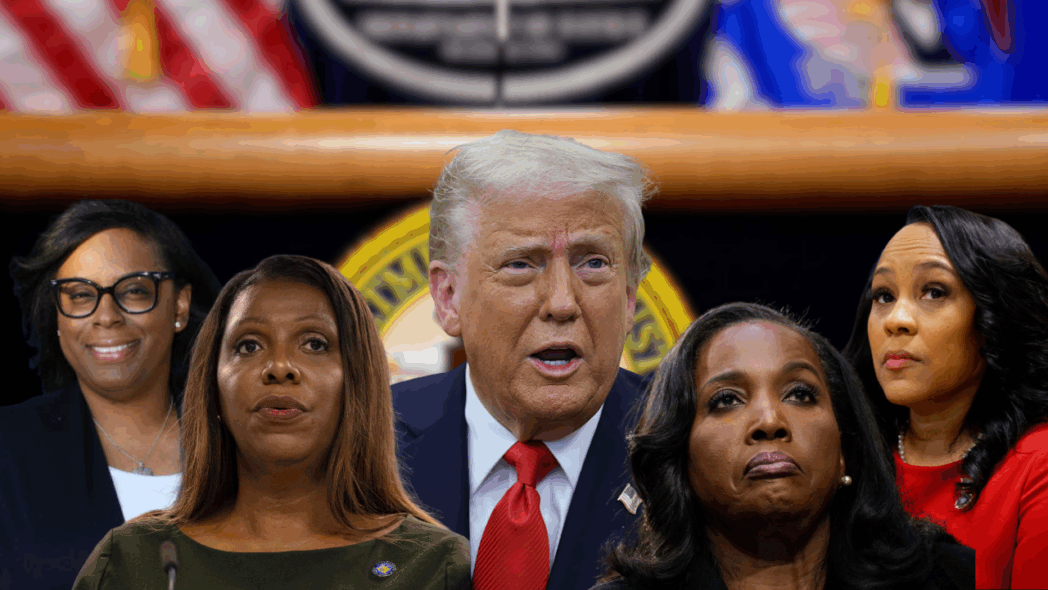
President Trump has not been shy about using his bully pulpit to verbally assail Black Democratic leadership and push out Black leaders from critical independent boards, from the so-far unsuccessful push to fire Lisa Cook, the first Black woman to serve on the Federal Reserve Board of Governors, to terminating Gwynne A. Wilcox, the first Black woman to serve on the National Labor Relations Board (NLRB).
Trump has used the Justice Department to file charges against Black elected officials like New York Attorney General Letitia James, which failed despite multiple court attempts, and U.S. Rep. LaMonica McIver of New Jersey, who continues to fight for her freedom in court over a clash with federal agents who unlawfully arrested Newark Mayor Ras Baraka, whose charges were ultimately dropped. The case against McIver has been rebuked by Democrats as an abuse of executive power and an example of Trump’s unfettered vindictiveness against his perceived political enemies.
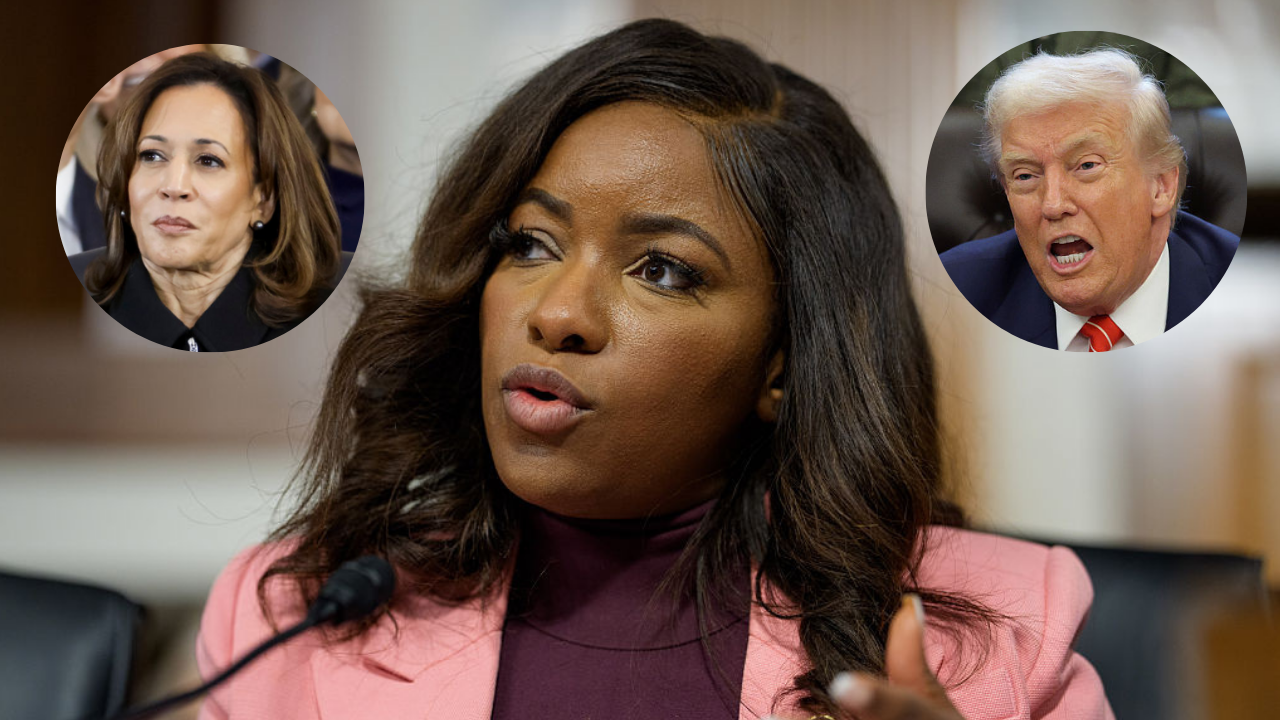
Trump has also routinely called out Black members of Congress, like U.S. Rep. Jasmine Crockett, whom he has called “low IQ” despite her having a law degree, and Rep. Ilhan Omar, whom he has called “garbage.”
Historic cuts to health care and social services
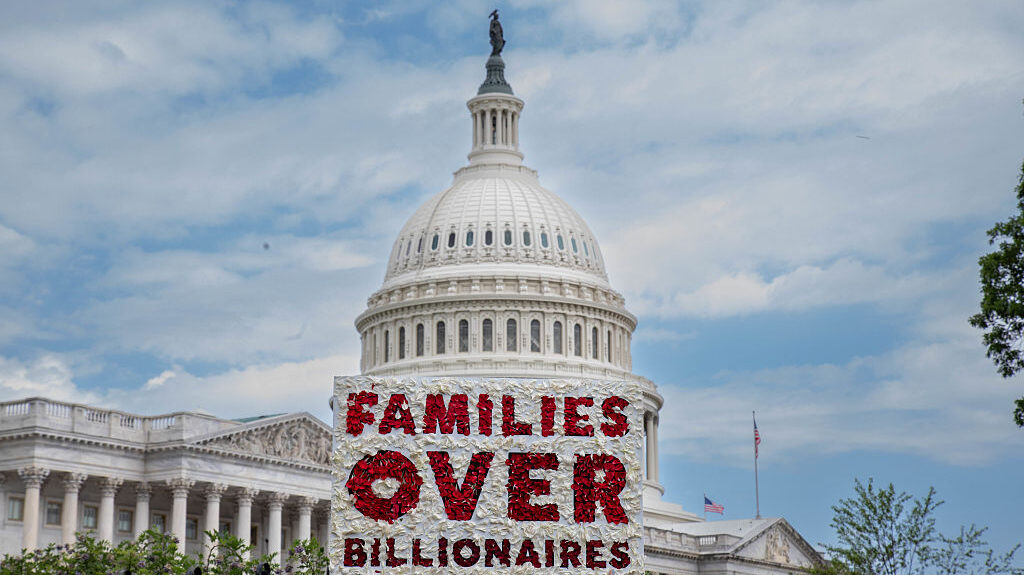
President Trump’s signature law, the One, Big, Beautiful Bill Act, makes historic cuts to health care and social programs that Black Americans disproportionately rely on to in order to offset the cost of more than $4 trillion in tax cuts that experts say will overwhelmingly benefit wealthy Americans and corporations. The OBBBA makes roughly $1 trillion in cuts to Medicaid and Medicare and $120 billion from SNAP.
What’s more, Trump’s tax and budget bill does not include extensions to Obamacare subsidies that will cause health care premiums to skyrocket in 2026 if current negotiations on Capitol Hill do not result in a deal. The Trump administration and Republicans have offered their own health care bill that would create savings accounts for patients to pay for their own insurance; however, there remain concerns that such a policy would only benefit the wealthy and healthy.
Abandoning enforcement of civil rights protections
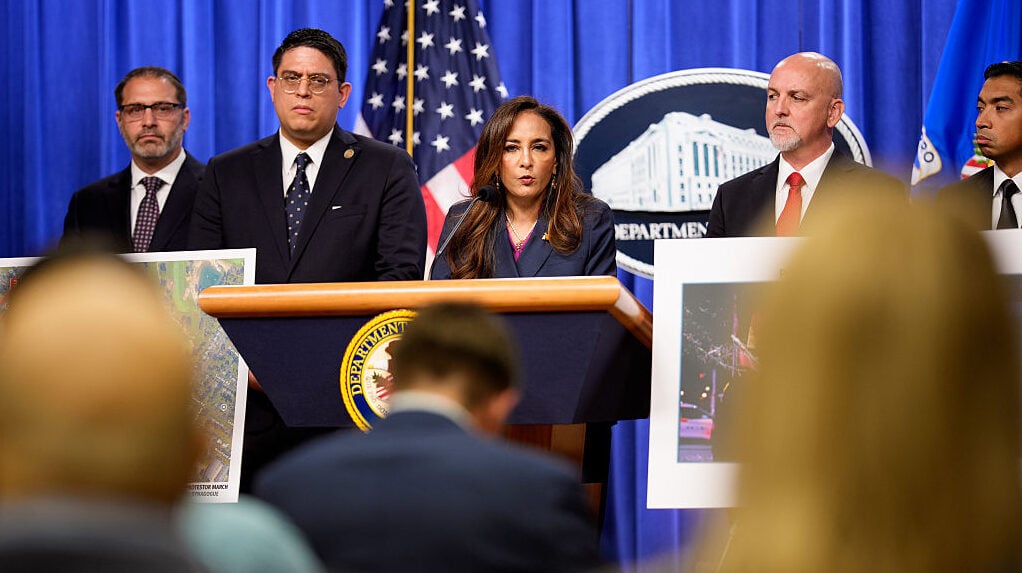
Though the administration has argued its anti-DEI agenda restores the federal government’s commitment to eliminating discrimination for all, civil rights leaders say actions like revoking decades-old executive orders intended to enforce anti-discrimination laws to protect Black and other protected classes only undermine them.
Trump’s Department of Justice Civil Rights Division has dismissed or terminated many racial discrimination cases it deemed as a “weaponization” of the federal government under the Biden administration, including some that had already reached agreements with the previous administration.
Most recently, the Equal Employment Opportunity Commission (EEOC) went out of its way to send a PSA to white men to inform them that they may be eligible for compensation for employment discrimination based on their race and gender. This is despite the fact that white men have a lower unemployment rate (3.6%) than the national average (4.6%) and the Black unemployment rate (8.3%).
What's Your Reaction?
 Like
0
Like
0
 Dislike
0
Dislike
0
 Love
0
Love
0
 Funny
0
Funny
0
 Angry
0
Angry
0
 Sad
0
Sad
0
 Wow
0
Wow
0